

Pomeranians may be tiny, but their stomachs can cause big dramas: loose stools, gassiness, picky eating and the occasional 3 a.m. grass-eating session. Sensitive digestion is common in this breed, and the right food makes an enormous difference. This guide explains what to look for, which types of food tend to suit delicate Pom tummies, and how to choose and transition safely.
Signs Your Pomeranian Has a Sensitive Stomach
Occasional soft stools happen to every dog, but talk to your vet and review the diet if you regularly see:
- Loose stools or diarrhoea more than once or twice a month
- Lots of gas or a gurgling, uncomfortable tummy
- Vomiting or regurgitation after meals
- Itchy skin, ear problems or dull coat alongside digestive issues
- Refusing food, then eating grass
Persistent symptoms can also signal pancreatitis, allergies or parasites, so a vet check always comes first — food changes should never replace a diagnosis.
What to Look for in Food for a Sensitive Pomeranian
Simple, limited ingredients. Short ingredient lists mean fewer chances to react to something. A single animal protein (such as salmon, turkey or lamb) with one or two gentle carbohydrate sources is a good template.
Highly digestible protein. Look for named meats — “salmon,” “turkey meal” — rather than vague “meat derivatives.” Quality protein is easier on the gut and helps a small dog keep muscle on a small frame.
Gentle fibres and pre/probiotics. Pumpkin, beet pulp and chicory root feed healthy gut bacteria. Foods that include live probiotics (look for names like Bacillus coagulans or Enterococcus faecium on the label) can help firm up stools.
Moderate fat. Very rich, fatty foods are a common trigger for small dogs. Aim for a moderate fat level rather than the highest-protein, highest-fat performance recipes.
Small kibble size. Poms have tiny mouths and teeth. Small-breed kibble is easier to chew and less likely to be gulped and brought back up.
No artificial colours, flavours or vague fillers. These add nothing nutritionally and are among the first things to remove when a stomach is unsettled.
Food Types That Often Suit Sensitive Pomeranians
Limited-ingredient dry food is the most convenient starting point. Reputable small-breed, sensitive-stomach lines from brands such as Royal Canin, Hill’s Science Diet and Purina Pro Plan are widely available and formulated for digestibility, with small kibble pieces suited to toy breeds.
Salmon-based recipes deserve a special mention: fish is often well tolerated by dogs that react to chicken, and its omega-3 fats support skin and coat — a bonus for a double-coated breed like the Pom.
Wet food and fresh food can help dogs that struggle with dry kibble. Wet food is gentler to chew and its higher moisture supports hydration. Gently cooked fresh subscription foods can work well too, though they cost more and need freezer space.
Hydrolysed or veterinary gastrointestinal diets are the next step if regular sensitive-stomach foods don’t settle things. These are prescription foods, so discuss them with your vet rather than buying at random.
How to Choose the Right One
- Note the current protein. If your Pom reacts on a chicken-based food, try a salmon or lamb recipe next — and change only one thing at a time.
- Read the feeding guide by weight. Pomeranians typically weigh 1.8–3.5 kg, so portions are small and easy to overdo. Weigh food with a kitchen scale rather than guessing.
- Check the stool, not just the bowl. The best food is the one that produces small, firm, easy-to-pick-up stools and a comfortable dog.
- Give it time. Unless symptoms are severe, allow 2–3 weeks on a new food before judging it — guts need time to adapt.
How to Read a Pomeranian Food Label
Labels reward a slow read. Work through this checklist before you buy:
- Named protein in the first two ingredients. “Salmon” or “turkey meal” tells you exactly what your dog is eating; “meat meal” or “animal derivatives” does not.
- A feeding statement for the right life stage. Look for wording that the food is complete and balanced for adult maintenance (or growth, for puppies) under recognised standards such as FEDIAF or AAFCO.
- Guaranteed analysis that suits a small, sensitive dog. Moderate fat, reasonable protein and some fibre are the pattern you want; extreme performance numbers belong to working-dog foods.
- Functional extras for digestion. Chicory root, beet pulp, pumpkin and named probiotic cultures are all good signs for a delicate gut.
- Calories per cup or per 100 g. Toy breeds eat so little that a calorie-dense food is easy to overfeed. Knowing the number helps you weigh out exact grams.
- A short, recognisable ingredient list. The fewer vague fillers and artificial colours, the fewer suspects when the tummy rumbles.
A Gentle Daily Feeding Routine for Sensitive Poms
Consistency soothes small stomachs. A routine many owners of sensitive Pomeranians find successful looks like this:
| Time | What to do |
|---|---|
| Morning | First measured meal, served after a short garden break; fresh water topped up |
| Midday (optional) | A tiny third meal or a few pieces of the regular kibble as a snack — helpful for dogs prone to empty-tummy bile vomiting |
| Early evening | Second measured meal at the same time each day |
| Evening | Last toilet break; no large meals right before bed |
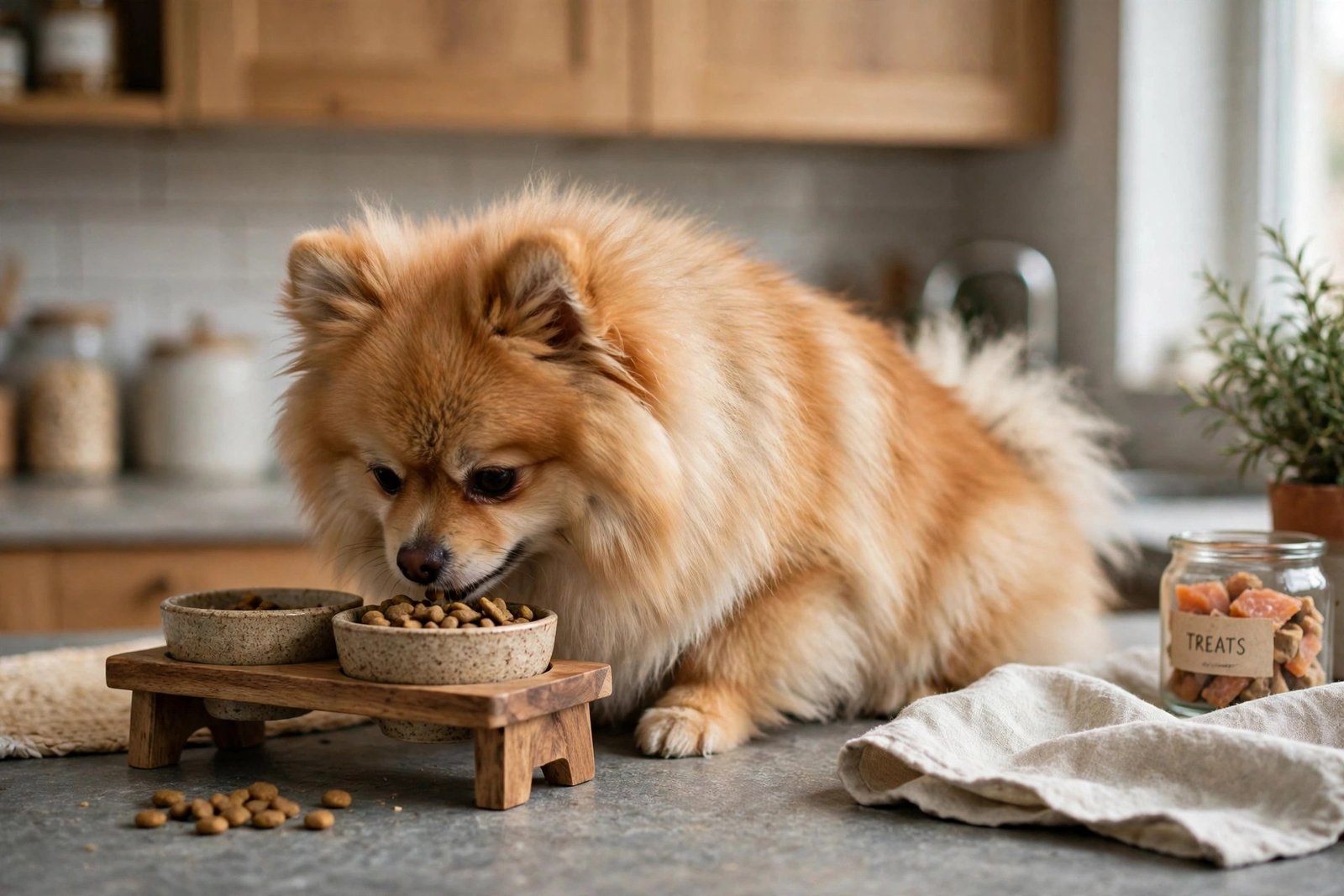
Split the daily ration into two or three small meals rather than one, keep mealtimes calm and unhurried, and avoid vigorous play for half an hour after eating. If your Pom bolts food and brings it back up, a slow-feeder bowl or scattering the kibble on a clean mat can slow them down and reduce swallowed air — a surprisingly common cause of regurgitation in excited little dogs.
Treats, Toppers and Table Scraps: The Hidden Suspects
When a Pomeranian’s digestion never quite settles, the main food is often innocent and the extras are guilty. Rich training treats, fatty chews, dental sticks, flavoured medications and “just a little bit” of your dinner all pass through the same small gut. During any food trial, strip extras back to the bare minimum: use individual pieces of the new kibble as rewards, and choose a single-ingredient gentle treat (such as a small piece of plain cooked turkey) only if you need one. Once stools have been firm and comfortable for several weeks, reintroduce one extra at a time, a few days apart, so any reaction has an obvious suspect.
Common Feeding Mistakes with Sensitive Pomeranians
- Changing food too often. Every sudden swap is a fresh insult to a delicate gut; commit to one food for at least two to three weeks before judging it.
- Overfeeding by “a little extra.” For a 2.5 kg dog, an extra tablespoon of food a day is a significant calorie surplus and a common cause of both weight gain and soft stools.
- Rich toppers on a gentle base. Pouring gravy, cheese or fatty wet food over a careful sensitive-stomach kibble defeats the object.
- Ignoring dental pain. Poms are prone to dental disease, and a dog that eats slowly, drops kibble or prefers soft food may be telling you its mouth hurts, not its stomach — worth a vet check.
- Treating grass-eating as an emergency every time. Occasional grass-eating is normal dog behaviour; it is the pattern of vomiting, weight loss or ongoing loose stools that needs attention.
Transitioning Without the Tummy Turmoil
Switch over 7–10 days: 75% old food with 25% new for two days, then 50/50, then 25/75, then fully new. For very sensitive dogs, stretch each stage to 3–4 days. Feed two or three small meals at the same times each day, keep treats to a minimum during the switch (or use pieces of the new kibble as treats), and always have fresh water available.
Cost and Storage Tips for Small-Bag Feeders
Pomeranians eat so little that a large bag of kibble can go stale — and stale, oxidised fats are themselves a stomach irritant — before you reach the bottom. Buy the smallest bag you can use within about four to six weeks of opening, store it in its original bag inside an airtight container (the bag’s inner lining is designed to protect the food), and keep it somewhere cool and dry rather than in a warm kitchen corner. Note the opening date on the bag with a marker. Wet food should be refrigerated once opened, used within two to three days, and always served at room temperature for a sensitive stomach — a few seconds in a bowl of warm water takes the fridge chill off. Finally, resist bargain multi-buys of a food your Pom has not yet proven it tolerates: with digestive trials, the cheapest food is the one you do not have to throw away.
Troubleshooting: If the Tummy Still Won’t Settle
Work through these steps in order before concluding that the food is wrong. First, check the extras — treats, chews and scraps — and cut them out completely for two weeks. Second, confirm the portion: an overfed small dog often has soft stools simply because the gut is overloaded, so weigh the food and try a 10% reduction. Third, slow the eating with a puzzle or slow-feeder bowl and feed smaller, more frequent meals. Fourth, consider whether stress, a change in routine, or a recent medication could be behind the symptoms. If stools are still loose after three to four weeks of this careful approach — or at any point if you see blood, weight loss or lethargy — go back to your vet. Persistent digestive trouble in a small dog deserves proper investigation, which may include stool tests, blood work or a prescription elimination diet rather than endless food swapping at home.
Frequently Asked Questions
Is grain-free food better for a sensitive Pomeranian?
Not necessarily. Most dogs digest cooked grains like rice and oats well. Grain-free only helps if your dog specifically reacts to a grain; discuss ongoing diet choices with your vet.
My Pomeranian is a picky eater as well as sensitive. What helps?
Warm the food slightly to release aroma, add a spoonful of warm water to kibble, and stick to set mealtimes — lift uneaten food after 20 minutes rather than leaving it down all day.
Can I add pumpkin to help digestion?
Yes, a teaspoon of plain canned pumpkin (not pie filling) per meal is a gentle fibre source many owners use for loose stools. Introduce it gradually.
How much should a Pomeranian eat per day?
Most adult Poms need roughly 200–400 calories a day depending on size, age and activity. Follow the food’s guide for their weight, then adjust to keep their waist visible under the fluff.
When should I see a vet instead of changing food?
Straight away for vomiting or diarrhoea lasting more than 24–48 hours, blood in the stool, weight loss, or lethargy — small dogs dehydrate quickly.
Are probiotics worth using every day?
For many sensitive dogs, yes — either built into the food or as a vet-recommended supplement during unsettled periods. They are not a cure for an underlying problem, so if you need them constantly just to keep stools normal, review the whole diet with your vet.
Should a sensitive Pomeranian eat wet food instead of kibble?
Not automatically. Some Poms do better on wet food because it is moist and often highly digestible; others are fine on a gentle small-breed kibble, which also helps a little with dental tartar. Judge by stools, comfort and appetite, and never persist with a format your dog clearly struggles with.
Could my Pom’s sensitive stomach be an allergy?
It could be, but most sensitive stomachs are not true allergies. If digestive problems come with itchy skin, recurrent ear infections or paw licking, ask your vet about an elimination diet to check for a specific ingredient trigger.
How quickly should I expect improvement after switching foods?
Stools often start to firm within a week or so, but allow the full two to three weeks of a careful transition before judging. Gas and gurgling may take a little longer to settle as the gut bacteria adjust to the new ingredients.
Conclusion
The best food for a Pomeranian with sensitive digestion is simple, digestible and consistent: a named protein your dog tolerates, moderate fat, helpful fibre and probiotics, and a kibble size made for tiny mouths. Change foods slowly, judge by the stools and your dog’s comfort, and keep your vet in the loop if symptoms persist. Get it right, and you’ll have a happier tummy — and a much happier little Pom.