

German Shepherd puppies grow fast — and then keep growing. A pup that fits in your arms at eight weeks can weigh 35 kg or more as an adult, and most of that growth happens in the first year. Feeding a large-breed puppy is a balancing act: they need plenty of nutrition to build bone, muscle and brain, but growing too fast on overly rich food can strain developing joints. This guide explains how to choose a puppy food that supports steady, healthy German Shepherd growth.
Why “Large Breed Puppy” Food Matters
German Shepherds are prone to hip and elbow dysplasia and other developmental joint problems, and nutrition plays a genuine role. Excess calories and excess calcium during growth are linked with too-rapid development in large breeds. Large-breed puppy foods are formulated differently from regular puppy food: slightly fewer calories per cup, controlled calcium and phosphorus levels, and an appropriate calcium-to-phosphorus ratio, all designed to slow things down to a safe pace while still delivering everything a puppy needs.
What German Shepherd Puppies Need Nutritionally
Quality animal protein for muscle and tissue growth — look for a named meat (chicken, lamb, salmon) as the first ingredient, with protein typically around 22–28% in a large-breed puppy recipe.
Controlled calcium. This is the headline point for large breeds. More is not better: avoid adding calcium supplements, bone meal or extra dairy to a complete puppy food, and choose a formula made for large-breed growth rather than an “all life stages” food with uncontrolled mineral levels.
DHA for brains and eyes. This omega-3 fatty acid, from fish oil or fish meal, supports learning and vision development — one reason quality puppy foods highlight it.
Moderate fat and calories. Puppy food should be energy-rich, but a large-breed formula keeps calories slightly reined in compared with small-breed puppy food, helping your pup grow lean rather than round.
Joint-supporting nutrients. Glucosamine and chondroitin are sometimes included; they’re a bonus rather than a substitute for correct calcium and weight control.
Types of Food and Brands to Consider
Large-breed puppy kibble is the standard choice. Reputable large-breed puppy lines from Royal Canin (which makes a German Shepherd–specific puppy food shaped and formulated for the breed), Hill’s Science Diet, Purina Pro Plan and Eukanuba are all built around controlled growth nutrition and are easy to feed consistently.
Wet puppy food can be mixed in for palatability but is harder to use as the sole diet in the right quantities for a big puppy, and costs add up. A small amount as a topper is fine.
What to avoid: generic “puppy” food with very high calorie density fed free-choice, adult food during the main growth phase (it isn’t balanced for growth), and homemade diets unless formulated with veterinary guidance — growth is the life stage where mineral mistakes hurt most.
How Much and How Often to Feed
German Shepherd puppies do best on measured meals — never free-feeding for a breed that must stay lean while growing.
- 8–12 weeks: 4 meals a day
- 3–6 months: 3 meals a day
- 6–12 months: 2 meals a day
- After 12 months: transition gradually to an adult large-breed food; many Shepherds keep maturing until 18 months, so ask your vet about timing
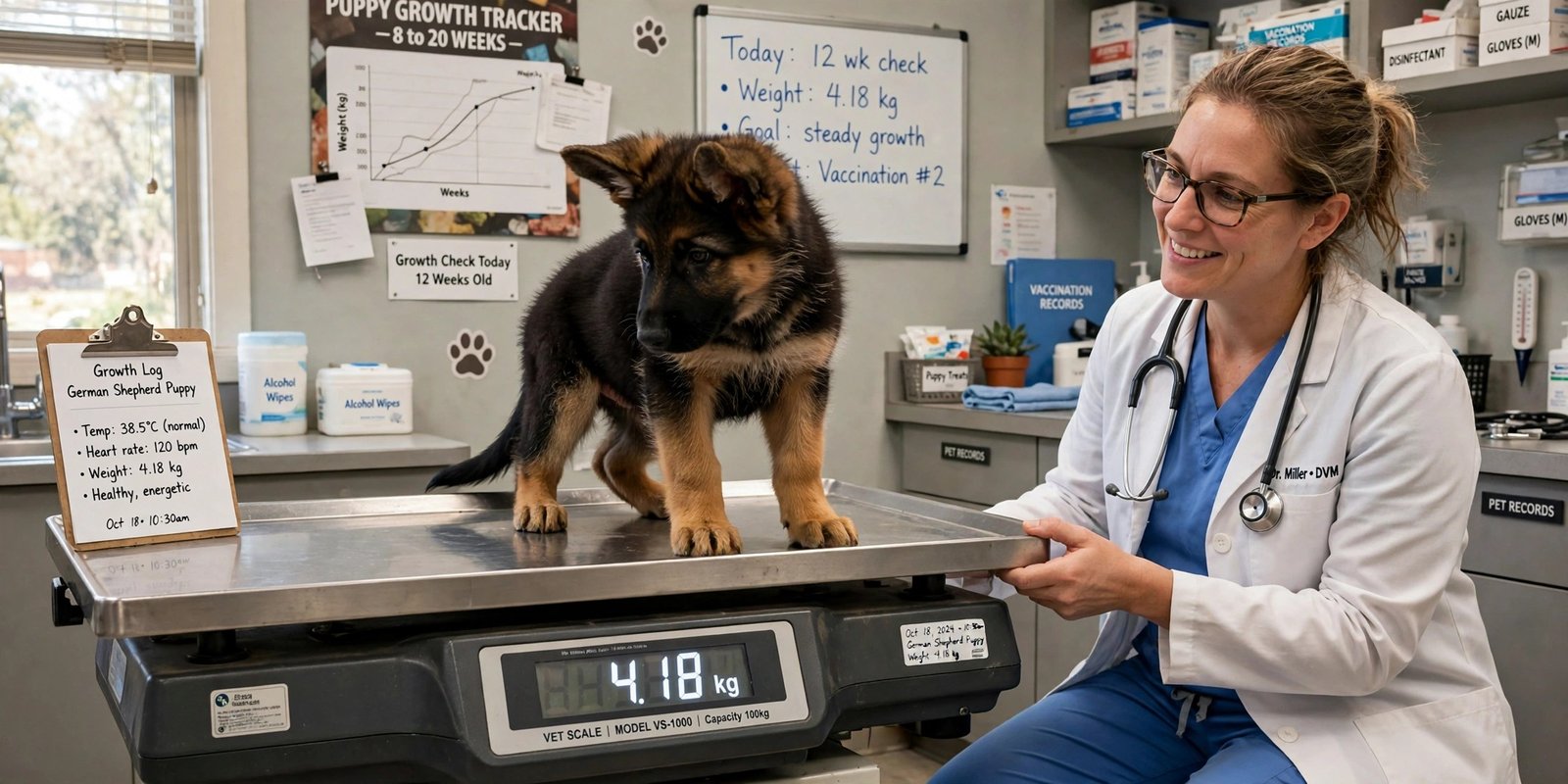
Amounts depend on the specific food’s calorie content and your puppy’s expected adult weight, so start with the packet’s guide for large-breed puppies, then judge by body condition: you should feel ribs easily under a thin fat cover, see a waist from above, and your puppy should look athletic — not tubby, not ribby. Weigh your puppy every 2–4 weeks and adjust portions in small steps. Growth charts from your vet clinic are a good sanity check.
How to Read a Large-Breed Puppy Food Label
Packaging is full of pastoral pictures and bold claims; the nutritional panel tells the truth. Check these points before you buy:
- Life-stage statement: the food should be formulated for growth, ideally specifying large-breed growth (sometimes worded as for puppies expected to reach a large adult weight). An “all life stages” food can carry more calcium than a big puppy should have.
- Calcium and phosphorus: large-breed puppy foods keep calcium controlled, commonly around 1.0–1.5% on a dry-matter basis, with phosphorus in a sensible ratio to it. If the label shows maximum calcium far above this, be cautious.
- Calories per cup: knowing the energy density lets you convert the feeding guide into real grams and compare brands fairly.
- Named animal protein first: chicken, lamb, salmon or a named meat meal — not generic “meat and bone meal.”
- DHA listed: often appearing as fish oil, fish meal or an omega-3 source; a genuine plus for a learning puppy.
A Growth and Feeding Tracker for the First Year
Consistency beats guesswork. Use this rhythm alongside your vet’s growth charts:
| Age | Meals per day | Weigh-ins | What to watch |
|---|---|---|---|
| 8–12 weeks | 4 | Every 2 weeks | Ribs easy to feel; tummy should not look pot-bellied after meals |
| 3–6 months | 3 | Every 2–4 weeks | Steady, even gain; visible waist from above |
| 6–12 months | 2 | Monthly | Lean, athletic outline; growth rate gradually slowing |
| 12–18 months | 2 | Monthly | Discuss the move to adult food with your vet |
If weight gain suddenly races ahead of the chart, trim the ration by about 10% and recheck in two weeks rather than making a dramatic cut — puppies still need their nutrients, just not the surplus energy.
Treats, Chews and Training Rewards
German Shepherd puppies do a lot of training, and training usually means treats. Keep all treats and chews inside 10% of the daily ration, and count them: use part of the measured kibble as training rewards where possible, since kibble pieces are nutritionally part of the plan. Avoid calcium-rich extras such as large amounts of cheese, milk bones marketed for adults, or any supplement your vet has not approved. Long-lasting chews should be size-appropriate and supervised; anything that adds substantial calories should come out of the day’s food allowance, not on top of it.
Pros and Cons: Large-Breed Kibble vs Other Options
Large-breed puppy kibble — pros: precisely controlled calcium and calories, economical for a dog that will eat a great deal, easy to measure and consistent. Cons: less exciting for fussy puppies, and quality varies between brands.
Wet puppy food — pros: very palatable and hydrating. Cons: expensive as a sole diet for a large puppy, harder to keep mineral levels controlled, and needs refrigeration once opened.
Homemade or raw diets — pros: ingredient transparency. Cons: the hardest possible way to control calcium and phosphorus during the exact life stage when errors cause permanent skeletal harm. Only attempt this with a recipe formulated by a veterinary nutritionist for large-breed growth.
Feeding Mistakes to Avoid
- Overfeeding “because he’s a big breed.” Extra weight during growth is the most common and most avoidable risk factor for joint strain.
- Adding calcium, milk or supplements to a complete puppy food. This unbalances precisely what the formula controls.
- Switching foods suddenly. Transition over 7 days to avoid the classic puppy upset stomach.
- Feeding right before or after vigorous exercise. Large, deep-chested breeds are at risk of bloat; keep meals and hard play at least an hour apart, and mention any family history of bloat to your vet.
Troubleshooting Common Puppy Feeding Problems
Loose stools after a food change. Almost always a transition that went too fast. Step back to the previous ratio of old to new food for a few days, then proceed more slowly. Persistent diarrhoea, especially with lethargy or poor growth, needs a vet visit — parasites are common in puppies and no food change fixes worms.
The puppy that will not eat. Check the basics first: teething discomfort around four to six months can make dry kibble less appealing, and soaking it in warm water often solves the problem. Offer meals for 20 minutes, then lift the bowl; healthy puppies rarely skip more than a meal or two. Refusal lasting beyond 24 hours, or paired with vomiting or quietness, is a vet call.
Begging and food stealing. Shepherds are smart and persistent. Keep human food out of reach, feed the puppy away from the table, and remember that stolen extras — especially cooked bones, fatty scraps or anything containing xylitol or onion — range from diet-wrecking to dangerous. If an accident happens and you are unsure about what was eaten, call your vet for advice rather than waiting for symptoms.
Preparing for the Switch to Adult Food
When your vet agrees it is time — typically somewhere between 12 and 18 months — move to a quality adult food, ideally a large-breed adult formula that continues the same philosophy: moderate calories, joint support and controlled minerals. Transition over seven to ten days, mixing increasing proportions of the adult food into the puppy food, and keep weighing monthly for the first few months on the new diet. Young adult Shepherds often need portion adjustments as their activity and metabolism settle, and the scale plus a hands-on rib check will tell you far more than the bag’s chart. The habits you built during puppyhood — measured meals, counted treats, regular weigh-ins — are exactly the habits that keep an adult German Shepherd lean, sound and active for years.
Frequently Asked Questions
How long should a German Shepherd stay on puppy food?
Usually 12–15 months, sometimes up to 18 for slow-maturing males. Your vet can advise based on your dog’s growth and when growth plates close.
My puppy is always hungry — should I feed more?
Shepherd puppies are famously dramatic about food. If body condition is right and weight gain is steady, the portions are right; try puzzle feeders or splitting the same amount into an extra meal to help them feel satisfied.
Is grain-free puppy food a good choice?
It isn’t necessary for most puppies, and some grain-free diets have been investigated for links to heart disease (DCM). Unless your vet advises otherwise, a quality grain-inclusive large-breed puppy food is a sound default.
Can German Shepherd puppies eat adult food?
It’s not recommended during rapid growth — adult food isn’t formulated with the controlled minerals and energy growth requires. Stick with large-breed puppy food until your vet says to switch.
Are raw diets good for growing Shepherds?
They are risky during growth: balancing calcium and phosphorus at home is difficult, and mistakes during the growth phase can have lasting skeletal effects. If you’re set on fresh feeding, get a recipe formulated by a veterinary nutritionist.
What weight should my German Shepherd puppy be at each age?
There is wide, healthy variation between individuals and between males and females, so chase body condition and steady growth rather than a single number. Your vet’s growth chart, plotted at each visit, is the most reliable guide for your particular puppy.
Should I use a slow feeder or raised bowl?
A slow-feeder bowl is a good idea for a puppy that inhales meals, helping reduce gulped air. Raised bowls are a mixed topic — they were once promoted for bloat prevention, but evidence is not clear-cut, so discuss them with your vet rather than assuming they help.
When can my puppy have adult treats and chews?
Occasional adult treats in tiny amounts are not a disaster, but the bulk of the diet — at least 90% — should remain the balanced puppy food until the switch to adult food, because growth nutrition depends on everything else staying in proportion.
A Note on German Shepherd Sensitivities
German Shepherds have a reputation for delicate digestion, and many puppies go through a phase of soft stools during food changes, growth spurts or stressful events like rehoming. Choose one quality large-breed puppy food and stick with it through minor wobbles rather than swapping at every loose stool, which usually makes things worse. If loose stools persist beyond a few days, if growth stalls, or if your puppy seems itchy or uncomfortable, your vet can check for parasites, pancreatic issues and genuine food sensitivities — all more usefully diagnosed than guessed at. Digestive steadiness, like everything else in this breed’s growth, rewards patience and consistency.
Conclusion
The best puppy food for German Shepherd growth is a large-breed puppy formula with quality protein, controlled calcium, DHA and moderate calories — fed in measured meals that keep your puppy lean and growing steadily. Resist the urge to push for maximum size; the Shepherds that stay soundest are the ones that grew slowly. Regular weigh-ins and vet checks turn a good food choice into a great growth plan.