

Labradors are famously food-obsessed — research has even found that many Labs carry a gene variant (in the POMC gene) that makes them feel hungrier and burn slightly fewer calories than other dogs. Add a breed-wide love of the sofa to that biology, and it’s no surprise Labs top the overweight charts. The good news: with the right food, honest portions and a few feeding tricks, most Labradors slim down steadily and safely.
Why the Extra Weight Matters
Carrying surplus kilos doesn’t just make a Lab look cuddly. Excess weight increases the risk and severity of arthritis and hip/elbow dysplasia (already common in the breed), diabetes, breathing problems and certain cancers, and it shortens comfortable life. The encouraging part is that even modest weight loss — 6–8% of body weight — can noticeably improve mobility in arthritic dogs.
What to Look for in a Weight-Control Food
High protein. Protein preserves muscle while fat is lost and helps a famously hungry dog feel fuller. Look for weight-management recipes with protein at the higher end of typical adult foods, with a named meat as the first ingredient.
Added fibre. Fibre from sources like beet pulp, pea fibre, pumpkin or cellulose adds bulk without calories, so the bowl looks full while the calorie count stays low. Satiety is everything with a Labrador.
Reduced fat and calories. Weight-control foods are deliberately less energy-dense than standard adult recipes — often around 10–15% fewer calories per cup. Compare the kcal-per-cup figure on the bag, not just the feeding chart.
L-carnitine and joint support. Many weight formulas include L-carnitine, which supports fat metabolism, and glucosamine/chondroitin, welcome extras for a heavy breed’s joints.
Complete and balanced for adult maintenance. Avoid simply feeding tiny amounts of a regular food long-term — that can short-change vitamins and minerals. A purpose-made weight food keeps nutrition complete at lower calories.
Food Types and Brands Worth Considering
Weight-management lines from Royal Canin, Hill’s Science Diet (including its Perfect Weight range), Purina Pro Plan and Eukanuba are all solid, widely available options formulated along the lines above. Hill’s also makes a veterinary metabolic diet (Metabolic) that vets often recommend for dogs that struggle to lose on over-the-counter foods — if progress stalls, ask your vet whether a prescription weight diet is appropriate. Wet weight-control foods can help too, since their high water content fills the bowl for fewer calories; many owners mix a portion of wet with weighed kibble.
How Much to Feed: Portion Control for Labs
This is where Lab weight loss is won or lost:
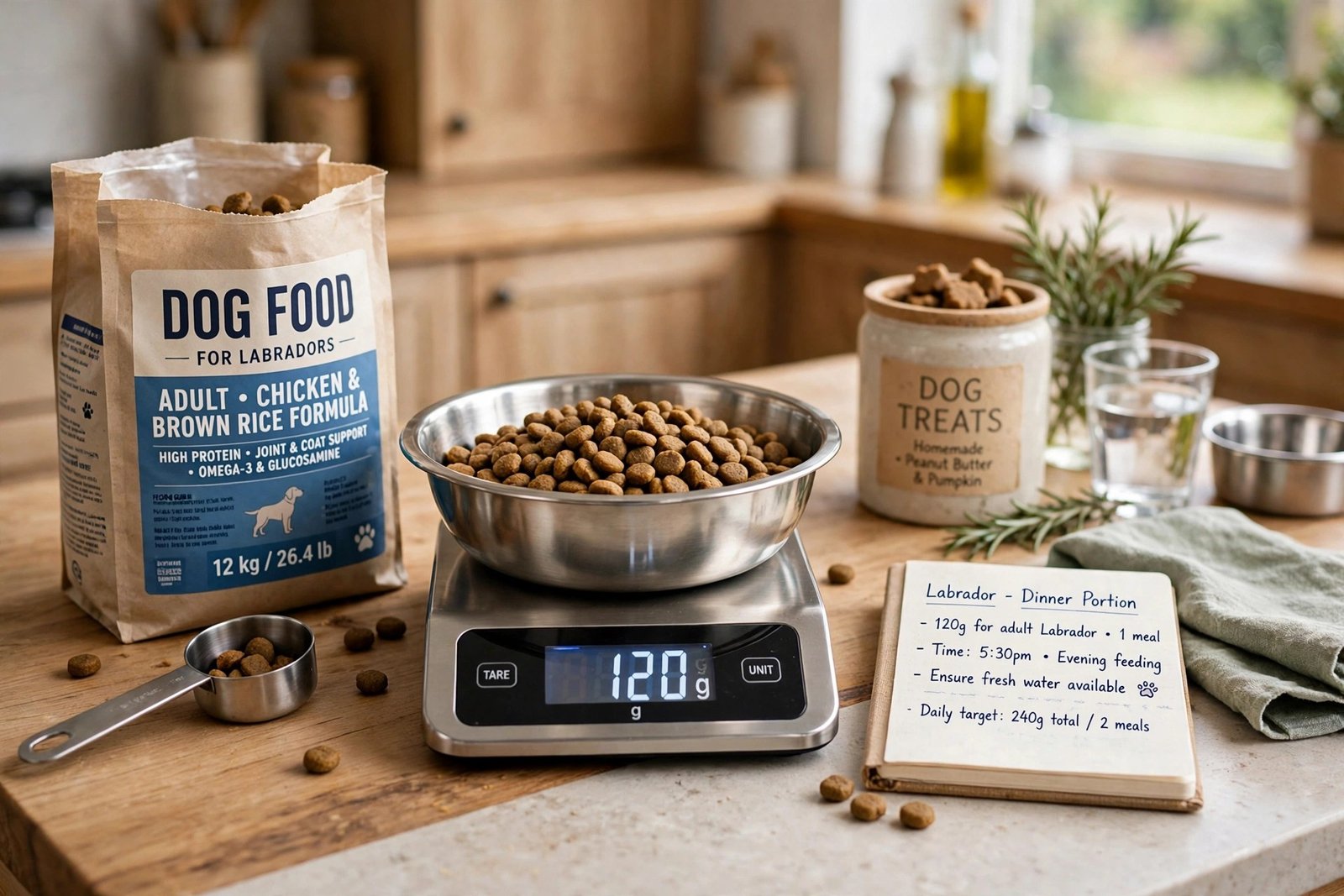
- Weigh the food, every meal. Use a kitchen scale and grams, not a scooped cup — cup portions routinely drift 20% or more over target.
- Feed for the target weight, not the current weight. Your vet can set an ideal weight; then follow the food’s guide for that weight (or ask the vet for a daily calorie target).
- Count everything. Treats, chews, dental sticks, training rewards and kitchen scraps all count toward the daily total. Keep extras under 10% of daily calories — swap in green beans, cucumber or a few pieces of their own kibble from the measured ration.
- Two measured meals a day, at consistent times, with nothing left down for grazing.
- Weigh your dog every 2–4 weeks. Safe loss is roughly 1–2% of body weight per week. No progress after a month? Reduce the ration slightly or review the plan with your vet.
A Sample Week on a Labrador Weight-Loss Plan
Seeing the whole week laid out helps the plan survive contact with real life. This example assumes a vet-set target and a daily calorie allowance (your vet will give you the number for your dog); the pattern matters more than the specifics.
| Day | Meals | Extras and activity |
|---|---|---|
| Monday | Two weighed weight-control meals | Kibble from the ration for training; 40-minute walk |
| Tuesday | Two weighed meals | Green beans as a low-calorie topper interest; 45-minute walk plus 10 minutes of fetch |
| Wednesday | Two weighed meals | Weigh-in day (fortnightly); sniffy woodland walk |
| Thursday | Two weighed meals | Puzzle feeder for one meal; 40-minute walk |
| Friday | Two weighed meals | Swimming session if available; keep treats inside the ration |
| Saturday | Two weighed meals | Longer family walk; no “weekend extras” outside the allowance |
| Sunday | Two weighed meals | Rest-day activity level; prepare and weigh the week’s treat allowance |
The unglamorous secrets are consistency and household agreement: everyone in the home must know the ration, the treat rules and the fact that the dog has already been fed — a shared note on the fridge door prevents the classic Labrador double dinner.
How to Read the Label on a Weight-Control Food
- Calories per cup or per 100 g is the number that decides everything. Compare brands by this, not by the size of the portion they suggest.
- Protein percentage should stay strong even as fat is reduced; a food that cuts protein alongside calories risks muscle loss.
- Fibre sources such as beet pulp, pea fibre, cellulose or pumpkin indicate the food is designed for satiety, not merely diluted.
- Feeding guides are written per target weight. Many bags include a separate, reduced column for weight loss — use that one, and confirm the daily total with your vet.
- Beware the “light” claim alone. It only means lower in calories than that brand’s standard food; it may still be denser than another brand’s ordinary recipe.
Pros and Cons of the Main Approaches
Purpose-made weight-control kibble — pros: complete nutrition at reduced calories, satiating fibre, easy to weigh and store. Cons: less exciting to some dogs, and premium lines cost more than standard food.
Wet weight-control food — pros: big, satisfying portions for few calories thanks to the water content; very palatable. Cons: cost per day for a 30 kg dog is high, and opened tins need fridge space and quick use.
Simply feeding less of a regular food — pros: no new purchase, fine for shedding a small surplus. Cons: at large reductions your dog gets proportionally fewer vitamins, minerals and protein, and hunger tends to be worse because regular food lacks satiety fibre.
Veterinary metabolic diets — pros: the most structured option, with strong satiety design and guidance materials; often succeed where other diets stall. Cons: prescription cost and availability through your vet.
Exercise and Lifestyle
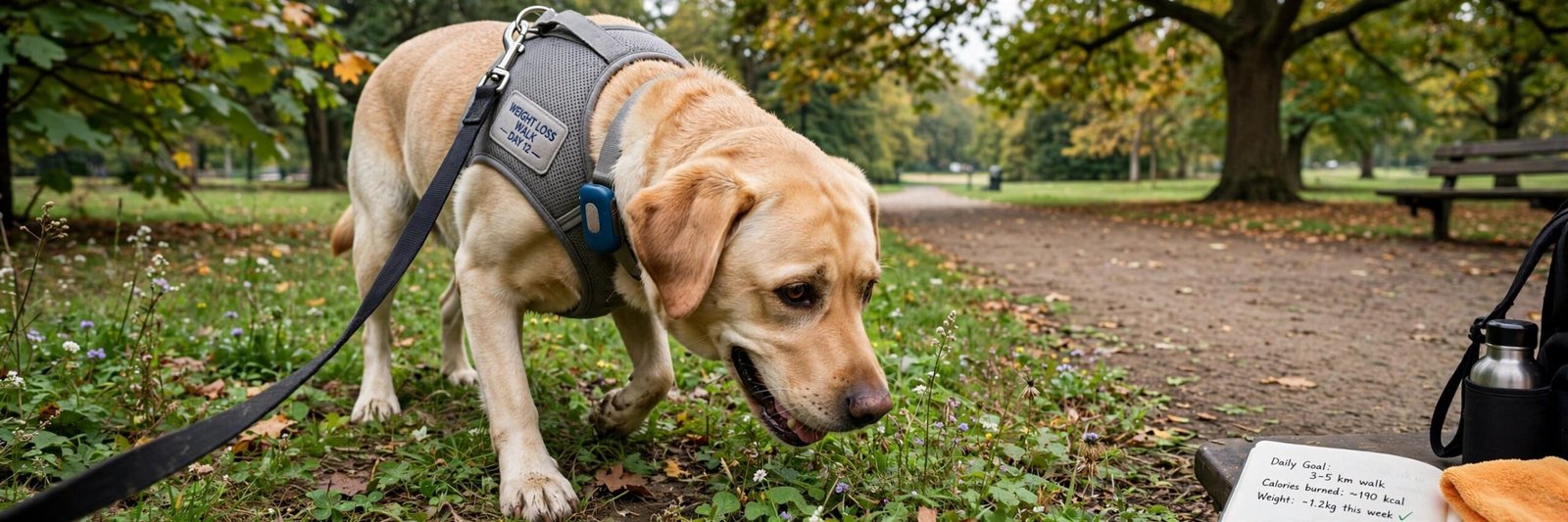
Food does the heavy lifting, but activity protects muscle and mood. Build up gradually: overweight, unfit Labs should add minutes of walking week by week rather than launching into hill sprints. Swimming is ideal for Labs — low impact on joints and they rarely need persuading. Scatter feeding, snuffle mats and puzzle feeders slow down eating and add mental exercise for a dog whose world revolves around food.
Body Condition Scoring: Know Your Starting Point
Before changing anything, learn to score your dog honestly. On the widely used 9-point body condition scale, an ideal dog sits around 4–5: ribs felt easily under a thin fat cover, a clear waist seen from above and the side, and a tummy that tucks up behind the ribs. At 6 the ribs take a firmer press to feel; at 7 the waist is barely visible; at 8–9 ribs are hard to find and the dog looks barrel-shaped — the classic overweight Labrador silhouette. Ask your vet or vet nurse to score your dog at the start and to set the target weight from that score; it converts “he needs to lose a bit” into a number you can track. Re-score monthly at weigh-ins. Many owners are genuinely surprised by the starting score, and knowing it honestly is what turns a vague intention into a plan that works.
Keeping the Weight Off After the Diet
Reaching the target is only the halfway point — Labradors regain enthusiastically. Move gradually from weight-loss portions to a maintenance amount (often roughly 10–20% more than the dieting ration) over a couple of weeks, then keep weighing monthly forever, not just during the diet. Stay on the weight-control food or another lean, high-protein recipe if it suits your dog; keep the treat rules, the fridge-door note and the kitchen scale in place. A two-kilo creep is easy to reverse; waiting until it is eight kilos is how the whole journey starts again. Build the fun parts in permanently too — the sniffy walks, swimming and puzzle feeders that made the diet bearable are simply a better life for a Labrador, whatever the scales say.
Handling Special Occasions Without Wrecking the Plan
Birthdays, Christmas, training classes and well-meaning relatives are where Labrador diets go to die. Plan for them instead of pretending they will not happen. For celebrations, prepare a dog-safe “special” from inside the ration — a portion of their wet food frozen into a puzzle toy, or a small handful of their kibble scattered in the garden to hunt for — so your dog joins the fun without a calorie ambush. At training classes, bring weighed kibble from the day’s allowance rather than the rich treats everyone else is using. Brief family and visitors kindly but firmly: the dog is on a vet-supervised diet, and the kindest treat is a game or a fuss, not a biscuit. One slipped sausage will not ruin a diet, but a household culture of slipping them will.
Frequently Asked Questions
My Lab acts starving all the time. Is the diet cruel?
No — but it is very Labrador. The hunger is partly genetic and partly habit. High-protein, high-fibre food, puzzle feeders and splitting the ration into smaller, more frequent meals all help a Lab feel fed.
Can I just feed less of my dog’s current food?
For a small amount of weight, modestly reducing a complete food can work short term. For real weight loss, a weight-control formula is better — it keeps protein and nutrients up while calories come down.
Are “light” treats actually light?
Check the calories per treat on the packet; some marketed light treats are surprisingly dense. Vegetables like carrot batons and green beans are genuinely low-calorie for most dogs.
How long will it take my Lab to reach target weight?
At a safe 1–2% of body weight per week, losing 5 kg can take several months. Steady, slow loss is healthier and far more likely to stay off.
Should I worry if weight isn’t coming off?
Yes — persistent failure to lose despite accurate portions deserves a vet visit to rule out issues like an underactive thyroid and to consider a prescription metabolic diet.
Can an overweight Lab still have chews?
Yes, if they are counted. Choose low-calorie options, give them a few times a week rather than daily, and subtract their calories from the day’s meals. Long-lasting fatty chews and pig’s ears are calorie bombs — save them for rare occasions or drop them during the diet.
Is it safe to put a senior or arthritic Lab on a diet?
Generally yes, and weight loss is one of the kindest things you can do for arthritic joints — but start with a vet check. Senior dogs need their protein kept up to protect muscle, and your vet may combine the diet with joint support and pain management.
My Lab keeps stealing food. How do I manage that?
Management beats willpower with this breed: use child locks or closed doors for bins and cupboards, never leave food unattended at dog height, and feed the dog before family meals so the begging is at least fuelled by a full stomach. Tell visitors the rules — one slipped sandwich can be a day’s calories.
Do I need special scales to weigh my dog at home?
Not necessarily. Weigh yourself holding the dog, then subtract your own weight, on ordinary bathroom scales — accurate enough to track the trend. For very large or wriggly dogs, most vet clinics will happily let you use their walk-on scales free of charge between appointments; just ask.
Can I exercise my overweight Lab more instead of cutting food?
Exercise helps fitness and mood, but it rarely outruns the bowl: a typical walk burns surprisingly few calories compared with what a small ration cut achieves. Food control does the heavy lifting; exercise protects muscle, joints and sanity while the weight comes down.
Conclusion
The best food for an overweight Labrador is a high-protein, fibre-rich weight-control formula, weighed precisely and fed for the dog they should be — not the dog the Labrador believes it is. Combine accurate portions, low-calorie treats, gradual exercise and regular weigh-ins, and most Labs reach a healthier shape within months. Your vet is the ideal partner in the plan, especially before starting if your dog has joint problems or other health conditions.