

Plenty of owners look for dog food without chicken or grains. Chicken is one of the more common protein sensitivities in dogs, and some dogs simply do better without grains in the bowl — while other owners just prefer to cook with vegetables and alternative proteins. Whatever your reason, home cooking makes it easy to control exactly what goes in.
Below are two complete-style recipes: a beef and vegetable bowl, and a gentle white fish dinner. Both skip chicken and all grains (no rice, oats, wheat, barley or corn), and both freeze well for batch cooking.
An important note: grain-free feeding is a personal choice, not a medical necessity for most dogs, and regulators have investigated possible links between some grain-free diets and heart health. If your dog has a diagnosed heart condition, a true grain allergy, or any ongoing medical issue, talk to your vet before feeding grain-free long term. For long-term home cooking, ask your vet about a canine vitamin and mineral supplement, because meat and vegetables alone are low in calcium and some trace nutrients.
Recipe 1: Beef, Sweet Potato and Vegetable Bowl
A hearty, everyday recipe that suits most healthy adult dogs.
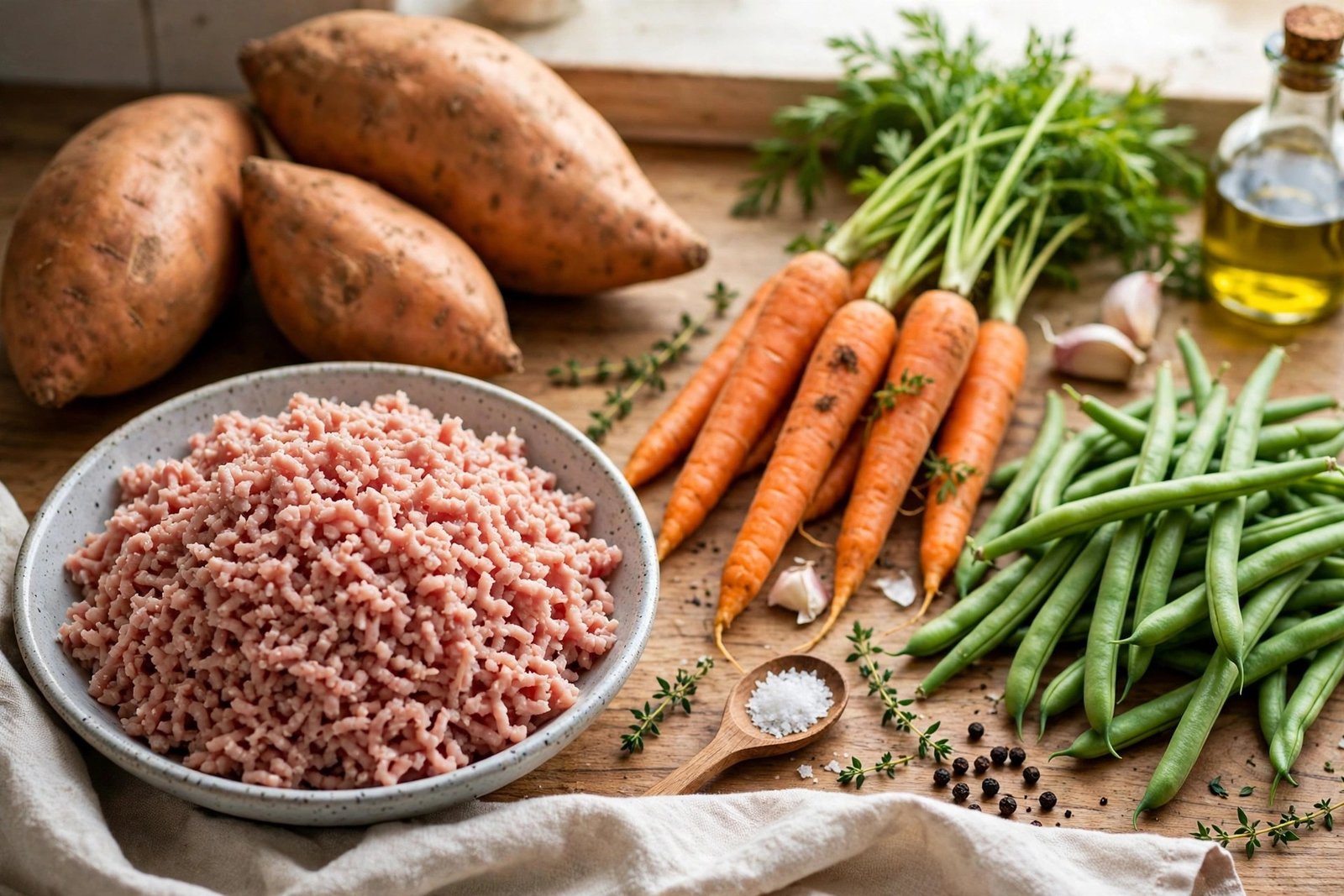
Ingredients (makes about 2 kg / roughly 9 cups)
- 900 g (2 lb) lean ground beef — about 4 cups raw
- 600 g (1.3 lb) sweet potatoes, peeled and diced — about 4 cups
- 250 g (9 oz) green beans, chopped — about 2 cups
- 200 g (7 oz) carrots, diced — about 1½ cups
- 150 g (5 oz) courgette (zucchini), diced — about 1 cup
- 500 ml (2 cups) water
- 1 tablespoon (15 ml) sunflower oil or salmon oil
- 1 teaspoon finely ground eggshell powder, or a vet-recommended canine multivitamin
Method
- Brown the beef (8–10 minutes). Cook the ground beef in a large pot over medium heat, breaking it into small crumbles, until no pink remains (71°C / 160°F). Drain off the excess fat.
- Add vegetables and water. Return the beef to the pot with the sweet potatoes, carrots, green beans, courgette and water.
- Simmer (20 minutes). Cover and simmer gently for about 20 minutes, until the sweet potato is completely soft.
- Cool and finish. Let the food cool until just warm, then stir in the oil and eggshell powder or supplement. Mash lightly for a softer texture if your dog prefers it.
- Portion and store. Serve once fully cooled to room temperature. Refrigerate for up to 3–4 days or freeze portions for up to 3 months.
Recipe 2: Gentle White Fish and Vegetable Dinner
Fish is naturally chicken-free, easy to digest and rich in skin-friendly omega-3 oils. This is a good option for dogs with sensitive stomachs.
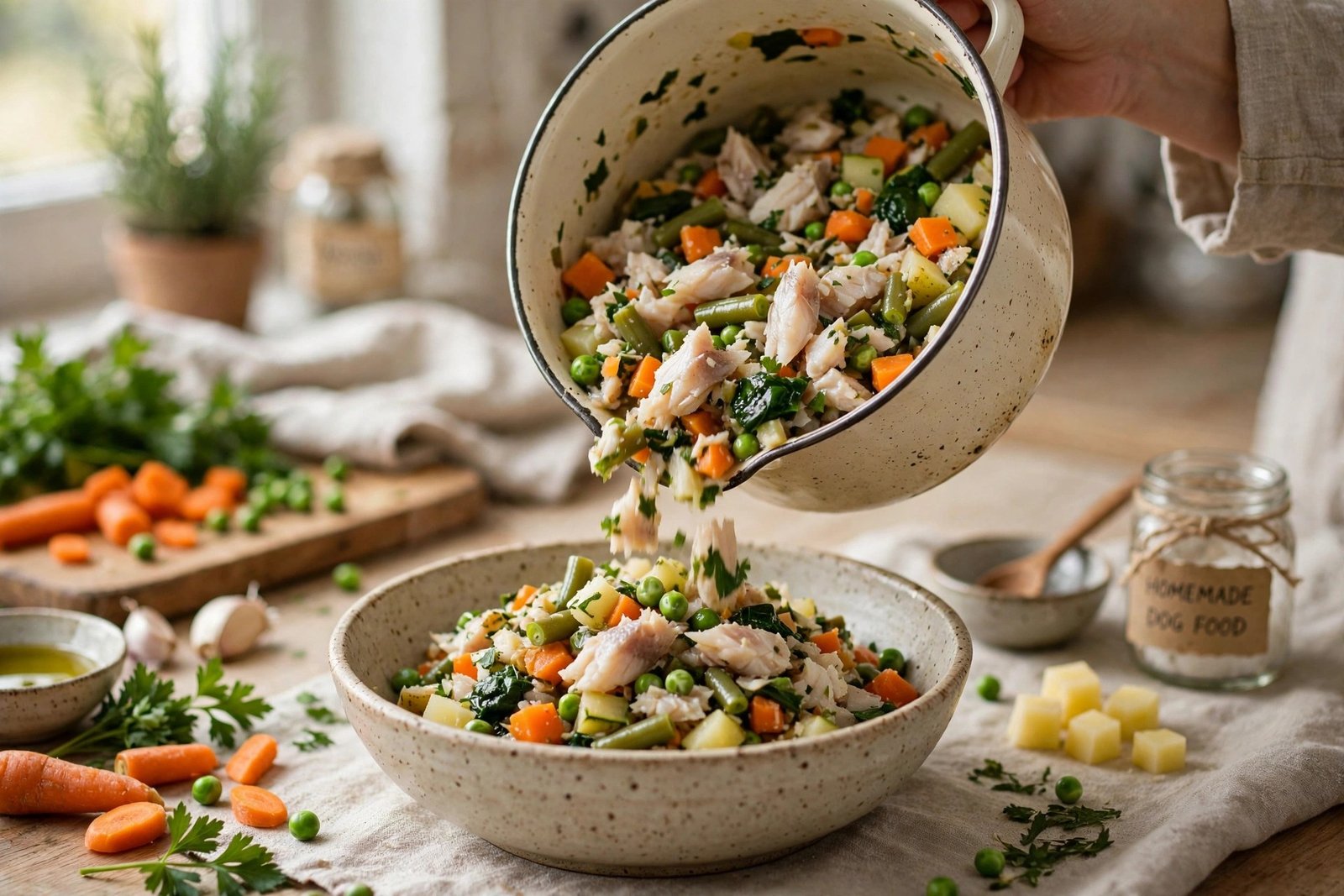
Ingredients (makes about 1.6 kg / roughly 7 cups)
- 800 g (1.75 lb) boneless, skinless white fish fillets (cod, haddock or pollock) — about 4 cups of chunks
- 500 g (1.1 lb) butternut squash or pumpkin, peeled and diced — about 3½ cups
- 200 g (7 oz) green beans or peas — about 1½ cups
- 150 g (5 oz) carrots, diced — about 1 cup
- 1 tablespoon (15 ml) olive oil or salmon oil
- 500 ml (2 cups) water
- 1 teaspoon finely ground eggshell powder, or a vet-recommended canine multivitamin
Method
- Simmer the vegetables (12–15 minutes). Put the squash, carrots and water in a large pot, bring to a gentle boil, then simmer until the vegetables are nearly soft.
- Add the fish (8–10 minutes). Lay the fish fillets on top of the vegetables, cover and cook on low heat for 8–10 minutes, until the fish flakes easily and is opaque all the way through.
- Check carefully for bones. Lift out the fish and run your fingers over every piece to remove any stray bones — this step matters, even with “boneless” fillets.
- Combine. Flake the fish back into the pot with the green beans or peas, stir gently and cook 3 more minutes.
- Cool and finish. Cool to room temperature, stir in the oil and supplement, and portion. Refrigerate up to 3 days (fish recipes keep slightly less time than beef) or freeze for up to 2–3 months.
Recipe 3: Turkey and Pumpkin Bowl
Turkey is the classic chicken alternative — similar in style, but a different protein that many chicken-sensitive dogs tolerate well. Pumpkin is gentle on the stomach and helps keep stools firm.
Ingredients (makes about 1.8 kg / roughly 8 cups)
- 800 g (1.75 lb) lean ground turkey — about 3½ cups raw
- 500 g (1.1 lb) pumpkin or butternut squash, peeled and diced — about 3½ cups (or 400 g / about 1¾ cups plain tinned pumpkin, unsweetened)
- 250 g (9 oz) green beans, chopped — about 2 cups
- 150 g (5 oz) carrots, diced — about 1 cup
- 100 g (3.5 oz) spinach, roughly chopped — about 3 loosely packed cups
- 500 ml (2 cups) water
- 1 tablespoon (15 ml) sunflower oil or salmon oil
- 1 teaspoon finely ground eggshell powder, or a vet-recommended canine multivitamin
Method
- Cook the turkey (8–10 minutes). Brown the ground turkey in a large pot over medium heat, breaking it into crumbles, until it is fully cooked with no pink remaining — poultry should reach 74°C (165°F). Drain any excess liquid fat.
- Add the vegetables and water. Stir in the pumpkin, carrots and green beans with the water.
- Simmer (15–18 minutes). Cover and cook gently until the pumpkin and carrots are completely soft.
- Add the spinach (2 minutes). Stir in the spinach at the very end; it wilts down in a couple of minutes in the residual heat.
- Cool and finish. Cool to room temperature, stir in the oil and eggshell powder or supplement, and mash lightly if your dog prefers a softer texture.
- Portion and store. Refrigerate for up to 3–4 days or freeze in daily portions for up to 3 months.
Other Chicken-Free, Grain-Free Proteins to Rotate
Variety helps cover nutrient gaps. Safe proteins to rotate through include turkey (boneless, skinless), lamb, pork (lean, well cooked), duck, venison, eggs (cooked) and tinned sardines in water (no added salt where possible), always paired with dog-safe vegetables such as sweet potato, pumpkin, carrots, green beans, courgette and spinach in modest amounts.
Ingredients to Always Avoid
Never include onion, garlic, leek or chives (toxic to dogs), grapes or raisins, chocolate, macadamia nuts, xylitol (birch sugar), cooked bones, alcohol, or salty processed meats. Also skip chilli and heavy spices — plain is best for dogs.
Feeding Amounts
As a starting guide, feed roughly 2–3% of your dog’s body weight per day across two meals. Some worked examples using these recipes:
- 5 kg (11 lb) dog: about 125–150 g (roughly ⅔ cup) per day
- 10 kg (22 lb) dog: about 250–300 g (roughly 1⅓ cups) per day
- 20 kg (44 lb) dog: about 450–600 g (roughly 2½–3 cups) per day
- 30 kg (66 lb) dog: about 650–850 g (roughly 3½–4 cups) per day
Adjust by body condition over two weeks: ribs should be easy to feel under a thin fat cover, and your dog should have a visible waist from above. Very active dogs may need the top of the range or a little more; older, less active dogs often need less. Weigh portions with a kitchen scale at first — cups of home-cooked food vary a lot depending on how firmly they are packed.
Transition from the old food over 7–10 days to avoid stomach upsets: roughly 25% new food for two or three days, then 50%, then 75%, then all new food. For a dog already known to have a sensitive stomach, stretch the changeover to a full two weeks.
Keeping a Home-Cooked Diet Balanced
The recipes above are designed to be complete-style meals, but three habits make the difference between a treat and a trustworthy long-term diet:
- Always include the calcium source. Meat is high in phosphorus and low in calcium, and over time that imbalance can weaken bones. The eggshell powder (finely ground, from clean baked shells, as described in many home-cooking guides) or a proper canine multivitamin-mineral supplement is not optional for everyday feeding.
- Include the oil. The tablespoon of oil is small but important: it provides essential fatty acids for skin, coat and overall health. Salmon oil is a particularly good choice for skin-prone dogs.
- Rotate sensibly. Using two or three of these recipes in rotation across the month covers more nutritional bases than one recipe alone — as long as each new protein is introduced gradually and your dog tolerates it.
- Weigh and watch. Weigh your dog monthly, note coat condition and stools, and review the diet with your vet once or twice a year. If your dog is fed home-cooked food exclusively, tell your vet so it is on the record.
Batch Cooking and Storage Tips
These recipes are built for batch cooking. A practical routine: cook two recipes on a Sunday, portion them into daily containers, keep 3 days’ worth in the fridge and freeze the rest. Label freezer containers with the recipe name and date — frozen home-cooked food all looks alike after a month.
Thaw portions in the fridge overnight, or in a bowl of cool water if you forget. Serve at room temperature or very slightly warmed; never serve piping hot, and avoid microwaving unevenly, which creates hot spots. Once thawed, use the food within 24 hours and never refreeze it. Any food left in the bowl for more than an hour should be thrown away, and bowls should be washed daily — home-cooked food spoils faster than kibble once served.
For food safety in the kitchen, treat your dog’s ingredients like your own: wash hands and boards after handling raw meat, cook poultry and pork thoroughly, keep raw and cooked foods separate, and refrigerate the finished batch within about two hours of cooking.
Frequently Asked Questions
Why do owners avoid chicken for their dogs?
Chicken is a common protein in dog food, so it is also one of the proteins dogs most often develop sensitivities to. Signs can include itchy skin, recurring ear problems or loose stools. A vet-guided elimination trial is the surest way to confirm a chicken sensitivity.
Are grains actually bad for dogs?
For most dogs, no — grains are a normal, digestible energy source and true grain allergies are uncommon. These recipes simply serve owners and dogs who do better without them or prefer to avoid them.
Can I swap the beef for turkey or lamb?
Yes, using the same weight. Keep the cooking method the same, and always cook poultry and pork thoroughly. Rotate proteins over time if your dog tolerates them.
How do I make sure a homemade grain-free diet is balanced?
Use the eggshell powder or a proper canine multivitamin-mineral supplement, include a quality oil for essential fatty acids, rotate proteins and vegetables, and review the diet with your vet at least once or twice a year.
Can puppies eat these recipes?
Not as a main diet. Puppies need precisely balanced calcium and extra calories for growth, so use a complete puppy food or a vet-designed puppy recipe instead.
Can I make these recipes in a slow cooker?
Yes, both the beef bowl and the turkey bowl adapt well. Brown the meat in a pan first and drain it, then add everything except the oil and supplement and cook on low for 4–5 hours, until the vegetables are completely soft. Stir in the oil and supplement after cooling slightly. The fish recipe is better on the stove, because fish overcooks and falls apart badly in a slow cooker.
What can I use instead of eggshell powder?
A commercial calcium powder made for dogs, or a complete canine multivitamin-mineral supplement dosed per the label, both work. Crushed human calcium tablets are harder to dose accurately for dogs, so ask your vet before using them. What matters is that some measured calcium source is included every day for long-term feeding.
My dog has both chicken sensitivity and kidney problems. Can I use these recipes?
Please do not use these recipes as a main diet in that situation. Kidney disease changes protein and phosphorus requirements significantly, and dogs with medical conditions need a diet designed for them. Ask your vet about a prescription renal diet or a vet-formulated home recipe instead.
Conclusion
Cooking without chicken or grains is straightforward once you build meals around other quality proteins — beef, turkey, lamb and fish — plus filling, dog-safe vegetables like sweet potato and squash. Batch-cook, freeze portions, add a supplement for balance, and keep your vet in the loop. Your dog gets tasty, transparent meals, and you get full control over every ingredient in the bowl.