

Few smells make a dog appear in the kitchen faster than peanut butter biscuits in the oven. These homemade dog treats use just a handful of wholesome ingredients — oats, peanut butter, banana and egg — and they are easy enough for a first-time baker. You control everything that goes in: no mystery fillers, no artificial colours, and no added sugar or salt.
One safety rule matters above all others: always check your peanut butter label for xylitol (also listed as birch sugar or E967). Xylitol is extremely toxic to dogs, even in small amounts. Choose a peanut butter that contains only peanuts (and at most a little salt), with no sweeteners.
Choosing Safe Peanut Butter: A Closer Look
Peanut butter is the one ingredient in this recipe that deserves real care, because the wrong jar can be dangerous. Here is how to shop for it confidently.
- Read the ingredient list every single time. Manufacturers change recipes without changing the front of the jar. The safe choices have an ingredient list that reads simply “peanuts” or “peanuts, salt.”
- Know xylitol’s other names. It may be listed as xylitol, birch sugar, wood sugar or E967. It appears most often in “sugar-free,” “low-sugar” and some protein or keto-style spreads. Even a small amount can cause a dangerous drop in a dog’s blood sugar, and larger amounts can damage the liver. If a jar mentions any of these, do not use it for your dog — ever.
- Avoid chocolate spreads entirely. Chocolate-hazelnut and chocolate-peanut spreads combine two problems: chocolate is toxic to dogs, and these spreads are loaded with sugar and oil.
- Smooth or crunchy? Both are fine for most dogs. Crunchy peanut butter just adds peanut pieces, which give a nice texture to the finished biscuits.
- What about palm oil and salt? Many ordinary peanut butters contain palm oil and a little salt. In treat quantities, these are not a safety issue for a healthy dog, though a natural, stir-the-oil-in style peanut butter with no added anything is the cleanest option if your dog likes it.
- When in doubt, leave it out. If you cannot verify a jar is xylitol-free, do not bake with it. The apple and pumpkin variations below work beautifully without any peanut butter at all.
Store your dog’s peanut butter like any opened spread, and give the jar a dedicated spoon if the household also uses sweetened spreads — cross-scooping a “safe” spoon into a sugar-free jar by mistake is an easy household accident to prevent.
Why These Ingredients Work for Dogs
- Oats are a gentle, soluble-fibre grain that most dogs digest easily, including many dogs who do not do well on wheat.
- Peanut butter provides protein, healthy fats and the flavour dogs adore — but it is calorie-dense, so these are treats, not meals.
- Banana adds natural sweetness, potassium and binding moisture without refined sugar.
- Egg holds the dough together and adds protein and shine-friendly nutrients.
Treats of any kind should make up no more than about 10% of your dog’s daily calories. For a medium dog, that usually means one or two of these biscuits a day, depending on size.
Ingredients
This recipe makes about 30 medium biscuits (roughly 4–5 cm / 2 inches each).
- 270 g (3 cups) rolled oats, plus a little extra for rolling out — or use oat flour if you have it
- 130 g (½ cup) unsweetened, xylitol-free peanut butter
- 1 ripe banana (about 120 g / just over ½ cup mashed)
- 1 large egg (about 50 g)
- 2–4 tablespoons (30–60 ml) water, only if the dough feels dry
Makes: about 30 biscuits | Prep time: 15 minutes | Bake time: 25–30 minutes | Cooling/drying: at least 30 minutes
Step-by-Step Method
- Heat the oven. Preheat to 175°C (350°F). Line a large baking tray with baking paper.
- Make the oat flour (3 minutes). Blitz about two-thirds of the rolled oats (180 g / 2 cups) in a blender or food processor until they form a coarse flour. This helps the biscuits hold together. Leave the remaining oats whole for texture. If you bought oat flour, skip this step and use 270 g (3 cups) of it in place of all the oats.
- Mash the banana (2 minutes). In a large bowl, mash the banana thoroughly with a fork until almost smooth.
- Mix the wet ingredients (2 minutes). Stir the peanut butter and the egg into the banana until evenly combined.
- Form the dough (3 minutes). Add the oat flour, the whole oats, and mix with a spoon, then your hands, until a firm dough forms. If it is crumbly, add water one tablespoon at a time. The dough should hold together without sticking badly to your hands.
- Rest the dough (10 minutes). Leave the dough to stand for 10 minutes. The oats absorb moisture and the dough becomes much easier to roll.
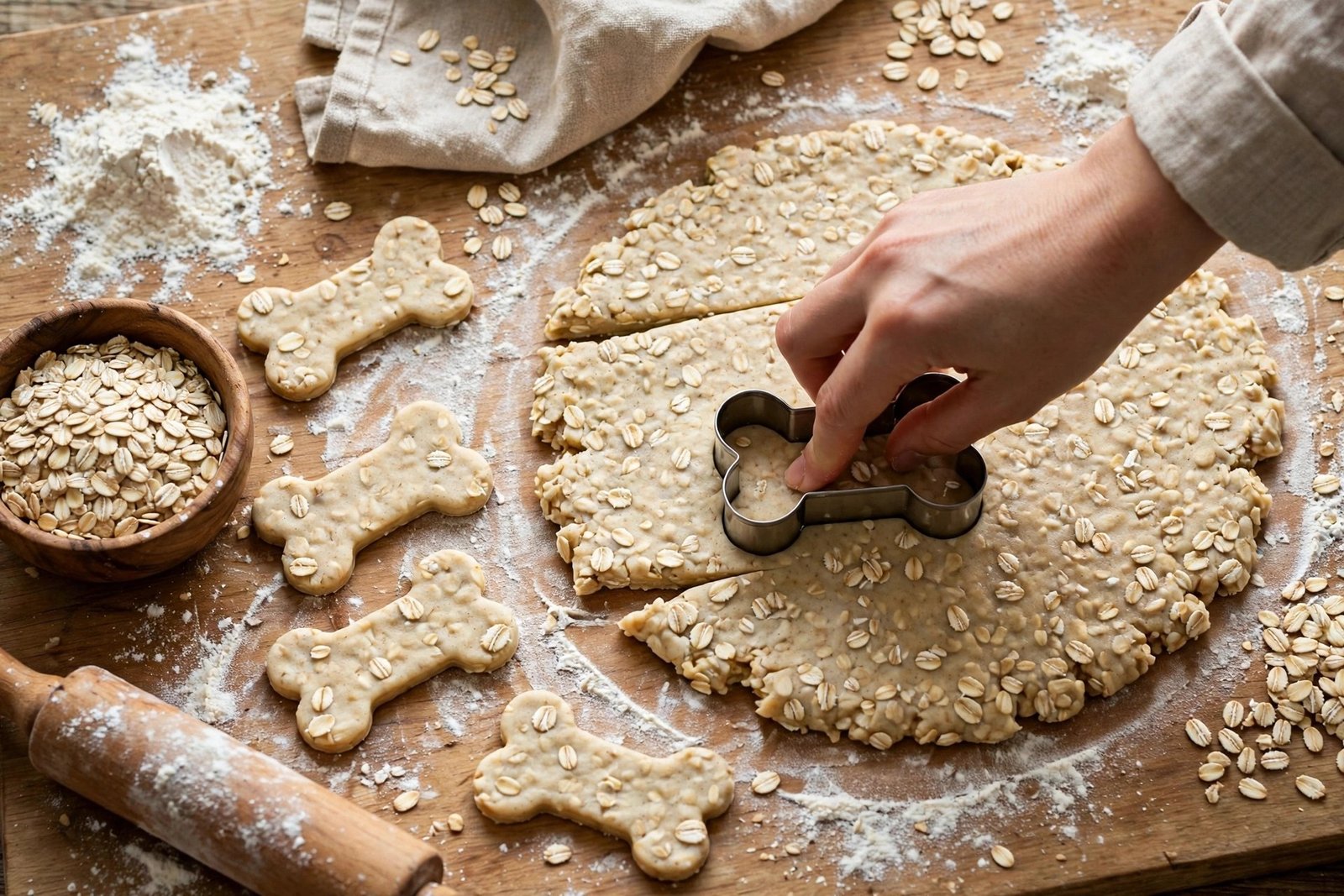
- Roll and cut (5 minutes). On a surface dusted with oat flour, roll the dough to about 6 mm (¼ inch) thick. Cut out shapes with a bone-shaped cutter, or simply slice into squares with a knife. Gather and re-roll scraps.
- Bake (25–30 minutes). Arrange the biscuits on the tray — they can sit close together as they do not spread. Bake for 25–30 minutes until firm and lightly golden underneath.
- Dry for crunch (optional, 1–2 hours). For a crunchier, longer-keeping biscuit, turn the oven off and leave the biscuits inside with the door slightly open as it cools. Crunchier treats are also better for keeping.
- Cool completely. Transfer to a wire rack and cool fully before treating your dog or storing.
How Many Treats Per Day? A Portion Guide
A medium biscuit from this recipe contains roughly 35–45 kcal, depending on thickness and how generously you rolled the dough. Treats work best inside the common guideline that treats make up no more than about 10% of daily calories:
- Small dog (5 kg, roughly 400 kcal/day): treats budget about 40 kcal — about 1 biscuit per day, or a few mini bites.
- Medium dog (15 kg, roughly 900 kcal/day): treats budget about 90 kcal — about 2 biscuits per day.
- Large dog (30 kg, roughly 1,400 kcal/day): treats budget about 140 kcal — about 3 biscuits per day.
On days with lots of training rewards, trim the main meals very slightly to compensate, or use the mini training-bite variation, which delivers the same flavour for a fraction of the calories per reward. Puppies and dogs on weight-management plans sit at the low end of these numbers — and for overweight dogs, remember that the kindest treat is often smaller than you think; half a biscuit still tastes like a whole one to the dog.
Troubleshooting Your Bake
- The dough is too sticky to roll. Your banana was large or the peanut butter oily. Work in extra oat flour a tablespoon at a time, or chill the dough in the fridge for 20–30 minutes — cold dough rolls far more obediently.
- The dough is dry and crumbly. Add water one tablespoon at a time (the recipe allows 2–4 tablespoons). Different oat brands absorb differently, and a small, firm banana gives less moisture.
- Biscuits are browning too fast on top. Your oven runs hot, or the tray is too high. Move the tray to a lower shelf and reduce the temperature by 10°C (about 25°F) next time. A pale gold colour is what you want — dark brown means bitter edges.
- Biscuits crumble when handled. They were rolled a little thin or under-baked. Bake a few minutes longer and use the drying step; slightly thicker biscuits (about 6 mm) hold together best.
- The biscuits went soft in the jar after two days. They were not dried enough before storing, or the jar was sealed while they were still warm. Return them to a low oven (120°C / 250°F) for 15–20 minutes to re-crisp, cool fully, then store. If any show mould or smell off, throw the batch away — do not just pick out the bad ones.
Storage Notes
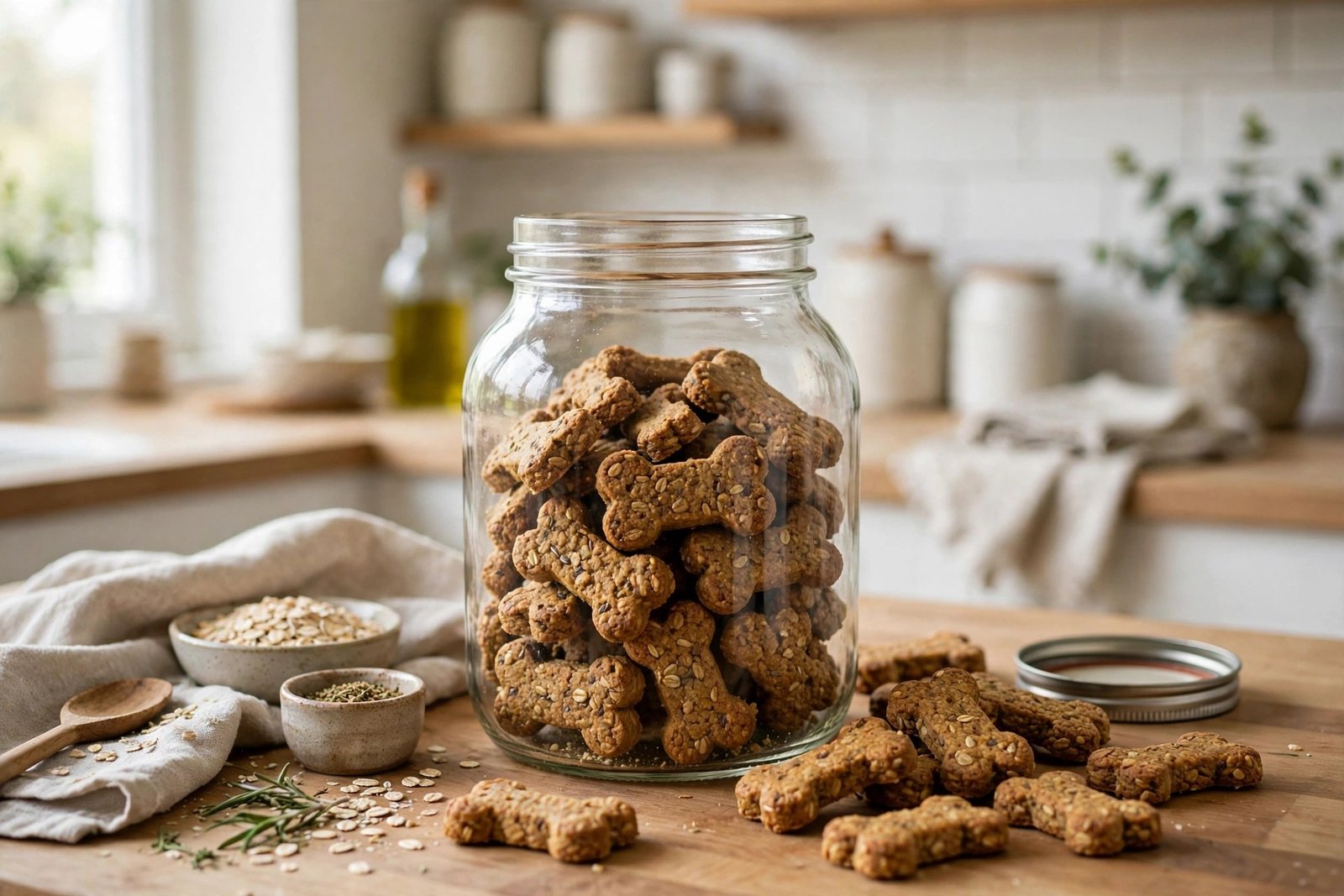
- Counter/jar: In an airtight container at room temperature, the biscuits keep for up to 1 week (up to 2 weeks if dried thoroughly in step 9).
- Fridge: Up to 2–3 weeks in a sealed container.
- Freezer: Up to 3 months. Thaw individual biscuits at room temperature for about 30 minutes.
- Safety check: Discard any biscuits that smell off, feel soft and damp after drying, or show mould. Softer, under-dried biscuits spoil fastest.
Easy Variations
- Apple and oat: Replace the banana with 120 g (½ cup) unsweetened applesauce.
- Pumpkin spice (dog-safe): Replace the banana with 120 g (½ cup) plain pumpkin purée and add ½ teaspoon of ground cinnamon. Never use nutmeg for dogs.
- Carrot crunch: Fold in 50 g (½ cup) finely grated carrot before rolling.
- Smaller training bites: Roll the dough into pea-sized balls and bake for 12–15 minutes instead — perfect for training sessions.
- No-bake version for hot days: Mix the same ingredients (using oat flour), roll into small balls and refrigerate for at least 2 hours. They are softer, so keep them in the fridge and use within 4–5 days.
- Birthday bones: Press the dough into a silicone bone mould or cut larger bones and bake 5 extra minutes — a prettier gift for a dog-owning friend, with the ingredient list written on the tag.
Using These Treats for Training
Because these biscuits are dry and crumbly rather than soft, they shine as household rewards, crate treats and “good dog” moments more than as rapid-fire training rewards. For training sessions, the mini-bite variation is the right tool: bake a tray of pea-sized pieces, keep them in a pouch, and you can reward twenty recalls without blowing the day’s treat budget. Break larger biscuits into fragments for puzzle toys and snuffle mats, where the peanut butter aroma makes the game irresistible. One caution for classes and group training: peanut allergies exist in people too, so if you train around others, it is courteous to mention your treats contain peanuts.
Frequently Asked Questions
How do I know my peanut butter is safe?
Read the ingredients every time, even for a familiar brand, because recipes change. It must not contain xylitol, birch sugar or E967. Plain peanuts-only peanut butter is the safest choice.
Can puppies eat these treats?
Yes, in small amounts once they are eating solid food happily. Break biscuits into tiny pieces for small mouths, and count them within the day’s food so growing tummies are not filled up on treats.
My dog is overweight — can they still have these?
Occasionally and in small pieces, yes, but peanut butter is rich. For dogs on a weight plan, make the mini training-bite version, reduce the daily ration slightly on treat days, and check the plan with your vet.
Can I make these without oats?
You can swap the oats for the same weight of plain flour (270 g / about 2¼ cups) if your dog tolerates wheat — avoid this swap for dogs with grain sensitivities, and remember the dough may need slightly less water.
Why are my biscuits soft in the middle?
They were rolled too thick or under-baked. Roll to 6 mm, bake until firm, and use the low-and-slow drying step (step 9) for a proper crunch.
Can dogs be allergic to peanuts?
True peanut allergy in dogs appears to be uncommon, but any new food can disagree with an individual dog. The first time you bake these, offer one small piece and watch for itching, ear redness, vomiting or loose stools over the next day. If anything appears, stop feeding them and, if symptoms are more than mild, check with your vet.
Can I give these to a dog with diabetes or pancreatitis?
Ask your vet first. These biscuits are moderate in fat and contain natural fruit sugars, which may not fit a prescribed diabetic or very-low-fat pancreatitis plan. Your vet can tell you whether an occasional mini bite is acceptable or whether a plainer treat (such as a few green beans or carrot pieces) is the better reward.
How finely do I need to grind the oats?
A coarse, flour-like grind is enough — a few visible flakes are fine and add texture. You are not aiming for powder-smooth cake flour. If your blender struggles, grind in small batches and shake the jug between bursts.
Conclusion
Oat and peanut butter biscuits are the perfect first homemade dog treat: five simple ingredients, one bowl, and a very motivated taste-tester at your feet. Check the peanut butter label, bake them firm, store them dry, and dish them out as the special reward they are meant to be. Your dog will quickly learn the sound of that treat jar.