

Small dogs often live well into their mid-teens, which means the senior years are a long, important chapter — not a short ending. From around the age of 8–10 (later for some tiny breeds), a small dog’s needs quietly change: joints stiffen, teeth may not be what they were, the metabolism slows, and keeping muscle matters more than ever. The best food for a senior small breed dog supports all of that in a small, easy-to-eat kibble.
This guide explains what to look for, which reputable senior ranges are worth considering, and how to make the switch kindly and safely. If your older dog has kidney disease, heart problems, diabetes or any diagnosed condition, ask your vet before changing food — therapeutic diets take priority over general senior foods.
When Is a Small Dog “Senior”?
Small breeds age more slowly than large ones. As a rough guide:
- Toy and small breeds (up to about 10 kg): senior from around 10–12 years
- Medium-small breeds (10–15 kg): senior from around 8–10 years
Signs that a senior formula may help include slowing down on walks, stiffness after rest, weight gain or loss, duller coat, and more selective eating.
What Senior Small Dogs Need Most
Quality Protein — to Keep Muscle
Older dogs lose muscle more easily, and healthy seniors generally do well on a diet with good-quality, digestible protein — around 24–28% in a dry food from named animal sources. Protein should only be restricted if your vet advises it for a specific condition such as advanced kidney disease.
Joint Support
Glucosamine, chondroitin and omega-3 fatty acids (EPA and DHA from fish oil) are common in senior formulas and help support ageing joints — particularly valuable for small breeds prone to knee and back issues, such as Dachshunds, Shih Tzus and Yorkies.
Controlled Calories with High Nutrient Density
Senior small dogs need fewer calories but the same (or more) nutrients per bite. A senior food typically has slightly reduced fat and added fibre for satiety. Watch the waistline: ribs should be easy to feel, and weight gain in an older dog adds strain to joints and the heart.
Small Kibble and Palatability
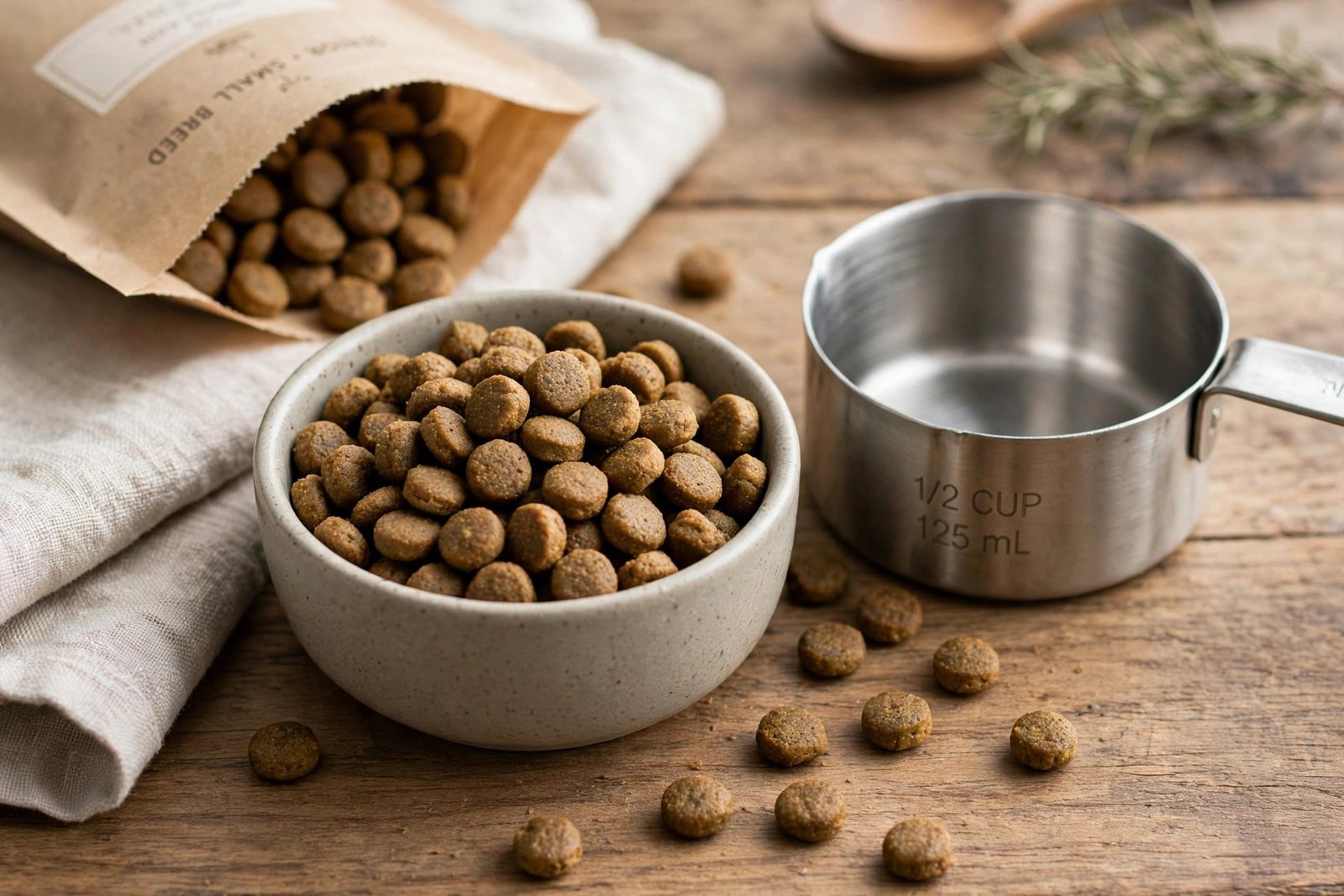
This is where small-breed senior foods earn their keep: tiny kibble pieces that little jaws and ageing teeth can manage, and enhanced aroma and flavour for dogs whose sense of smell and appetite are fading. Wet food or soaked kibble helps dogs with dental problems.
Digestive and Immune Support
Added fibre, prebiotics and probiotics support older digestive systems, while antioxidants such as vitamin E and C help the ageing immune system. Omega oils also keep the coat and skin in better condition.
How to Read a Senior Small-Breed Label
“Senior” on the front of a bag is marketing, not a legal standard, so flip the bag over and check the details.
- Protein figure. In the guaranteed analysis, look for protein around 24–28% in a dry food, from named animal sources in the first ingredients. Some senior foods cut protein hard — that suits a few medical cases but is not ideal for a healthy senior who needs to hold onto muscle.
- Fat and calories. Fat around 10–14% is typical for weight-conscious senior formulas. If your senior is underweight or very active, your vet may steer you to a slightly richer food instead.
- Phosphorus. Responsible senior formulas moderate phosphorus to be kinder to ageing kidneys. The figure is often only available on the brand’s website or by asking — reputable companies publish it.
- Joint ingredients. Glucosamine, chondroitin and fish oil (or named oily fish) in the ingredient list show the joint support is real rather than a front-of-bag claim.
- Kibble size. “Small breed” senior foods genuinely make smaller pieces. If you only have a regular senior food available, check the pieces are small enough — or plan to soak them.
- Life-stage statement. The food should state it is complete and balanced for adult maintenance. Avoid feeding a “senior” treat-style or complementary food as if it were a full diet.
How Much to Feed: Sample Portions
Portions depend on the food’s calorie content, so use these as start points for a typical senior small-breed kibble (around 340–360 kcal per cup), then adjust by body condition.
- 3 kg senior Toy breed (e.g., Chihuahua, Yorkie): about ⅓–½ cup (35–55 g) per day
- 5 kg senior (e.g., Shih Tzu, Maltese): about ½–⅔ cup (55–75 g) per day
- 8 kg senior (e.g., Cavalier, Miniature Schnauzer): about ¾–1 cup (85–110 g) per day
- 12 kg senior (e.g., French Bulldog, larger Cocker): about 1–1¼ cups (110–140 g) per day
Weigh the food — cups of tiny kibble are notoriously easy to overfill, and in a 4 kg dog, an extra 10 g a day is a meaningful overfeed. Split the daily amount into two meals (three smaller meals suit dogs with delicate stomachs or those who get very hungry between feeds). Weigh your dog monthly and aim for stability: ribs easy to feel, a gentle waist, and no rapid change in either direction. Treats should stay inside about 10% of the day’s intake, and senior dogs often do happily with tiny soft treats or a piece of their own kibble as a reward.
Trusted Senior Small-Breed Foods to Consider
- Royal Canin Ageing 12+ (Small Dog) and Royal Canin Mini Ageing — tiny adapted kibble, phosphorus awareness and antioxidants, from a strongly vet-backed brand.
- Hill’s Science Diet Adult 7+ Small & Mini — controlled minerals, omega-6s and vitamin E for skin, coat and immunity.
- Purina Pro Plan Bright Mind Small Breed 7+ — includes enhanced botanical oils designed to support alertness in older dogs, with high-quality protein.
- Eukanuba Senior Small Breed — with beta-carotene, joint-care nutrients and a smaller kibble size.
- Wellness Complete Health Senior Small Breed and IAMS Proactive Health Healthy Aging Small Breed — solid, widely available senior options from established makers.
These are examples of reputable brands with nutrition teams and feeding research behind them. The best one is the formula your dog enjoys, digests well and maintains a healthy weight on — ideally chosen with your vet’s input at a senior health check.
Helping Fragile, Picky or Toothless Seniors Eat Well
Feeding an elderly small dog is often less about the perfect formula and more about making eating easy and appealing.
- Warm the food slightly. Ten seconds of gentle warming (or a splash of warm water on kibble) releases aroma — important because smell fades with age, and smell is what tempts a picky senior to the bowl.
- Soften for sore mouths. Kibble soaked in warm water for 10–15 minutes becomes easy to gum. Dogs who have lost several teeth often manage soaked small kibble or wet food happily, but a sore mouth needs a dental check, not just softer food — dental pain is one of the most common hidden causes of “picky” behaviour in older small dogs.
- Raise the bowl. A stand that lifts the bowl to chest height helps dogs with stiff necks, arthritis or back problems — common in long-backed small breeds — eat in comfort.
- Offer little and often when appetite is fragile. Three or four small meals can succeed where two big ones are refused. Pick the bowl up after 20–30 minutes and offer fresh food at the next mealtime rather than leaving food standing all day.
- Keep mealtimes calm and separate. Feed seniors away from boisterous younger dogs so they can eat slowly without pressure or guarding.
- Watch water as carefully as food. Older dogs dehydrate more easily and dogs with kidney issues drink more. A sudden change in drinking — much more or much less — is a vet conversation, just like a change in appetite.
If your older dog refuses food for more than 24 hours, eats far less for several days, or loses weight steadily, do not simply keep switching brands — book a vet check. In seniors, appetite changes are information about health, not fads about flavour.
Common Mistakes With Senior Feeding
- Switching foods too fast. An abrupt change that a young stomach shrugs off can upset an older one for days. Use the full 10–14 day transition.
- Assuming less protein is always safer. Restricting protein in a healthy senior accelerates muscle loss. Protein restriction is a medical decision, not a default.
- Ignoring the teeth. Feeding softer food forever while dental disease worsens is a kindness that backfires — dental pain itself suppresses appetite and harms overall health.
- Free-feeding an overweight senior. Measured meals matter even more in old age, when metabolism slows and joints object to extra kilos.
- Skipping vet checks because “he’s just old.” Many “old age” changes — weight loss, thirst changes, stiffness, appetite shifts — have treatable causes. Six-monthly senior checks catch them early.
Pros and Cons of Senior Small-Breed Formulas
Pros
- Nutrients targeted at joints, immunity, digestion and ageing organs
- Small kibble that suits little mouths and older teeth
- Calorie control helps prevent senior weight gain
Cons
- Cost more than standard adult food
- Some older dogs are very set in their ways and resist any change
- “Senior” is not a regulated term — you must still read the label rather than trust the bag’s front
How to Choose and Switch
- Book a senior health check first if your dog has not seen a vet in the last year — blood tests can change dietary priorities.
- Check the label for named animal protein early in the ingredients, joint nutrients, and a feeding guide for your dog’s weight.
- Choose the format your dog can eat — dry small kibble, wet trays, or a mix; soak kibble in warm water for sore mouths.
- Transition over 10–14 days — older stomachs appreciate an extra-slow change.
- Monitor monthly: weigh your dog, note appetite and stool quality, and check teeth and gums.
- Feed twice a day in measured meals, and keep fresh water always available — seniors are more vulnerable to dehydration, especially in warm weather.

Frequently Asked Questions
Does every older small dog need senior food?
Not automatically. A fit, healthy 10-year-old who thrives on adult food may not need to change immediately. Senior food becomes valuable when you notice weight shifts, stiffness, lower energy or a fading coat — and your vet can advise at routine checks.
My senior dog is losing weight. What should I do?
Book a vet visit first — weight loss in older dogs can signal dental pain, kidney issues or other illness. If health causes are ruled out, your vet may suggest a more calorie-dense food, smaller more frequent meals, or warming food slightly to release smells and tempt appetite.
Is wet food better than dry for senior small dogs?
It depends on the dog. Wet food is softer for sore teeth and adds hydration, but it is pricier per calorie and worse for dental tartar if it is the only food. Many owners feed a mix. Whatever you choose, keep up with dental care, as dental disease is extremely common in older small breeds.
Should I add supplements to a senior food?
A complete senior food already includes joint nutrients and vitamins. Extra supplements can unbalance the diet or clash with medication, so ask your vet before adding anything beyond perhaps a vet-approved fish oil.
How long do small dogs live, and does food really matter?
Many small breeds live 12–16 years or more. Diet is one of the few factors fully in your control, and maintaining a healthy weight and muscle mass in old age is strongly associated with a better quality of life — so yes, it genuinely matters.
How often should a senior small dog see the vet?
Twice a year is the usual recommendation for senior dogs, even when they seem well. These checks typically include weight, teeth, heart and joints, and often blood tests, which can flag kidney or thyroid changes early enough to adjust the diet usefully. Bring a note of what and how much you are feeding — it makes the conversation far more productive.
Can a senior dog eat regular adult food with a joint supplement added?
Sometimes, yes — a healthy senior who is thriving on a quality adult food does not always need a formula change. But senior formulas package several adjustments together (calories, phosphorus, joint nutrients, antioxidants, small kibble), and adding multiple supplements piecemeal can unbalance a diet. Weigh the options with your vet, who knows your dog’s blood results.
My senior dog has kidney problems. Is a normal senior food suitable?
Not necessarily. Kidney disease needs a therapeutic renal diet with carefully controlled phosphorus and protein quality, prescribed by your vet — that takes priority over any general senior food. Never put a dog with kidney disease on a new diet, supplement or high-protein food without veterinary guidance.
Conclusion
The best food for a senior small breed dog combines quality protein for muscle, joint-supporting nutrients, controlled calories and a small, tasty kibble your dog can manage comfortably. Choose a reputable senior small-breed formula, switch slowly, keep up with vet checks, and watch weight and appetite month by month. With the right bowl, your little old friend can stay bright, comfortable and well-fed for many happy years.