

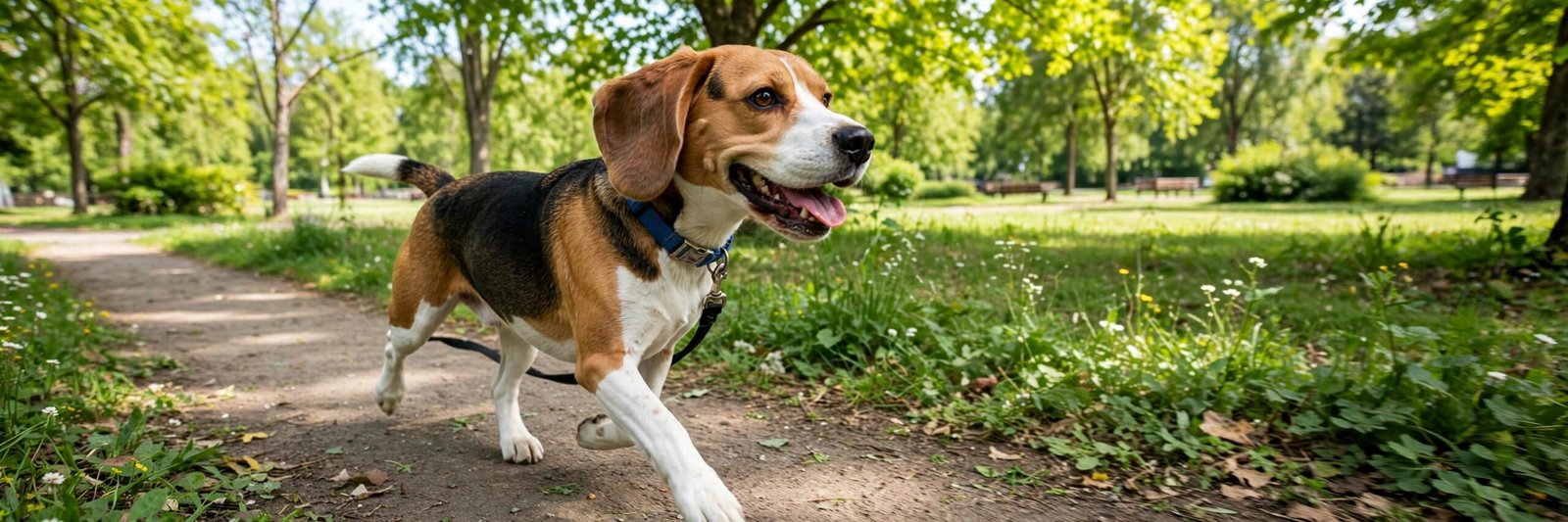
Beagles were bred to follow a scent trail for hours — and to eat whenever food appears, just in case the pack’s next meal is far away. That survival instinct, combined with soulful begging eyes and a love of snacks, makes the Beagle one of the breeds most prone to weight gain. An overweight Beagle faces extra strain on joints, a higher risk of diabetes, and a shorter, less comfortable life.
The right food makes weight control far easier. This guide explains what to look for in the best dog food for Beagles that gain weight easily, and how to feed it so your dog stays slim, satisfied, and healthy.
Why Beagles Gain Weight So Easily
- A powerful food drive. Beagles are famously food-obsessed and will happily eat far beyond their needs.
- Efficient metabolism. Many Beagles maintain weight on fewer calories than other dogs of the same size.
- Slowing down with age. A spayed or neutered adult Beagle who naps more than he walks needs noticeably less food than a youngster.
- Treat creep. Training treats, dental chews, and “just one bite” of your dinner can quietly add a meal’s worth of calories a day.
A typical adult Beagle weighs around 9–11 kg (20–25 lb) and often does well on roughly 550–750 calories a day depending on activity — but check the label of your chosen food and your vet’s advice, because individual needs vary a lot.
What to Look For in a Weight-Control Dog Food
Moderate calories per cup
Look for a food with a calorie count clearly printed on the bag. Weight-management recipes typically provide around 300–340 kcal per cup, noticeably less than rich performance foods. Lower calorie density means your Beagle still gets a satisfying bowl volume.
High-quality protein to protect muscle
When a dog loses weight, you want fat loss, not muscle loss. Choose foods with a named animal protein (chicken, turkey, salmon) as the first ingredient and a protein content around 25% or higher on a dry-matter basis.
More fiber for fullness
Fiber from ingredients such as beet pulp, pumpkin, peas, and powdered cellulose helps a dog feel full on fewer calories. Weight-control foods are usually higher in fiber than standard recipes.
L-carnitine and joint support
Many weight-management formulas add L-carnitine, which supports fat metabolism. Glucosamine and chondroitin are a bonus for Beagles, whose joints carry any extra pounds.
Complete and balanced for adults
Confirm the food carries an AAFCO (or FEDIAF in Europe) statement saying it is complete and balanced for adult maintenance, ideally formulated specifically for weight management rather than simply being a smaller portion of a regular food — feeding less of a normal food can short-change vitamins and minerals.
How to Read a Weight-Control Label Like a Pro
The front of the bag is advertising; the back is information. When comparing foods for an easy-gaining Beagle, check these items in order:
- Calorie content (kcal per cup or per 100 g). This is the single most useful number for weight control. If it is missing, pass the food by — portioning without it is guesswork.
- Guaranteed analysis. Look at crude protein and crude fat percentages. For weight management you generally want moderate fat (often roughly 8–14% for kibble) with protein kept up, rather than a very low-protein budget food.
- First ingredients. A named animal protein first (chicken, turkey, salmon, lamb) is a good sign. Long lists of fillers with little named protein suggest a food that fills the bowl without nourishing the dog.
- Fiber content. Higher crude fiber usually means a fuller feeling dog — helpful for a breed that begs.
- Feeding guide realism. Some guides suggest generous portions aimed at keeping dogs plump and bags emptying fast. For a Beagle who gains easily, start at the lower end of the guide for the ideal weight and adjust from the scale, not the bag.
Is Your Beagle Actually Overweight? The Hands-On Check
Scales tell only half the story, because Beagles vary in build. Use this simple hands-on check monthly:
- Ribs: Run your hands along the ribcage. You should feel individual ribs easily under a thin layer of fat, similar to feeling the back of your hand. If you have to press hard, or feel only padding, your dog is carrying extra weight.
- Waist from the side: Look for a tummy tuck — the belly should slope upward behind the ribs. A straight or sagging belly line suggests overweight.
- Waist from above: There should be a visible narrowing behind the ribs. A sausage-shaped outline means it is diet time.
- Energy and breathing: A fit Beagle recovers quickly after a walk. Heavy panting after mild exercise is another gentle warning sign.
Write down the weight and your check results every month. Slow, steady change is easy to miss day to day but obvious in a monthly record — and the record is gold when you talk to your vet.
Food Types Worth Considering
Reputable brands that offer dedicated healthy-weight lines include Hill’s Science Diet Perfect Weight, Royal Canin Weight Care (including breed-focused options), and Purina Pro Plan Weight Management. These are widely available, formulated by veterinary nutrition teams, and publish clear calorie counts — helpful when you are portioning carefully. Whichever brand you choose:
- Dry weight-management kibble is usually the easiest way to control calories precisely.
- Wet food has fewer calories per gram because of its water content, so a partial wet-food topper can make the bowl feel generous.
- Avoid vague “light” foods with no calorie statement, and be cautious with very high-fat raw or boutique diets for a dog who gains weight easily.
How to Choose the Right One for Your Beagle
- Weigh your dog and note the ideal target with your vet — you should be able to feel ribs under a thin fat cover and see a waist from above and the side.
- Calculate daily calories, then divide by the food’s kcal per cup to get the exact portion.
- Switch gradually over 7–10 days to avoid stomach upset.
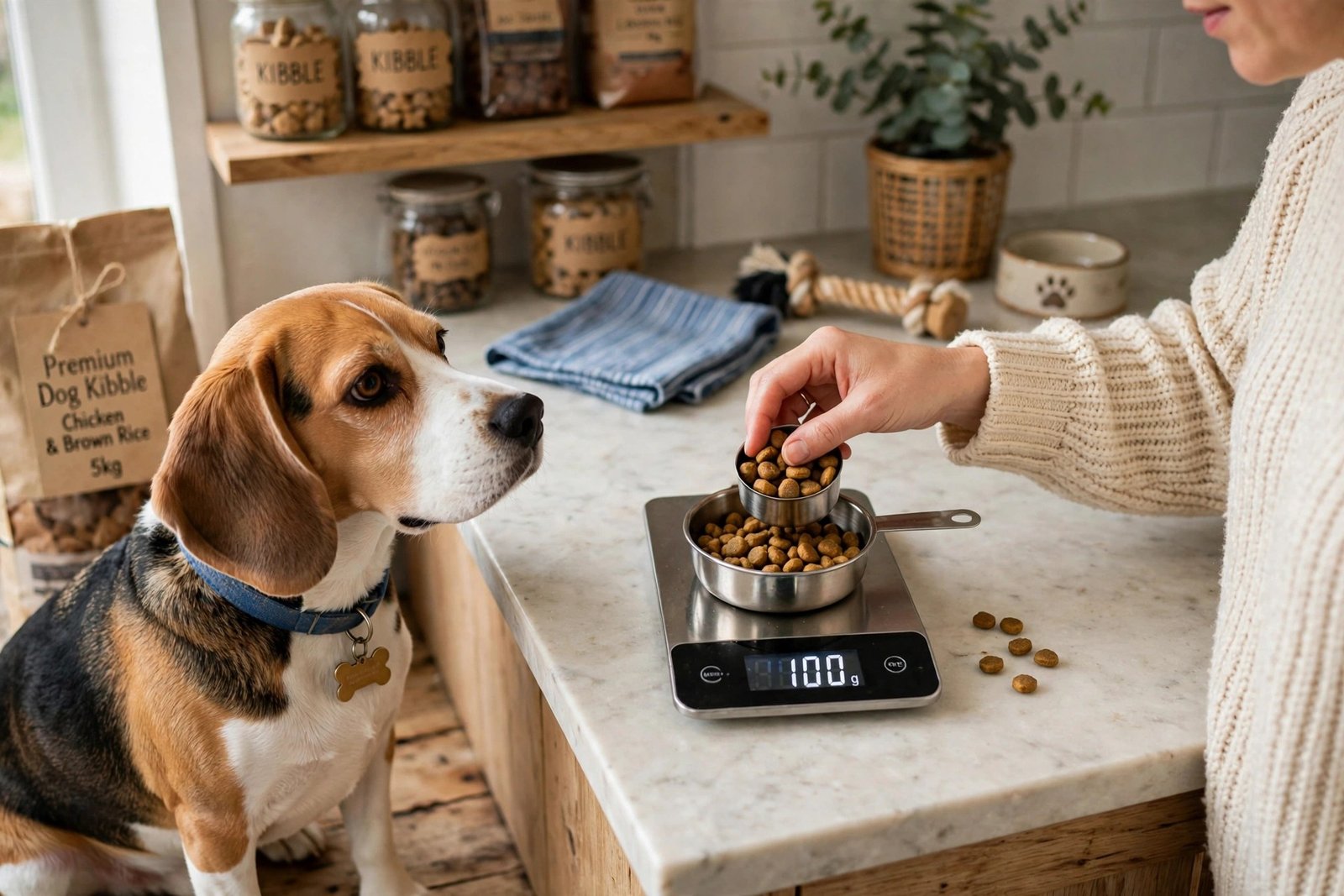
- Measure every meal with a scale or cup — never free-feed a Beagle.
- Re-weigh every two weeks. Aim for slow loss of about 1–2% of body weight per week; adjust portions by small amounts with your vet’s guidance.
Pros and Cons of Weight-Management Foods
Pros
- Nutrients stay balanced even at lower calories, unlike simply feeding less of a regular food.
- Higher fiber and protein help your Beagle feel genuinely full.
- Printed calorie counts make precise portioning possible.
- Many include joint support and L-carnitine as a bonus.
Cons
- They usually cost a little more per bag than standard recipes.
- Some very picky dogs find them less tasty than rich regular food — warming the food slightly or adding a spoonful of wet food can help.
- Results are slow by design; owners sometimes give up before the two-to-three-month mark when change becomes visible.
A Sample Day of Feeding for a Beagle Losing Weight
This example is for an 11 kg (24 lb) adult Beagle whose ideal weight is about 10 kg (22 lb), using a weight-control kibble at roughly 320 kcal per cup. Always confirm your own dog’s plan with your vet.
- Morning meal (about 7 am): ½ cup kibble (about 60 g, ~160 kcal).
- Evening meal (about 6 pm): ½ cup kibble (about 60 g, ~160 kcal).
- Training/snack budget (about 50–60 kcal across the day): a small handful of kibble saved from the meals, baby carrots, green beans, or cucumber slices.
- Chews: swap high-calorie dental sticks for a raw carrot or a specifically low-calorie chew, and count it in the daily budget.
Total: roughly 380–420 kcal of food plus treats, adjusted up or down depending on the weekly weigh-in. A less active or smaller Beagle may need less; a very active one a little more. The scale, checked every two weeks, is the referee.
Common Mistakes That Keep Beagles Chubby
- Free-feeding or “topping up” the bowl. A Beagle will always finish — that proves nothing about need.
- Guessing portions. Studies of owners repeatedly show eyeballed portions run large. Use a scale; it takes ten seconds.
- Forgetting the chews. Dental sticks, rawhide-style chews, and pig ears can each carry a surprising calorie load.
- Feeding from the table. One sausage at a barbecue can equal half a Beagle’s daily target.
- Blaming the food when exercise dropped. A house move, new baby, or winter weather can quietly cut activity in half while the bowl stays the same size.
- Giving up at week three. Healthy loss is slow. Judge the plan over months, and celebrate non-scale wins: easier walks, a visible waist, more playful energy.
Feeding Tips That Make the Diet Work
- Cut treats to under 10% of daily calories. Swap biscuit treats for green beans, carrot sticks, or a few kibbles taken from the meal allowance.
- Use puzzle feeders and slow-feeder bowls so meals last longer and feel more satisfying.
- Feed two measured meals a day rather than one large one.
- Keep the whole household on the plan. One soft-hearted family member with a cheese cube can undo a week of careful feeding.
- Pair food with exercise: at least an hour of walking and sniffy play a day suits most Beagles and burns calories while satisfying their nose.
When to Involve Your Vet
Most Beagle weight plans succeed at home with the right food and consistent portions, but bring your vet into the loop when:
- Your Beagle is more than about 15–20% over ideal weight — significant loss deserves a supervised plan.
- Weight keeps rising despite measured portions and few treats; thyroid and other hormonal conditions are worth ruling out.
- You notice increased thirst, urination, hair loss, or unusual tiredness alongside weight gain.
- Your dog has arthritis, a heart condition, or another health issue, so the exercise and diet plan can be tailored safely.
- You are planning weight loss for a puppy (do not restrict a growing puppy without veterinary guidance) or for a senior with muscle loss.
An annual weigh-in is good practice even for a Beagle who looks fine — catching a slow creep early is far easier than reversing established obesity.
Frequently Asked Questions
How much should I feed my Beagle to lose weight?
Start from the weight-management food’s guide for your dog’s ideal weight, not current weight, and confirm the plan with your vet. Many overweight Beagles need around 20% fewer calories than they were eating.
Are grain-free foods better for weight loss?
Not necessarily. Weight gain comes from total calories, not grains. Grain-free foods are often higher in fat and calories, so check the kcal per cup rather than the marketing.
Can I just feed less of my Beagle’s regular food?
For a small amount of weight loss, slightly reduced portions can work short-term. For significant loss, a formulated weight-control food is safer because it keeps protein, vitamins, and minerals adequate at lower calories.
How fast should a Beagle lose weight?
Slowly — roughly 1–2% of body weight per week is a safe, sustainable pace. Crash dieting is dangerous and usually rebounds.
My Beagle acts hungry all the time. Is that normal?
Yes, very Beagle. Hunger behaviour does not always mean true hunger. Higher-fiber food, puzzle feeders, and low-calorie vegetable snacks help. If appetite suddenly increases dramatically, ask your vet to check for conditions like hypothyroidism or Cushing’s disease.
Can puppies and senior Beagles eat weight-control food?
Puppies should not — growing dogs need growth-formulated food even if they look round; ask your vet if you are worried about a puppy’s weight. Seniors can often use a weight-management food, but choose one with adequate protein to protect ageing muscle, and confirm with your vet.
Are raw or homemade diets good for a Beagle’s weight loss?
They can be, but only when carefully balanced — it is very easy to overdo fat with homemade meals. If you cook at home, work with your vet or a veterinary nutritionist on the recipe, and weigh ingredients until portions become second nature.
How do I stop my Beagle stealing food?
Management beats willpower with this breed: keep food off counters and behind cupboard doors, secure the bin, and teach a solid “leave it.” Child locks on low cupboards are a known Beagle-owner trick, not a joke.
Conclusion
The best dog food for a Beagle that gains weight easily is a complete weight-management recipe with moderate calories, plenty of protein and fiber, and a clearly printed calorie count — fed in measured portions and paired with daily exercise. Combine the right food with consistent portions and a treat budget, and your Beagle can stay trim, energetic, and ready for the next great smell. If your dog gains weight despite careful feeding, check in with your vet to rule out a medical cause.