

Yorkshire Terriers are tiny dogs with enormous opinions — and food is no exception. Many Yorkie owners know the routine: you serve a bowl, your dog sniffs it, looks at you, and walks away as if you have offered a bowl of gravel. Picky eating is common in this breed, but it is manageable once you understand what Yorkies need and what makes a food genuinely appealing to them.
This guide explains how to choose the best dog food for Yorkies with picky eating habits, what formats tempt fussy dogs most, and how to build good mealtime habits.
Why Yorkies Are Often Picky
- Tiny stomachs. A Yorkie may weigh only 2–3.5 kg (4–8 lb). They fill up fast and simply cannot manage large meals.
- They were often hand-fed or free-fed. Constant access to food kills appetite; a grazing Yorkie is never truly hungry at mealtimes.
- Small mouths and teeth. Standard kibble pieces can be too big to crunch comfortably, and Yorkies are prone to dental crowding.
- They learn fast. If refusing a meal produces something tastier ten minutes later, your Yorkie has trained you — not the other way around.
Important first step: sudden pickiness in a dog who used to eat well deserves a vet visit. Dental pain, nausea, and other health issues commonly hide behind “fussiness,” especially in a breed prone to tooth problems.
What to Look For in Food for a Picky Yorkie
Small kibble size
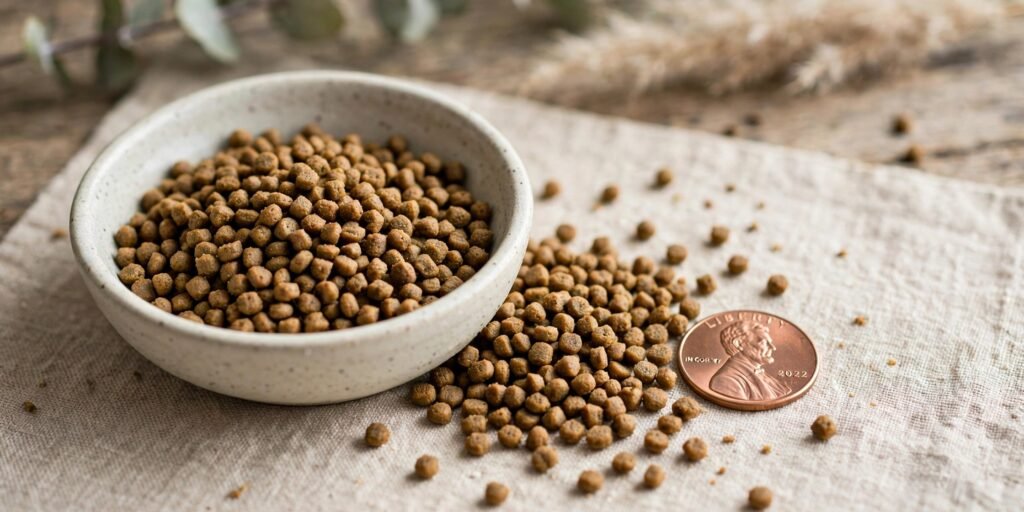
Look for kibble designed for toy or small breeds — pieces small enough to pick up and crunch easily. Many small-breed formulas are shaped and textured to encourage chewing and help clean teeth.
Strong aroma and real flavour
Dogs taste with their noses first. Foods with a named animal protein first on the label (chicken, turkey, salmon, lamb), some animal fat, and — in wet foods — a rich gravy or pâté texture tend to win over fussy dogs. Gently warming food releases more smell.
Calorie density matters
Because Yorkies eat small volumes, choose an energy-dense food so a little goes a long way. Small-breed foods commonly provide around 370–400 kcal per cup. An average adult Yorkie needs roughly 200–300 kcal per day, split into two or three small meals.
Complete nutrition for small breeds
Confirm the food is AAFCO complete and balanced (or FEDIAF in Europe) for adult maintenance or all life stages. Yorkie-specific and small-breed lines from reputable makers — such as Royal Canin Yorkshire Terrier Adult (breed-specific kibble shape), Hill’s Science Diet Small Paws, and Purina Pro Plan Small Breed — are formulated with this breed size in mind and are good starting points. Variety packs of wet food from established brands can also help, because many picky Yorkies simply crave novelty.
How Much Does a Yorkie Actually Need? Portion Guide
Because every food differs in calories, weigh the food or count using the kcal figure on the packet. These daily totals are starting points for typical adult Yorkies eating a small-breed food at about 380 kcal per cup:
- 2 kg (4.5 lb), quiet indoor dog: roughly 160–200 kcal/day — about ½ cup (45 g) dry food, split into 2–3 meals.
- 2.5–3 kg (5.5–6.5 lb), average activity: roughly 200–260 kcal/day — about ⅔ cup (55–65 g).
- 3–3.5 kg (7–8 lb), active dog: roughly 260–320 kcal/day — about ¾ cup (70–80 g).
Treats come out of this budget, not on top of it. For a 3 kg Yorkie, a single large dental chew can equal a third of the day’s food — a classic hidden reason a small dog “isn’t hungry” at dinner. Check body condition every two weeks: you should feel ribs under a light fat cover, and a tiny waist should be visible from above once the coat is parted or wet.
A Sample Day for a Picky Yorkie
- 7:30 am — after the morning walk: half the day’s food, served warm in a shallow dish. Bowl lifted after 20 minutes whether finished or not.
- 1:00 pm (optional for very small or young adults): a small snack of a few kibbles used as training rewards, taken from the daily ration.
- 6:00 pm — evening meal: the second half, perhaps with a spoonful of warm wet food stirred through for aroma.
- Evening: one small dental chew or a few carrot batons, counted in the day’s calories.
Routine is the magic ingredient. When meals arrive at predictable times and disappear if ignored, most Yorkies learn within a week that eating when served is the winning strategy.
Formats That Tempt Picky Yorkies
- Wet food (pâté or chunks in gravy): the strongest smell and softest texture; often the quickest win. Watch teeth, though — wet food alone can worsen dental build-up, so keep up dental care.
- Dry kibble with a topper: a spoonful of warm wet food, a little low-sodium (onion-free) broth, or a sprinkle of freeze-dried raw topper can transform a rejected bowl.
- Fresh, gently cooked foods: refrigerated fresh diets are often highly palatable. Choose a reputable brand formulated to be complete and balanced.
- Rotating two or three approved foods slowly (over a few days each) can satisfy a novelty-seeker without upsetting the stomach.
Picky Eating at Different Life Stages
Puppies (under 12 months). Yorkie puppies must never be allowed to skip meals casually — their tiny reserves make low blood sugar (hypoglycaemia) a real risk. Feed a complete puppy food three to four times a day, and if a puppy refuses two meals in a row or seems wobbly or unusually sleepy, contact your vet the same day. Your vet may advise keeping a glucose source (such as a small amount of honey or a vet-recommended supplement) on hand for emergencies.
Adults. Healthy adult Yorkies are the ones the tough-love schedule works for: set meals, lifted bowls, minimal treats. Most settle into a routine within one to two weeks once the household stops negotiating.
Seniors (around 8+ years). Older Yorkies may eat less because of dental wear, a weaker sense of smell, or early kidney or other disease. Softer or warmed food helps, but any senior who loses interest in food deserves a vet check rather than assumptions — appetite loss is often the first visible sign that something needs attention, and senior blood tests are a wise yearly habit.
How to Choose and Introduce the Food
- Rule out health issues with your vet, including a dental check.
- Pick one promising food rather than buying five bags at once.
- Transition gradually over 5–7 days, mixing increasing amounts of new food into the old.
- Serve on a schedule: put the bowl down for 15–20 minutes, then lift it away uneaten. Offer the next meal at the next regular time. A healthy Yorkie will not starve herself — but because tiny dogs can be prone to low blood sugar, do not let a Yorkie puppy go long without eating, and call your vet if an adult refuses food for more than a day.
- Limit treats to 10% of daily calories; too many snacks spoil dinner.
Pros and Cons of the Main Formats for Picky Yorkies
Small-breed dry kibble
Pros: calorie-dense, helps scrape teeth as they crunch, easy to measure exactly, stores well, usually the most economical.
Cons: the least aromatic option, and some fussy dogs find it boring — a warm topper usually fixes this.
Wet food
Pros: strong smell, soft texture, high success rate with fussy dogs, extra moisture is a bonus for dogs who drink little.
Cons: pricier per calorie, sticks to teeth more, opened trays or cans must be refrigerated and used within a few days.
Fresh gently cooked food
Pros: very palatable, whole ingredients, portioned tubs make serving easy.
Cons: the most expensive option, needs fridge space, and quality varies by brand — check it is formulated to be complete and balanced.
Common Mistakes That Make Pickiness Worse
- Offering a buffet. Switching between three open bags and the fridge leftovers teaches your Yorkie that refusing pays.
- Free-feeding. An always-full bowl means your dog is never hungry and you cannot tell how much she actually eats.
- Treating the refusal with human food. One evening of chicken from your plate can undo a month of careful scheduling.
- Changing foods too quickly. Abrupt switches cause loose stools, which owners then blame on the new food — and the rotation chaos deepens.
- Skipping the dental check. Yorkies are famous for crowded, plaque-prone teeth. A sore mouth is one of the most common hidden causes of “picky.”
A Special Note on Yorkie Teeth
Toy breeds keep their small jaws busy, and Yorkies frequently need professional dental cleaning during their lives. If your picky Yorkie drops kibble, chews on one side, has bad breath, or prefers only soft food, put “teeth” at the top of your suspect list. Daily tooth brushing with dog toothpaste, dental chews approved by your vet, and food with a texture that encourages crunching all help. Never use human toothpaste — many contain xylitol, which is highly toxic to dogs.
Mealtime Tricks That Actually Help
- Warm it up: 10 seconds in the microwave (stir and check temperature) makes wet food far more fragrant.
- Feed after a walk, when appetite is naturally higher.
- Use a flat plate or shallow bowl — deep bowls can bother small faces and fancy whiskers.
- Make food fun: scatter a few kibbles on a clean floor or use a snuffle mat so “hunting” builds interest.
- Stay boring about it. Hovering, coaxing, and offering alternatives teaches a Yorkie to hold out for better offers.
Keep a Tiny Food Diary
When you are untangling a picky-eating puzzle, a notebook (or phone note) is surprisingly powerful. For two weeks, jot down what was served, how much was eaten, the time, and anything unusual — a new treat, visitors, a car trip. Patterns jump out fast: many owners discover their Yorkie eats badly on days a family member feeds “just a few” lunchtime extras, or that one particular texture always wins. The diary also gives your vet concrete information if the problem continues, which leads to faster, better answers than “she just won’t eat.”

Frequently Asked Questions
How often should I feed my Yorkie?
Most adult Yorkies do well on two or three small meals a day. Puppies need three to four meals because of their size and blood-sugar sensitivity.
Is it okay to mix wet and dry food?
Yes, mixing is fine and often the best solution for picky dogs, as long as the total amount keeps daily calories on target and both foods are complete diets or the mix is mostly the complete one.
My Yorkie only wants treats and human food. What do I do?
Stop the extras almost completely for a while, feed on a strict schedule, and lift uneaten bowls. Most Yorkies start eating their meals within a day or two. If not, see your vet.
Should picky Yorkies get grain-free food?
Only if they enjoy it and it suits them — pickiness is about taste, smell, and texture, not grains. Choose for palatability and quality rather than trends.
When is picky eating an emergency?
If your Yorkie refuses all food for more than 24 hours, vomits, has diarrhea, drools, paws at the mouth, or seems weak or shaky, contact your vet the same day.
How long should I stick with a new food before deciding my Yorkie dislikes it?
Give it one to two weeks of scheduled feeding once the transition is complete. Many “dislikes” evaporate once the dog learns no alternative is coming. Judge by the whole picture — stool quality, coat, energy, and weight — not day-one enthusiasm alone.
Can I add toppers every day, or will that spoil her?
A measured topper that is part of the daily calorie plan is fine and can be a permanent strategy for small dogs. The problem is not toppers themselves; it is unplanned extras that replace balanced food with snacks.
My Yorkie eats well for a week then goes off the food. Why?
Often the bag has gone stale — small dogs eat so little that a big bag can sit open for months and lose its aroma (and its fats can turn rancid). Buy smaller bags, keep the food in its original bag sealed inside an airtight container, and store it in a cool, dark place.
Conclusion
The best dog food for a picky Yorkie is small in kibble size, big in aroma, calorie-dense, and complete for small breeds — served on a calm schedule with strict bowl-down, bowl-up rules. Solve the texture and smell puzzle first, keep treats in check, and most fussy Yorkies rediscover their appetite. When in doubt, your vet can rule out the dental and health issues that so often sit behind a turned-up nose.