

Sharing a bite of your food with your dog feels natural — those hopeful eyes are hard to resist. The good news is that plenty of everyday human foods are not just safe for dogs, they can actually add vitamins, fibre and variety to their diet. The key is knowing which foods are genuinely dog-friendly, how much to give, and which common foods are dangerous and must never be shared.
This guide covers the human foods most dogs can enjoy daily in small amounts, how to prepare them safely, and the foods to keep well out of reach.
How Much Human Food Is OK Each Day?
Before the list, one important rule: treats and extras — including healthy human foods — should make up no more than about 10% of your dog’s daily calories. Their main meals should still come from a complete, balanced dog food, because human foods alone do not provide everything a dog needs. Think of the foods below as healthy toppers, training treats and snacks, not meal replacements.
Always introduce a new food in a tiny amount first and watch for any stomach upset. If your dog has a medical condition such as diabetes, kidney disease or pancreatitis, check with your vet before adding anything new, as some “healthy” foods are unsuitable for certain conditions.
A Rough Portion Guide by Dog Size
The 10% rule is easier to follow with real numbers. The extras below are the total for the whole day, not per food:
| Dog size | Typical weight | Daily extras (all treats and toppers combined) | Examples |
|---|---|---|---|
| Toy | under 5 kg | about 1–2 tablespoons | 3–4 baby carrot sticks, a few green beans, 2–3 blueberries |
| Small | 5–10 kg | about 2–3 tablespoons | Half a small carrot, a small handful of green beans, a few apple slices |
| Medium | 10–25 kg | about ¼–⅓ cup (40–55 g) | A few spoonfuls of pumpkin plus training treats |
| Large | 25–40 kg | about ⅓–½ cup (55–85 g) | A small handful of veg plus a spoonful of yoghurt |
| Giant | over 40 kg | up to about ½ cup (85 g) | Still modest — giant dogs gain weight on extras too |
If your dog is overweight, use the lower end of the range and favour crunchy vegetables, which feel generous without adding many calories.
Safe Vegetables Dogs Can Eat Daily
Vegetables are some of the best daily extras: low in calories, high in fibre and full of crunch that many dogs love.
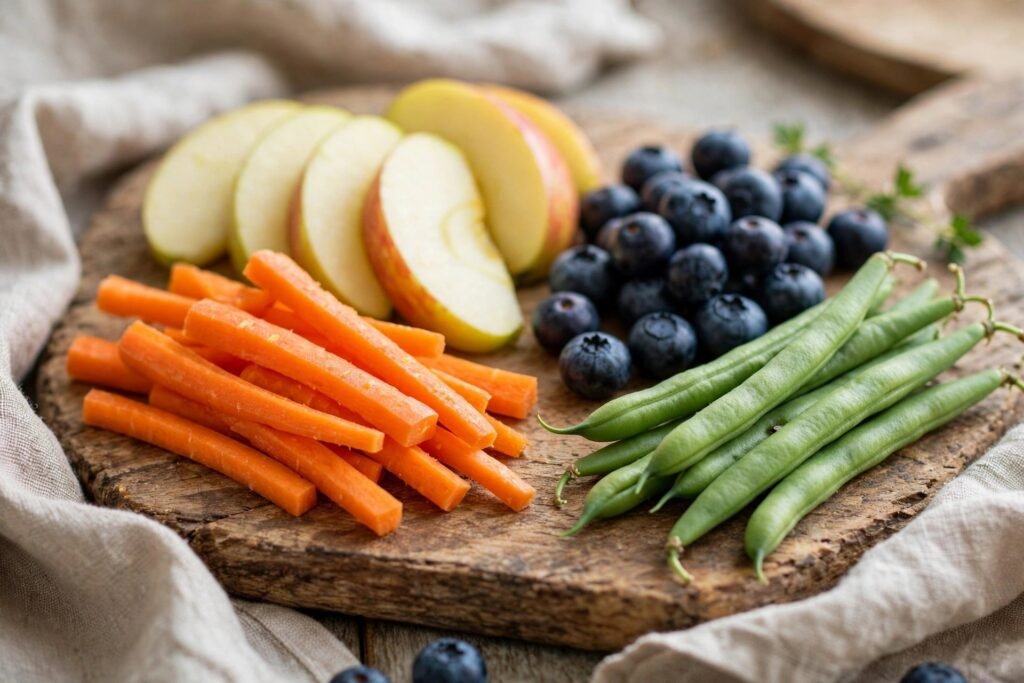
- Carrots — excellent raw or cooked. Crunchy raw carrots help clean teeth a little, and they are rich in beta-carotene, which supports eye and skin health.
- Green beans — plain fresh, frozen or cooked green beans are filling and low-calorie, making them a favourite for dogs watching their weight.
- Cucumber — hydrating and very light; a few slices make a refreshing snack, especially in warm weather.
- Sweet potato — always serve cooked and plain. It is gentle on the stomach and rich in fibre and vitamin A.
- Pumpkin — plain cooked pumpkin (never spiced pie filling) is famous for supporting healthy digestion in both directions — helping with mild constipation and loose stools.
- Courgette (zucchini) — mild, soft and easy to digest, raw or lightly cooked.
- Peas — green peas, snow peas and sugar snaps in small amounts provide vitamins and a little protein.
- Broccoli — small florets only. Broccoli is nutritious, but large amounts can irritate the stomach, so keep it to a few little pieces.
- Celery — crunchy, hydrating and very low in calories. Chop into short pieces so stringy bits do not get stuck.
- Spinach — a few leaves now and then add iron and vitamins. Because spinach is high in oxalic acid, it is a sometimes food rather than a large daily one, and dogs with kidney issues should skip it unless their vet says otherwise.
Serve vegetables plain — no butter, oil, salt, sauces or seasoning — and cut them into bite-sized pieces to prevent choking, especially for small dogs. Frozen vegetables straight from the freezer make a cooling summer treat for many dogs, but thaw hard frozen chunks slightly for small mouths.
Safe Fruits Dogs Can Enjoy
Fruits contain natural sugars, so keep portions small, but the following are safe and nutritious:
- Blueberries — tiny antioxidant powerhouses and a perfect training treat size for most dogs.
- Apple slices — a crunchy source of fibre and vitamin C. Always remove the core and seeds first, as apple seeds contain trace compounds that are best avoided.
- Banana — soft and easy to eat; good for potassium, but higher in sugar, so a few slices are plenty.
- Watermelon — remove all seeds and the rind. The flesh is hydrating and well loved on hot days.
- Strawberries — a few chopped berries provide vitamin C and fibre. Wash well and remove the leaves.
- Pear — ripe pear flesh in small chunks, with core and seeds removed.
Safe Proteins and Other Everyday Foods
- Plain cooked chicken or turkey — boneless, skinless and unseasoned. A gentle protein that most dogs digest easily.
- Plain cooked eggs — scrambled or boiled with no oil, butter or salt. A good source of protein and healthy fats in moderation.
- Cooked salmon and other fish — cooked, boneless fish provides omega-3 fats that support skin and coat. Never serve raw fish, and always check carefully for bones.
- Plain cooked white or brown rice — easy to digest and often used to soothe an upset stomach for a day or two.
- Plain yoghurt or cottage cheese — in small amounts, these offer calcium and probiotics. Choose plain, unsweetened versions with no artificial sweeteners (especially xylitol, which is extremely toxic to dogs). Some dogs are lactose-sensitive, so start small.
- Plain air-popped popcorn — a few pieces, with no butter, salt or unpopped kernels, make a fun low-calorie treat.
- Peanut butter — a teaspoon for training or stuffing a toy, but only brands that are 100% xylitol-free. Check the label every time: xylitol (also listed as birch sugar) can be fatal to dogs even in small amounts.
Foods That Are Safe Only Sometimes
A few foods sit in the middle — not toxic, but not ideal as daily habits either:
- Cheese — a pea-sized cube is a high-value training reward most dogs adore, but cheese is fatty and salty, so keep it occasional and tiny.
- Bread — plain white or brown bread will not harm most dogs, but it adds empty calories and can swell in the stomach in large amounts. A small corner is plenty.
- Corn on the cob — loose sweetcorn kernels are fine, but never give the cob itself: dogs can swallow chunks of cob that block the intestines, which is a surgical emergency.
- Milk — many adult dogs cannot digest lactose well. A splash occasionally is usually tolerated, but yoghurt and cottage cheese are gentler choices.
- Tuna — fine as a rare treat, but too much, too often can add up in mercury. Fresh cooked fish or tinned salmon in water are better regular options.
- Ham and processed meats — very salty and fatty. A tiny scrap will not poison your dog, but make it a rare exception, not a routine.
How to Prepare and Serve Human Foods Safely
How you serve a food matters almost as much as which food you choose:
- Wash everything. Rinse fruit and vegetables to remove dirt and surface residues.
- Remove the risky parts. Take out seeds, cores, stones, rinds, husks and skins that are tough or unsafe.
- Cook plainly. Boil, steam or bake proteins with no salt, oil, butter, marinade, garlic or onion powder. Seasoning mixes are a common hidden danger.
- Cut to size. Pieces should be small enough to chew easily — for small dogs, pea-to-blueberry sized bites are safest.
- Introduce one food at a time. Wait two or three days before adding another new food, so if your dog’s stool changes or they seem itchy or gassy, you know which food caused it.
- Serve at the bowl, not the table. Putting extras in your dog’s bowl or using them in training keeps begging from becoming a mealtime habit.
- Mind the fridge. Cooked leftovers meant for your dog keep 3–4 days in the fridge; if in doubt, throw it out.
Human Foods Dogs Must Never Eat
Keep these away from your dog completely — several are toxic even in small quantities:
- Chocolate — toxic in all forms; dark chocolate and cocoa are the most dangerous.
- Grapes, raisins, currants and sultanas — can cause kidney failure, sometimes from just a few.
- Onions, garlic, leeks and chives — damage red blood cells and can cause anaemia; powdered forms in sauces count too.
- Xylitol / birch sugar — found in sugar-free gum, sweets and some peanut butters; causes a rapid, life-threatening drop in blood sugar.
- Macadamia nuts — can cause weakness, tremors and vomiting.
- Avocado — the pit is a choking hazard and the fruit contains persin; best avoided entirely.
- Alcohol and caffeine — both are dangerous; never let dogs lap coffee, tea, energy drinks or alcoholic beverages.
- Cooked bones — they splinter and can injure the mouth, throat or gut. Never offer cooked chicken or chop bones.
- Salty, fatty and spicy leftovers — rich sauces, gravy, fried foods and heavily seasoned scraps commonly trigger vomiting, diarrhoea or pancreatitis.
If your dog eats any of the toxic foods above, contact your vet immediately — do not wait for symptoms.
A Simple Daily Routine
A practical way to use this list: sprinkle a small handful of chopped carrot or green beans over one meal, offer a few blueberries as training rewards, or add a spoonful of plain pumpkin to the bowl. Rotate a few favourites through the week for variety, always plain and always in small portions matched to your dog’s size — a Great Dane’s “small treat” is not a Chihuahua’s.
Common Mistakes When Sharing Human Food
- Sharing from your plate. Sauces, gravies and seasonings travel with the scrap — even a “plain-looking” roast dinner is usually coated in salt, fat and onion or garlic.
- Forgetting the treat count. Five family members each giving “just one bite” can quietly double a small dog’s daily extras. Agree on one treat-giver or keep a small daily treat pot.
- Assuming “natural” means safe. Grapes, macadamia nuts and avocados are perfectly natural — and still dangerous for dogs.
- Skipping the label check. Peanut butter, yoghurt and “sugar-free” snacks can contain xylitol. Read the ingredients every time, because recipes change.
- Giving bones from the table. Cooked bones splinter; raw bones carry their own risks and should only ever be given under vet guidance, never as an afterthought.
Frequently Asked Questions
Can dogs eat human food every day?
Yes, in small amounts. Safe foods like carrots, green beans and blueberries can be given daily as long as all extras together stay under roughly 10% of your dog’s daily calories and their main diet remains a complete dog food.
What is the healthiest human food for dogs?
There is no single winner, but plain pumpkin, carrots, blueberries and cooked fish are often praised by vets for their fibre, antioxidants and omega-3 fats. Variety in tiny portions is the real benefit.
Can I replace one of my dog’s meals with human food?
Not regularly. A one-off plain chicken-and-rice meal is fine, but human food alone lacks the balanced calcium, vitamins and minerals of complete dog food, so it should not become a daily meal replacement without a vet-formulated recipe.
My dog ate something from the toxic list. What should I do?
Call your vet or an emergency animal clinic straight away and tell them what and how much was eaten. Quick treatment matters far more than watching and waiting.
Are raw vegetables or cooked vegetables better?
Both are fine. Raw vegetables like carrot offer crunch, while cooking softens vegetables such as sweet potato and pumpkin, making them easier to digest. Serve either way — just plain, unseasoned and bite-sized.
Can puppies eat these foods too?
Mostly yes, once they are weaned and eating solid food, but in even smaller amounts — a puppy’s stomach is delicate and their balanced puppy food matters far more than extras. Start with one tiny piece, and check with your vet if your puppy is under about 12 weeks old.
My dog is overweight. Which human foods are best?
Green beans, cucumber, celery, carrot sticks and a little pumpkin are the standouts: high in fibre and crunch, low in calories. Skip cheese, peanut butter and fatty meats, and count every extra within the 10% rule.
Can dogs eat the same vegetables every day, or should I rotate?
Rotating two or three favourites across the week is ideal. It spreads the nutrients, keeps things interesting, and reduces the chance of too much of any one thing — for example, spinach or broccoli every single day.
Conclusion
Plenty of foods from your own kitchen — carrots, green beans, blueberries, plain chicken, eggs, pumpkin and more — can safely brighten your dog’s day, every day, in sensible portions. Keep extras small, plain and varied, keep the toxic list memorised and out of reach, and when in doubt about a new food, a quick check with your vet keeps your dog safe while you share the good stuff.