

A puppy with a sensitive stomach can be worrying: loose stools, gassiness, the occasional skipped meal, or a tummy that rumbles loudly after eating. The good news is that many puppies settle down quickly once they are on the right food. Choosing a gentle, highly digestible puppy food — and switching to it slowly — makes a real difference to their comfort and to their growth.
This guide explains the signs of a sensitive stomach, what to look for (and avoid) on the label, and the types of food and reputable brands that are widely trusted for delicate young tummies.
Signs Your Puppy Has a Sensitive Stomach
Occasional soft stools happen to almost every puppy, especially during the stress of moving to a new home. A pattern worth addressing looks like this:
- Frequent loose stools or diarrhoea that keeps coming back
- Lots of gas, burping or audible stomach gurgling
- Occasionally vomiting after meals or bringing up undigested food
- Picky eating, walking away from the bowl, or eating very slowly
- Dull coat or itchiness alongside the tummy trouble
Important: repeated vomiting, blood in the stool, weight loss, lethargy or diarrhoea lasting more than a day or two in a young puppy needs a vet visit, not just a food change. Puppies dehydrate quickly, and parasites, infections and swallowed objects can all look like “a sensitive stomach”. Once your vet has ruled out medical causes, food is the next place to look.
Common Causes of an Upset Puppy Tummy
Understanding why the stomach is sensitive helps you fix the right thing:
- A sudden food change. The single most common cause. A new food given overnight, with no transition, overwhelms a puppy’s immature gut enzymes.
- Rich treats and chews. Fatty chews, dental sticks, sausage scraps and table food are frequent hidden culprits — the main food gets blamed for the treats’ mischief.
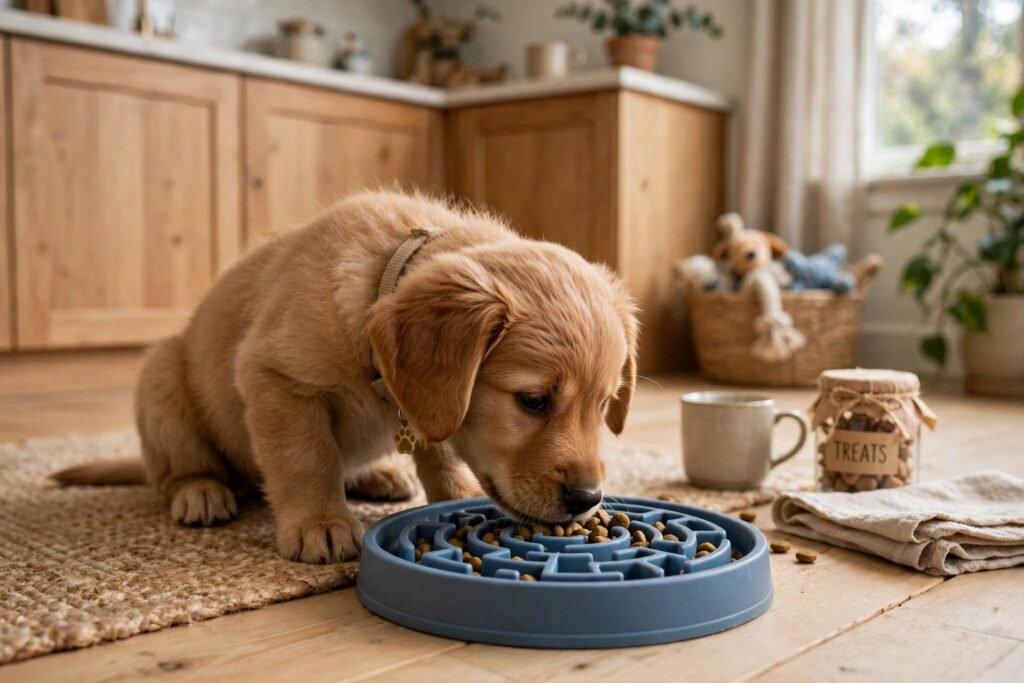
- Eating too fast. Gulped food and swallowed air lead to regurgitation and gas. A slow feeder bowl or scatter feeding can help.
- Scavenging. Puppies explore the world with their mouths. Garden finds, litter-tray raids and bin scraps commonly trigger a day or two of loose stool.
- Stress. Rehoming, travel, visitors and routine changes all affect the gut.
- Parasites and infections. Worms and common puppy parasites are so frequent that vets usually rule these out early — bring a fresh stool sample to your appointment if you can.
- A genuine ingredient sensitivity. Less common than owners think, but real: some puppies react to a specific protein (often chicken or beef) or another ingredient.
If loose stools keep returning despite a gentle food and a careful routine, ask your vet to check for parasites and discuss an elimination trial before you start swapping foods at random.
How to Read a Puppy Food Label in Two Minutes
Labels are less scary when you know the order of the checks:
- The nutritional adequacy statement. Find the small print that says the food is “complete and balanced” for growth (AAFCO wording) or formulated to FEDIAF guidelines for puppies. No statement, no purchase.
- The first three ingredients. These make up most of the food. You want a named animal protein first, ideally followed by other recognisable ingredients.
- Guaranteed analysis. Check protein (aim for at least the low-to-mid 20s percent in dry food), fat (moderate, roughly 14–18% for a sensitive tum), and fibre (a little extra, around 3–5%, often helps stools).
- The extras list. Scan for pumpkin, beet pulp, chicory root, fish oil and named probiotics — all good signs in a sensitive-stomach food.
- What to be wary of. Artificial colours, vague “animal derivatives” as the main protein, added sugars and long lists of different proteins if you are trying to narrow down a trigger.
What to Look For in a Puppy Food for Sensitive Stomachs
A Named, Easily Digested Protein
Look for a specific animal protein as the first ingredient — “chicken”, “turkey”, “salmon” or “lamb” — rather than vague terms like “meat meal”. Many sensitive puppies do best on a single protein source, which makes it easier to spot and avoid anything that disagrees with them. Novel or gentle proteins such as turkey, salmon or lamb suit some puppies better than chicken or beef, which are among the more common triggers.
Moderate Fat and High Digestibility
Very rich, high-fat foods can overwhelm a young digestive system. Foods formulated for sensitive digestion usually have moderate fat levels and are cooked to be highly digestible, so more nutrients are absorbed and less undigested food reaches the large intestine — meaning smaller, firmer stools.
Puppy-Appropriate Nutrition
Never solve the problem by switching to an adult or “all life stages” food without checking it suits puppies. Growing puppies need more protein (typically at least around 22–32% in dry food), controlled calcium for healthy bone growth, and DHA from fish oil or similar sources for brain and eye development. The label should state the food is complete for puppy growth (look for an AAFCO or FEDIAF statement mentioning growth or gestation/lactation).
Soothing Extras
Helpful additions found in many gentle puppy foods include:
- Pumpkin, beet pulp or chicory root — gentle fibres that feed healthy gut bacteria and firm up stools
- Prebiotics and probiotics — listed strains such as Bacillus or Enterococcus faecium support a balanced gut
- Omega-3 fats (EPA/DHA) — calm the gut and support skin, helpful when sensitivity shows up as itchiness too
- Limited ingredient lists — fewer ingredients means fewer chances of a reaction
Ingredients That Soothe a Puppy’s Stomach
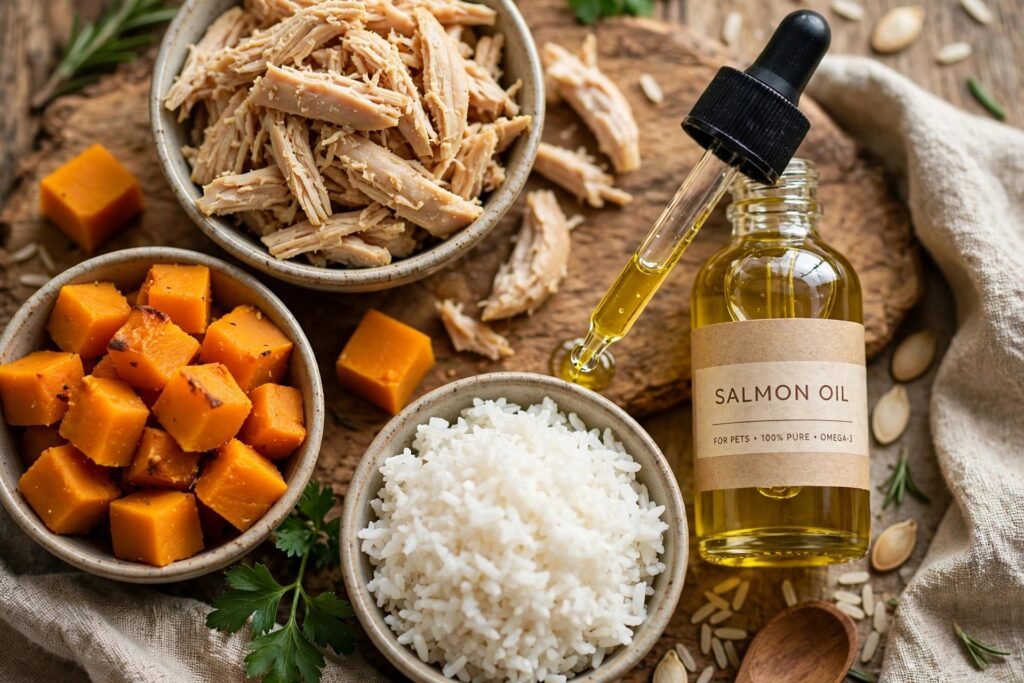
At home, a few simple foods are famously gentle and are built into many sensitive-stomach recipes: plain cooked pumpkin for soluble fibre, well-cooked white rice or oatmeal for easy energy, and plain boiled chicken for lean, bland protein. If your puppy is having a mild flare-up, vets often suggest a day or two of bland food — but puppies need proper nutrition to grow, so return to a complete puppy food promptly, and always ask your vet first for very young or small-breed puppies.
Feeding Schedule and Portions for a Puppy in Recovery
How you feed matters alongside what you feed. Use this simple framework while the stomach settles:
| Puppy age | Meals per day | Notes |
|---|---|---|
| 8–12 weeks | 4 | Small, regular meals; soak kibble in warm water for 10 minutes to soften it |
| 3–6 months | 3 | Keep meal times consistent; last meal a few hours before bed |
| 6–12 months | 2–3 | Transition gradually to the adult pattern for the breed |
Portions should follow the feeding guide on your chosen food for your puppy’s current weight and expected adult weight — then adjust by what you see. You should be able to feel (not easily see) the ribs under a thin fat cover. During a sensitive phase:
- Serve food at room temperature, not fridge-cold, which some puppies find harder to handle.
- Keep water available at all times, and replace it fresh twice a day. Loose stools lose water fast.
- Pause extras. No new treats, chews or scraps during a two-week settling period — one variable at a time.
- Weigh weekly. A steadily growing puppy on the new food is the best proof it is working.
Types of Food Worth Considering
- Sensitive-stomach puppy kibble — dry foods specifically formulated for digestive care; convenient, economical and complete.
- Limited-ingredient puppy food — a short, simple recipe with one protein and one or two carbohydrate sources; ideal for elimination-style troubleshooting.
- Wet puppy food for sensitive stomachs — higher moisture can be easier on digestion and more appealing to picky puppies; can be fed alone (if complete for growth) or mixed with kibble.
- Veterinary gastrointestinal diets — if ordinary gentle foods do not settle things, your vet may recommend a prescription digestive diet for a period.
Reputable brands with well-regarded sensitive-stomach or gentle puppy lines include Hill’s Science Diet (Sensitive Stomach & Skin puppy recipes), Purina Pro Plan (Sensitive Skin & Stomach puppy formulas with salmon or lamb and rice), Royal Canin (breed-size-specific puppy and digestive care ranges), Wellness (limited-ingredient and CORE digestive health lines) and Blue Buffalo (Basics limited-ingredient range). Availability varies by country, and the “best” choice is the one your individual puppy thrives on — bright, growing steadily, with firm stools and a shiny coat.
Pros and Cons of Sensitive-Stomach Puppy Foods
Pros
- Firmer stools and less gas, usually within one to three weeks
- High digestibility means puppies absorb more of what they eat
- Limited-ingredient recipes make it easier to identify problem ingredients
- Often include skin-soothing omega fats as a bonus
Cons
- Usually cost more than standard puppy food
- Fewer flavour choices, and some puppies find gentle recipes bland
- Not a fix for true food allergies or medical problems, which need a vet’s plan
How to Choose and Switch Safely
- Pick one food and commit for a few weeks. Constant swapping keeps the gut unsettled and makes it impossible to tell what helped.
- Transition over 7–10 days (longer than usual for sensitive pups): roughly 75% old / 25% new for a few days, then 50/50, then 25/75, then fully new. Slow down if stools soften.
- Feed little and often. Three to four smaller meals suit young puppies and are easier to digest than one or two large ones.
- Keep treats minimal and matched. Use a few pieces of the new kibble as treats, and pause rich chews and table scraps during the trial.
- Track the results. Note stool quality, appetite and energy for two to three weeks. No improvement — or anything getting worse — means a vet conversation about allergies, parasites or a prescription diet.
Common Mistakes That Keep Puppy Stomachs Upset
- Switching foods too quickly — or too often. A new food every week guarantees a confused gut and tells you nothing.
- Judging after three days. Digestive benefits usually need two to four weeks to show fully.
- Keeping the rich treats. The gentlest food in the world cannot outrun daily fatty chews and cheese cubes.
- Feeding adult dog food “because it is gentler”. Adult foods lack the nutrients puppies need for growth; choose a gentle puppy formula instead.
- Overfeeding. Too much food at once is a classic, overlooked cause of loose stools. Try slightly smaller portions before changing brands again.
- Skipping the worming schedule. Parasites undo good food choices; keep preventative treatment up to date as your vet advises.
Frequently Asked Questions
How long does it take for a new food to settle a puppy’s stomach?
Most puppies show improvement within one to two weeks of a slow transition, but give a food a fair trial of three to four weeks (with no other diet changes) before judging it — unless symptoms are severe, in which case see your vet sooner.
Is grain-free food better for sensitive puppies?
Not necessarily. Many puppies digest grains like rice and oatmeal very well, and these are among the gentlest ingredients. Grain-free is only needed if grains are the specific problem. Choose based on your puppy’s response, not the trend.
Should I try a raw or homemade diet for my sensitive puppy?
Growing puppies need precisely balanced calcium and nutrients, which is hard to achieve with homemade food, and raw diets carry infection risks for puppies and households. A quality commercial gentle puppy food, or a vet-designed recipe, is the safer route.
Can I mix wet and dry sensitive-stomach food?
Yes, as long as both are complete puppy foods and the total daily amount matches your puppy’s needs. Many owners find a little wet food on top of kibble improves appetite without upsetting the stomach. Keep the same brand family and proteins during a trial so you are not adding new variables.
What if my puppy refuses the gentle food?
Warm the food slightly to release its smell, add a spoonful of warm water to kibble, or hand-feed the first few bites. If a healthy puppy skips one meal, do not panic — but puppies should never go a full day without eating, and refusal plus loose stools or tiredness means a vet call.
Can probiotics help my puppy’s digestion?
Often, yes — dog-specific probiotic pastes or powders can help during a food transition or after a mild upset. Ask your vet for a suitable product and dose for your puppy’s size.
When should I worry and see the vet?
Go promptly if there is vomiting that repeats, diarrhoea lasting over 24–48 hours, blood in vomit or stool, refusal to eat, tummy bloating, weight loss or unusual tiredness. Young puppies can go downhill fast.
Conclusion
For most puppies with sensitive stomachs, the winning formula is a complete puppy food with a single named protein, moderate fat, gentle fibres and gut-friendly extras — switched to slowly and given a fair few weeks to work. Trusted sensitive-stomach lines from brands like Hill’s, Purina Pro Plan and Royal Canin are a solid starting point. Pair the right food with regular vet checks, and your puppy should soon be comfortable, energetic and growing just as they should.