

Your dog’s birthday — or “gotcha day” — deserves a celebration, and a homemade cake lets you join the fun knowing every single ingredient is safe for dogs. This recipe makes a small, soft, two-layer celebration cake flavoured with banana, apple and carrot, frosted with a dog-friendly yoghurt and peanut butter topping. It tastes like a treat, smells wonderful, and contains nothing that will harm your dog.
Before the recipe, the most important part: the safety list. Many classic birthday cake ingredients are dangerous for dogs.
How to Check Labels Before You Bake
Most dog-poisoning accidents with baking happen through a label nobody read. Before any ingredient goes into the bowl, run through this two-minute routine:
- Peanut butter: read the sweetener line. Ingredients should say peanuts (and maybe a little salt). If you see “xylitol”, “birch sugar”, “wood sugar” or E967, put it back on the shelf — do not buy it for a dog household at all, if you can avoid it.
- Yoghurt: choose plain, unsweetened Greek yoghurt. Flavoured and “light” yoghurts often contain sweeteners or added sugar. The ingredient list should be little more than milk and cultures.
- Applesauce and baby food: handy shortcuts, but check for added sweeteners and never use anything containing onion or garlic powder.
- “Sugar-free” anything: treat the words as a warning flag in dog baking. Sugar substitutes are the number one hidden danger.
- When in doubt, leave it out. No decoration or flavour boost is worth a vet emergency. Plain, recognisable ingredients are always the safe choice.
If your dog ever does eat xylitol, chocolate, grapes or macadamia nuts — including by stealing human cake — treat it as an emergency: note what was eaten and roughly how much, and phone your vet or an emergency clinic immediately rather than waiting for symptoms.
Equipment You Will Need
- Two 15 cm (6 inch) round cake tins, or a lined muffin tray for cupcakes
- Baking paper, a mixing bowl ×2, a fork for mashing, and a spatula
- A wire rack for cooling
- A skewer or toothpick to test doneness
Ingredients You Must NEVER Use
Read this section carefully — it is the reason this recipe exists:
- Xylitol / birch sugar — an artificial sweetener found in “sugar-free” peanut butter, sugar-free yoghurt, some cake mixes and chewing gum. It is extremely toxic to dogs and can cause a fatal drop in blood sugar and liver failure, even in small amounts. This applies to any product labelled birch sugar — they are the same substance. Always check the label of peanut butter and yoghurt before buying.
- Chocolate and cocoa — toxic in all forms, including cocoa powder, chocolate chips, chocolate frosting and “just a little” chocolate cake. Never use them in dog baking.
- Grapes and raisins — including sultanas and currants, these can cause kidney failure in dogs. No fruit cake, no raisin decorations.
- Macadamia nuts — can cause weakness, tremors and overheating. Keep nut decorations to a minimum anyway, and never macadamias.
- Also avoid: nutmeg (toxic in quantity), coffee, alcohol, artificial sweeteners of any kind, sugary human frosting and fondant, cooked bones as decoration, and excessive salt or sugar.
Everything in the recipe below is a recognised dog-safe food. Even so, this is a treat — rich compared with daily food — so serve a sensible slice (small dogs need only a thin slice), and if your dog has diabetes, pancreatitis, kidney disease or another medical condition, check with your vet before serving any celebration food.
Ingredients
Makes one small two-layer cake, about 15 cm (6 inches) — enough for a birthday dog plus a few doggy guests.
For the cake
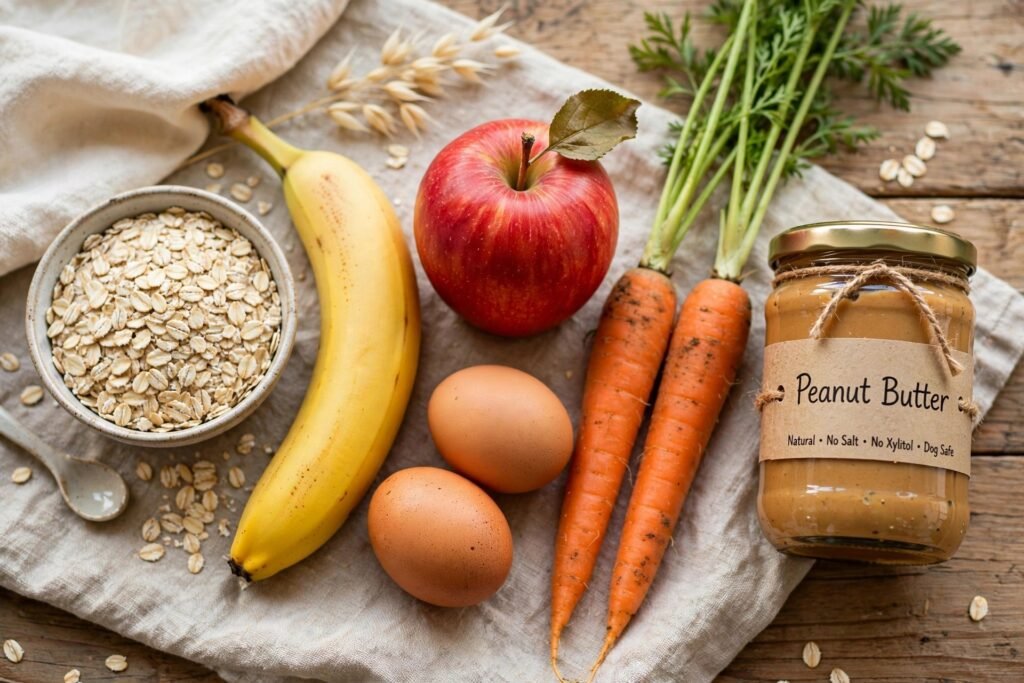
- 1½ cups (135 g) oat flour (or finely blitzed rolled oats)
- 1 teaspoon (4 g) baking powder (plain, aluminium-free is fine)
- ½ teaspoon (1 g) ground cinnamon (optional — use true cinnamon and only this small amount; never nutmeg)
- 1 ripe banana, about ½ cup mashed (120 g)
- ½ cup (125 g) unsweetened applesauce, or 1 grated apple with core and seeds removed
- 1 medium carrot, finely grated, about ½ cup (65 g)
- 2 large eggs (about 100 g without shells), at room temperature
- ¼ cup (65 g) smooth peanut butter — 100% xylitol-free / birch-sugar-free; check the label
- 2 tablespoons (30 ml) melted coconut oil or neutral vegetable oil
- ¼ cup (60 ml) water or unsweetened oat milk, if needed, to loosen the batter
For the frosting
- ¾ cup (185 g) plain Greek yoghurt — unsweetened, with no artificial sweeteners
- 2 tablespoons (32 g) xylitol-free peanut butter
- Optional decorations: a few blueberries, thin carrot ribbons, or small dog biscuits (never chocolate, grapes, raisins or macadamias)
Step-by-Step Method
- Heat the oven and prepare the tins (5 minutes). Preheat the oven to 175°C (350°F). Lightly grease two 15 cm (6 inch) round tins, or one deep tin if you plan to slice the cake in half after baking. Line the bases with baking paper.
- Mix the dry ingredients (2 minutes). In a large bowl, whisk together the oat flour, baking powder and cinnamon (if using) until evenly combined.
- Mash and mix the wet ingredients (4 minutes). In a second bowl, mash the banana thoroughly with a fork. Stir in the applesauce, grated carrot, eggs, peanut butter and melted oil until you have a smooth, even mixture.
- Combine (2 minutes). Pour the wet mixture into the dry and fold together until just combined — a few small lumps are fine. The batter should be thick but spoonable; if it seems stiff, stir in the water or oat milk a tablespoon at a time.
- Fill the tins (2 minutes). Divide the batter evenly between the tins and smooth the tops with the back of a spoon.
- Bake (25–30 minutes). Bake on the middle shelf for 25–30 minutes, until the cakes are risen, golden and springy, and a skewer pushed into the centre comes out clean.
- Cool completely (30 minutes). Leave the cakes in their tins for 10 minutes, then turn them out onto a wire rack and cool fully. Frosting a warm cake will slide straight off.
- Make the frosting (3 minutes). Stir the Greek yoghurt and peanut butter together until smooth and spreadable. If it is very thick, let it sit at room temperature for 10 minutes; if it is loose, chill it in the fridge for 15 minutes.
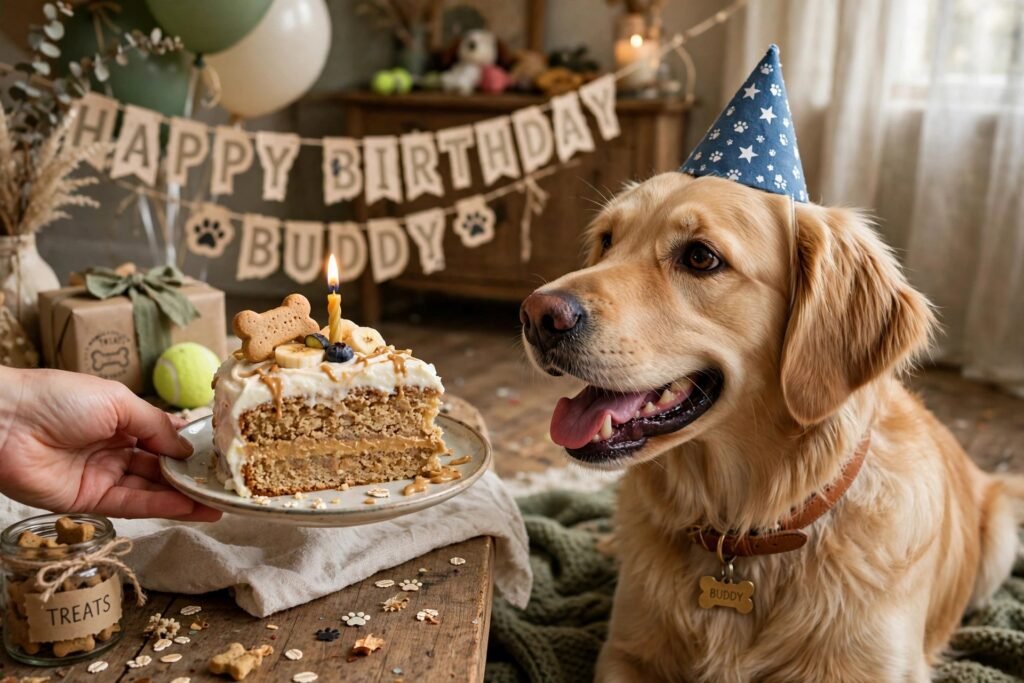
- Assemble and decorate (5 minutes). Spread a layer of frosting over the first cake, place the second cake on top, then cover the top (and sides, if you like) with the remaining frosting. Decorate with blueberries, carrot ribbons or dog biscuits. Add a candle for the photo — then remove it before serving, of course.
- Serve. Slice according to your dog’s size: a thin slice for small dogs, a modest wedge for large ones. Offer it in the bowl, not as a whole cake to demolish, and provide fresh water alongside.
Total time: about 1 hour 15 minutes including cooling.
Serving Sizes by Dog Size
This cake is rich, so slice with the guest of honour’s size in mind:
| Dog size | Sensible serving | Notes |
|---|---|---|
| Toy / small (under 10 kg) | A thin slice, about 30–40 g | Or one mini cupcake |
| Medium (10–25 kg) | A modest wedge, about 60–80 g | Count it as the day’s main treat allowance |
| Large (over 25 kg) | A generous wedge, about 100 g | Even big dogs do not need half the cake |
Serve the slice in your dog’s bowl alongside fresh water, and let doggy guests have portions matched to their own sizes — ask their owners first, in case of allergies or special diets.
Safe Variations to Try Next Birthday
- Pumpkin spice (dog-safe) version: replace the banana and applesauce with 1 cup (245 g) plain pumpkin purée (never spiced pie filling) and keep the cinnamon. Moist, gentle on stomachs, and a lovely autumn colour.
- Salmon celebration cake: for dogs who prefer savoury, replace the peanut butter in the batter with ¼ cup (60 g) finely flaked cooked salmon, skip the cinnamon, and frost with plain yoghurt blended with a little mashed sweet potato.
- Single-layer sheet cake: bake the same batter in one 20 cm (8 inch) square tin for 30–35 minutes and cut into portion squares — easier for a big doggy party.
- Pupcakes with toppings bar: bake as cupcakes and decorate each differently — a blueberry here, a carrot ribbon there, a tiny biscuit on top — all from the safe decoration list.
Whatever variation you choose, the same safety rules apply: no xylitol or birch sugar, no chocolate, no grapes or raisins, no macadamia nuts, no nutmeg — ever.
Party Safety Tips for the Big Day
A dog birthday gathering adds excitement — and a few extra risks worth planning for:
- Guard the human food. Parties mean human cake, crisps, chocolate and drinks within reach. Keep human treats on a high table, brief your guests (especially children) that the dog only eats from its own plate, and check the floor for dropped hazards before letting dogs roam.
- Candles and decorations. Take the photo, then remove candles, ribbons, balloons and small decorations — all are choking or blockage hazards if chewed.
- One cake, calm portions. Excited dogs may guard a prized slice. Serve each dog its portion in a separate bowl, in separate spaces, and supervise until every slice is finished.
- Watch the water bowl. Lots of play plus a rich treat means thirsty dogs; keep fresh water topped up.
- Know when to stop. If the birthday dog gets overwhelmed, a quiet room and a small slice saved for later is a kinder celebration than a whole party’s worth of excitement.
Storage Notes
- Fridge: store the frosted cake in an airtight container for up to 3 days (the yoghurt frosting means it must be refrigerated).
- Freezer: unfrosted cake layers freeze well for up to 1 month; wrap tightly. Thaw in the fridge overnight and frost fresh.
- Serve slices at room temperature by taking them out of the fridge 20–30 minutes beforehand.
Frequently Asked Questions
Can humans eat this cake too?
Yes — every ingredient is ordinary human food. It will taste very mildly sweet and wholesome rather than like a sugary birthday cake, but it is perfectly safe for people to share a slice.
How much cake can my dog eat?
Think “party treat”, not dinner. A thin slice for a small dog and a moderate slice for a large dog is plenty, and ideally it replaces some treats that day rather than being added on top of everything. Dogs new to rich food should get a smaller piece to avoid an upset stomach.
What if I can only find peanut butter with sweeteners?
Then skip the peanut butter entirely — never use a product containing xylitol or birch sugar. The cake works without it (add an extra tablespoon of applesauce), or use a certified xylitol-free brand. The same rule applies to yoghurt: plain and unsweetened only.
Can I bake this as cupcakes instead?
Yes. Spoon the batter into 8–10 lined muffin cups and bake at 175°C (350°F) for 18–22 minutes, until a skewer comes out clean. Frost each one — perfect individual portions for a doggy party.
Can I use regular flour instead of oat flour?
Yes — plain wholemeal or white flour works in the same quantity (1½ cups / about 190 g for plain flour, which is heavier than oat flour). Oat flour is popular for dog baking because it is gentle and many dogs find it easy to digest, but ordinary flour is dog-safe. Avoid self-raising flour with high salt content, and never use mixes containing sweeteners.
How far ahead can I bake the cake?
Bake the layers up to 2 days ahead and keep them, unfrosted and wrapped, in the fridge (or a month in the freezer). Frost on the day for the freshest yoghurt topping, assemble, photograph, and serve.
My dog has a sensitive stomach. Should I still make it?
Make a mini version and serve a very small piece first, watching for any reaction. Leave out the frosting if dairy upsets your dog, and if your dog has a diagnosed medical condition, ask your vet before serving celebration treats.
Conclusion
A dog birthday cake does not need chocolate, sugar or anything risky to feel like a party. Banana, apple, carrot, oats and a yoghurt-peanut-butter frosting give you a cake that photographs beautifully, smells delicious and is genuinely safe from the first ingredient to the last crumb — as long as you keep the toxic list (xylitol/birch sugar, chocolate, grapes and raisins, macadamia nuts) firmly out of the kitchen while you bake. Happy birthday to your dog!