

Border Collies were bred to work all day in the hills, and most pet Collies keep that engine. A high-energy Border Collie can burn through calories at a remarkable rate, and a standard maintenance food sometimes is not enough — the dog loses condition, the coat dulls, and recovery after long runs or training sessions slows down. Feeding an athlete means feeding like one: more protein, more healthy fat, and careful portion control based on workload and body condition.
This guide covers what to look for on the label, reputable active-dog foods worth considering, and how to adjust feeding between hard-working days and quiet ones.
What High-Energy Border Collies Need
Higher Protein for Muscle and Recovery
Active dogs repair muscle constantly. Look for a food with roughly 26–32% protein from named animal sources (chicken, lamb, beef, fish or egg) in the first ingredients. Protein quality matters as much as quantity — named meats and meat meals from a reputable brand digest far better than vague “meat derivatives.”
More Fat — the Athlete’s Fuel
Fat is the most concentrated energy source in a dog’s diet and the main fuel for endurance work. Active and working-dog formulas typically contain around 18–22% fat, compared with 12–15% in standard foods. Named fats such as chicken fat or salmon oil are preferable, and fish oils also provide omega-3s that support joints and coat.
Calorie Density
A busy Collie may need roughly 20–30% more calories than a quiet dog of the same weight, and a genuinely working sheepdog in winter can need far more. Calorie-dense food (around 420–480 kcal per cup or 380+ kcal per 100 g) lets your dog get enough energy without enormous meal volumes.
Joint and Antioxidant Support
Hard-running dogs benefit from omega-3 fatty acids (EPA and DHA), plus vitamin E and other antioxidants. Glucosamine and chondroitin appear in many active formulas and are a sensible bonus for a breed that stays athletic into old age.
Digestibility
High digestibility means more energy absorbed and smaller stools. Reputable performance foods are formulated for this — if your dog produces large, soft stools on a rich food, it may not suit them regardless of the label claims.
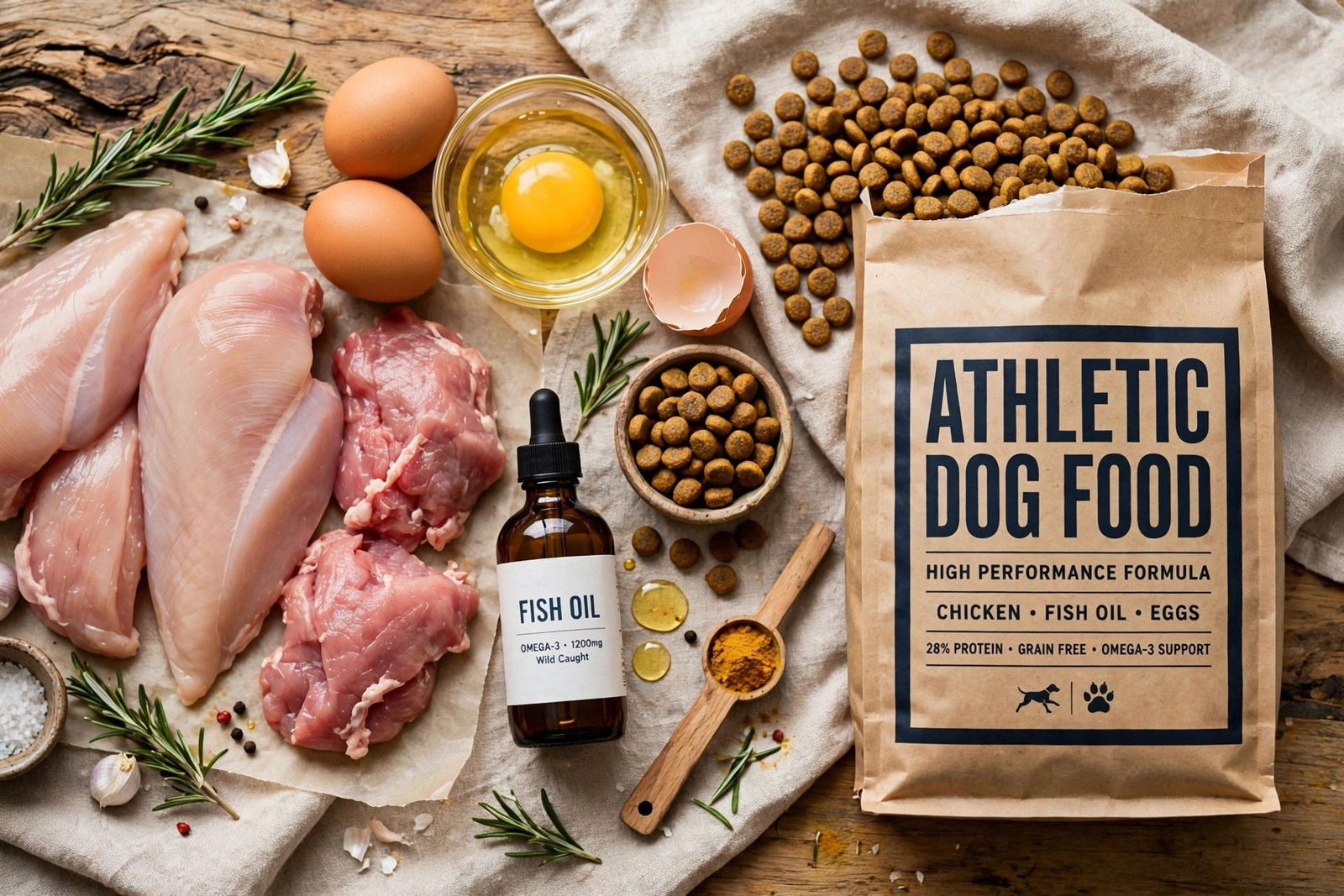
How to Read an Active-Dog Food Label
Performance marketing is everywhere, so use the guaranteed analysis rather than the bag’s front.
- Protein and fat first. For a hard-working Collie you are looking for protein around 26–32% and fat around 18–22% in a dry food. A food labelled “active” with only 14% fat is a maintenance food in sporty packaging.
- Named ingredients. “Chicken meal” or “salmon” as the first ingredient is a good sign; “cereals” or “meat and animal derivatives” at the top is not, for a dog whose recovery depends on protein quality.
- Calorie content. Look for kcal per 100 g or per cup on the bag or the brand’s website — performance foods are typically 380+ kcal per 100 g. Calorie density is what lets you fuel a busy dog in reasonable meal sizes.
- Joint and coat extras. Fish oil or salmon oil in the ingredients covers omega-3s; glucosamine and chondroitin are a welcome bonus but the amounts in food are modest, so if your vet recommends joint support for a specific problem, ask about a proper supplement dose.
- Life-stage statement. The food should be complete and balanced for adult maintenance (or all life stages). Working Collie puppies need a puppy formula instead — see below.
How Much to Feed: Start Points by Workload
The ranges below assume a typical performance kibble of about 420 kcal per cup (roughly 105 g). They are start points only — body condition always has the final say.
- 18 kg Collie, light activity (daily walks, some training): about 2½–3 cups (260–320 g) per day
- 18 kg Collie, moderately active (1–2 hours of exercise most days): about 3–3½ cups (320–370 g) per day
- 20 kg Collie, hard work (farm work, competition training, long hill days): about 3¾–4½ cups (400–480 g) per day, and genuinely working dogs in cold weather may need more
- 22 kg Collie, rest/recovery week: drop back toward 3–3¼ cups (320–350 g) and monitor weight
Change one variable at a time: if your dog is losing condition during a training block, raise the total by about 10% and reassess after two weeks rather than changing foods immediately. If weight creeps up during a quiet month, trim 10% before blaming the food. Weigh your Collie every two weeks while you are dialling portions in — active dogs can change condition surprisingly fast in either direction.
Puppies, Young Dogs and Older Collies
Everything above applies to healthy adults. Puppies should be fed a complete puppy food — for Collies, growth continues to around 12–14 months — and should not be put on rich adult performance food early; their calcium and calorie balance needs to be set for growth, and a lean puppy is healthier than a roly-poly one. Ask your vet when to switch your individual dog to adult food.
Young adults in their first working season often need portion increases in steps as fitness and workload build; weigh fortnightly and let condition guide you rather than jumping straight to maximum rations.
Older Collies (often from about 8–10 years) usually slow down gradually. Many do best moving from a performance formula to a quality adult or senior food with slightly fewer calories but still-good protein, to protect muscle while preventing weight gain. A dog that has been lean and active all its life should stay lean — extra weight is especially hard on ageing joints. If an older dog’s appetite, weight or stamina changes suddenly, that is a vet visit, not just a diet change.
Trusted Active-Dog Foods to Consider
- Purina Pro Plan Sport — a well-known performance line (commonly a 30% protein / 20% fat style recipe) developed for active and sporting dogs.
- Eukanuba Premium Performance — designed for working and sporting dogs, with animal protein and added joint support in some versions.
- Royal Canin active and sporting formulas — reputable, widely available and precisely formulated.
- Skinners Field & Trial ranges — popular working-dog foods in the UK, including higher-energy recipes for dogs in hard work.
- Orijen or Acana higher-protein recipes — meat-rich options from an established manufacturer for owners who prefer that style.
- Hill’s Science Diet adult performance-style recipes — a vet-trusted brand with consistent quality control.
These are examples of established brands with nutritional expertise behind them. The right pick is the one that keeps your individual Collie at a lean, muscular weight with good stools and a glossy coat.
Pros and Cons of High-Energy Formulas
Pros
- Sustain weight and stamina on active days
- Support muscle repair, joints and coat condition
- Smaller meal volumes for the same energy
Cons
- Easy to overfeed on rest days — weight creeps on quickly
- Richer foods can upset sensitive stomachs if introduced too fast
- Performance lines usually cost more per bag
Feeding Routine for an Active Collie
- Feed by body condition, not just the bag. You should feel ribs easily under a thin fat layer, see a defined waist, and see the last rib faintly when the dog runs.
- Split into two meals. Feed morning and evening; avoid one huge meal, which is uncomfortable for exercise and a risk factor for bloat in deep-chested dogs.
- Time meals around exercise. Feed the main meal at least 1–2 hours before hard exercise, or after your dog has cooled down and rested — never a big meal immediately before or after intense work.
- Adjust weekly, not daily. Increase portions by about 10% during heavy training blocks, and drop back on quiet weeks. Weigh your dog every two weeks during the adjustment.
- Use part of the ration as training treats. Collies train a lot; using kibble from the daily allowance keeps calories honest.
- Keep water central. Active dogs need constant access to fresh water, especially after work.
Transition to a richer food slowly over 10 days — richer formulas are the classic cause of loose stools when swapped overnight.
A word about water, because it is half the fuelling equation: a working Collie can lose a great deal of fluid through panting, and even mild dehydration shows up as slower recovery and reduced stamina. Offer small drinks regularly during long work rather than one huge drink at the end, carry water and a collapsible bowl on hill days, and let your dog drink before they are desperate. At home, rinse and refill the water bowl daily. If your dog drinks dramatically more than usual for several days without heat or extra work to explain it, mention it to your vet, as a change in thirst can be an early sign of illness.
Common Mistakes When Feeding an Active Collie
- Feeding work-day rations on rest days. Performance food is potent; a week of sofa days on full rations adds visible weight. Match the bowl to the week, not the best day in it.
- One giant evening meal. A single huge meal after exercise is uncomfortable and unwise; two measured meals suit active dogs far better.
- Feeding immediately before or after hard work. Allow 1–2 hours before intense exercise and let your dog cool down and settle before the post-work meal.
- Judging by appetite alone. Collies are enthusiastic eaters with remarkable stamina for begging. Ribs, waist and the scale are more honest guides than the face at the cupboard.
- Adding lots of extras on top. Cheese, sausage and leftovers during training weekends can quietly add hundreds of calories beyond the measured ration. Use the ration itself as rewards wherever you can.
- Switching foods too often. Constant rotation prevents you from ever learning what truly suits your dog. Give a suitable food at least 6 weeks (barring obvious problems) before judging it.

Frequently Asked Questions
How many calories does an active Border Collie need?
It varies widely with workload. As a rough starting point, an average active 20 kg Collie may need around 1,200–1,600 kcal per day, while a hard-working dog can need considerably more. Use that as a starting estimate, then adjust by weight trend and body condition.
Is a high-protein food safe for my Collie’s kidneys?
For healthy dogs, higher protein from quality sources is not a kidney problem. If your dog has diagnosed kidney or liver disease, follow your vet’s dietary advice instead — therapeutic diets are different.
Can I just feed a normal food but give more of it?
For a moderately active dog, sometimes yes. But very large volumes can be uncomfortable and less digestible; a calorie-dense active formula usually suits genuinely high-energy dogs better.
What about raw or home-cooked diets for active Collies?
Some owners do feed them successfully, but getting enough balanced calories, calcium and trace minerals is harder than it looks. If you choose that route, work with your vet or a qualified canine nutritionist to formulate the diet.
My Collie is high energy but also gaining weight — what now?
First, check honesty about extras: treats, chews and family handouts add up. Then reduce portions by about 10%, weigh fortnightly, and mention it at vet checks so thyroid or other causes can be ruled out if weight keeps rising.
Should I feed differently in hot weather?
Yes, a little. Many dogs eat less in heat, and that is usually fine for a few days. Offer meals in the cooler parts of the day, make sure water is always available (and refreshed), and do not try to force full rations into a hot, tired dog. If appetite loss lasts more than a couple of days or comes with lethargy or vomiting, see your vet — heat affects dogs quickly.
Is wet food or dry food better for an active Collie?
Dry performance food is the practical choice for most owners: it is calorie-dense, easy to weigh precisely, stores well and travels easily to training and competitions. Wet food can be added in small amounts for palatability, but on its own it is bulky (mostly water) and expensive at working-dog volumes. Whichever format you use, the protein, fat and calorie figures matter more than the format.
Conclusion
A high-energy Border Collie thrives on a quality active-dog food with 26–32% protein, generous named fats, and enough calorie density to fuel work without huge meals. Feed in two measured meals, time them sensibly around exercise, and adjust by body condition rather than appetite — Collies will happily eat for the joy of it. Get the fuel right, and your dog will have the stamina, coat and recovery to match their remarkable brain.