

Poodles have a way of making dinner feel personal. A poodle will sniff a new bowl of food with the seriousness of a wine critic, take one careful bite, and then decide whether the whole thing is worth their time. If the answer is no, they will sit down and wait for a better offer.
That pickiness is part of the breed’s charm. Under those curls is a smart, sensitive dog with a fussy stomach and a coat that asks a lot from their diet. Once you know what a poodle actually needs, picking their food stops being a daily negotiation.
What Makes Poodles Different at Mealtimes?
Poodles come in three sizes — standard, miniature, and toy — and that alone changes the feeding math. A standard poodle can weigh 40 to 70 pounds, while a toy poodle might weigh less than 6.
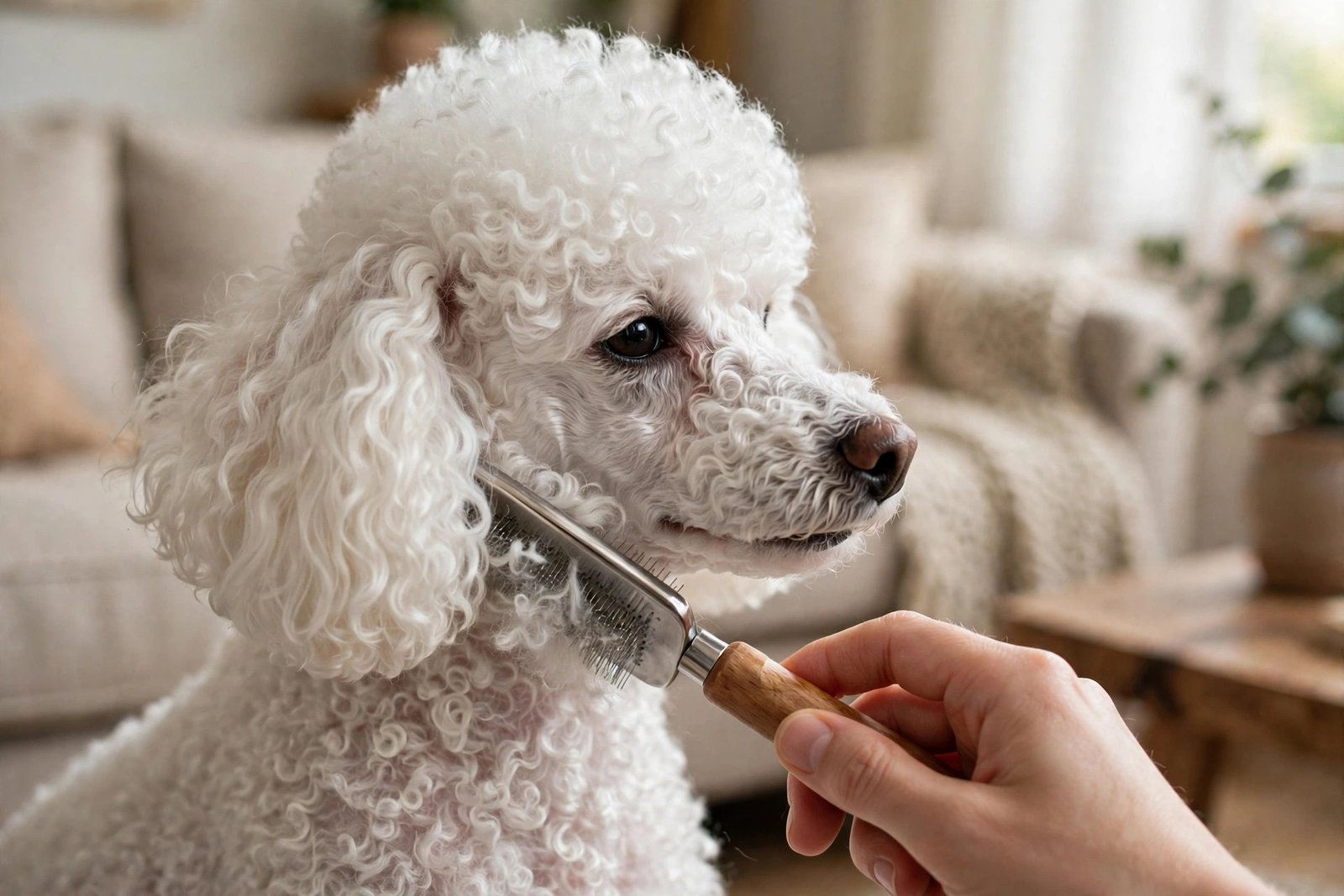
First, the coat. A poodle’s hair grows constantly, much like human hair. That growth takes protein and fat, every single day. When a poodle’s diet falls short on good fats, the coat is usually the first place it shows: dull curls, dry skin, extra tangles, or shedding that seems heavier than usual.
Then there is the stomach. Poodles are known for sensitive digestion. Many owners learn this the hard way — a new treat, a table scrap, or a sudden food swap can mean a day of loose stools or a skipped meal. It is common enough that a gentle, easy-to-digest food is a sensible starting point for the breed.
Poodles are also prone to a few health quirks that food can influence. Their ears hang close to the head, which traps moisture and can lead to ear infections, and some vets link recurring ear trouble with food sensitivities. Standards can also be prone to bloat and to joint issues as they age.
Poodles are also one of the smartest breeds, and smart dogs get bored. A bored poodle is more likely to turn its nose up at plain kibble, so keeping meals interesting — a topper here, a puzzle feeder there — can matter as much as the food itself.
How Much Should a Poodle Eat Each Day?
There is no one number that fits every poodle, because the size range is so wide. A toy poodle eats a fraction of what a standard eats, and an active standard who swims or runs every day needs a good deal more than one who spends the afternoon on the sofa. Age matters too — puppies burn calories fast because they are growing, and seniors slow down and need less.
| Size and life stage | Approx. daily calories | Approx. cups per day |
|---|---|---|
| Toy adult (4–6 lbs) | 200–300 | 0.5–0.75, split into 2 meals |
| Miniature adult (10–15 lbs) | 350–550 | 0.75–1.25, split into 2 meals |
| Standard adult, less active (40–50 lbs) | 900–1,200 | 2–2.5, split into 2 meals |
| Standard adult, active (50–70 lbs) | 1,200–1,700 | 2.5–3.5, split into 2 meals |
| Puppy (2–6 months) | 400–900 by size | 1–2.5, split into 3–4 meals |
| Senior (8+ years) | 10–20% less than adult | Reduce slightly, keep 2 meals |
Most adult poodles land somewhere in these ranges, though your dog’s body condition is always the better guide than any chart. You should be able to feel the ribs easily under a thin layer of fat, and your poodle should have a visible waist when you look down at them.
Treats count, and with a small dog they count fast — keep them under 10% of daily calories. Set meal times too: put the bowl down for 15 to 20 minutes, then pick it up.
What to Look for on the Label
The label is where the real choice happens. Ignore the front of the bag — that is marketing. Turn it over and read the ingredient list and the guaranteed analysis, because that is where the food tells the truth.
Start with the first ingredient. You want a named meat — chicken, salmon, lamb, turkey, or duck — listed first. A named meat meal, like chicken meal or salmon meal, is fine too; it is just the same meat with the water removed. What you do not want at the top of the list is a vague word like “meat by-products” or a grain like corn doing the heavy lifting.
Protein is next. For most adult poodles, look for foods with around 22–28% protein, with active standards at the higher end. Fat matters just as much, because fat is what keeps that coat soft and those curls springy. Around 12–16% fat is a sensible range for most adult poodles.
Check for an AAFCO nutritional adequacy statement. It should say the food is complete and balanced for a life stage — growth, adult maintenance, or all life stages. That line means the food meets the nutrient profiles set by the Association of American Feed Control Officials.
A good poodle food also lists a named fat source, like chicken fat or salmon oil, and includes omega-3 and omega-6 fatty acids for skin and coat health. Learning how to read a dog food label properly pays off every time you stand in the pet food aisle, because the front of the bag will never tell you what the back does.
What should you skip? Foods where corn, wheat, or soy is the first ingredient, foods packed with artificial colors, and foods with long lists of fillers and very little actual meat. Poodles do not need grain-free food as a rule — wholesome grains like brown rice and oatmeal are fine for most of them.
Best Types of Food for Poodles
Not every formula suits every poodle. Most owners end up with one of these three.
Fish-based formulas are a popular pick for poodles. Salmon, whitefish, and herring are rich in omega-3 fatty acids, which support the skin and that demanding coat. Many poodles with itchy skin, dull curls, or recurring ear trouble do well on a fish-based food, and the strong taste can also help with picky eaters. The downside is mostly price — fish formulas usually cost a bit more.
Limited-ingredient formulas keep the recipe short on purpose — one protein, one or two carbohydrate sources, and not much else. That simplicity makes them a good first try for a poodle with a sensitive stomach or suspected food sensitivity, because there are fewer things that could be causing trouble. The same gentle approach helps puppies too, and the guidance for puppies with sensitive stomachs follows the same idea of keeping things simple and easy to digest.
Small-breed formulas are made for toy and miniature poodles. The kibble is smaller, which matters for a tiny mouth and small teeth, and the calorie density is higher, so a small dog gets enough energy from a small bowl. If your toy poodle struggles to finish a bowl of standard-sized kibble, switching to a small-breed formula often fixes the problem overnight.
So which one should you pick? Start with your dog’s size and stomach. A standard poodle with a normal stomach often does well on a good fish-based or chicken-based food. A toy or miniature with a fussy stomach is a strong candidate for a small-breed, limited-ingredient formula. Buy a small bag first — if your poodle eats it happily for two weeks, has firm stools, good energy, and a healthy coat, you have your answer.
Poodles and Sensitive Tummies
If there is one complaint poodle owners share, it is the sensitive stomach. A poodle can be perfectly fine for months, then one new treat or one scavenged scrap on a walk turns into a day of loose stools.
The first rule is to change food slowly. A sudden swap is the fastest way to upset a poodle’s gut, and we cover a simple 7-day plan below. The second rule is to keep treats simple and limited — rich table scraps and fatty leftovers are a fast way to trouble. The third rule is to watch for patterns: if the loose stools always follow the same treat or the same ingredient, that ingredient is your suspect.
Some poodles do better on foods with added probiotics or prebiotic fiber, which support gut health. Pumpkin, plain and canned — never the pie filling with sugar and spices — is the home remedy most owners reach for first, and it genuinely helps firm things up. A tablespoon for a miniature, a little more for a standard, mixed into the food, is usually enough.
If your poodle has ongoing stomach trouble — loose stools that keep coming back, vomiting, or constant gas — ask your vet about it before you start cycling through foods on your own. A vet can rule out parasites, allergies, and other causes. The guidance for dogs with recurring digestive problems walks through the same steps of ruling out causes before changing foods.
Coat health ties into this too. A dull coat or flaky skin can point to a diet short on omega fatty acids, but it can also point to a food sensitivity. If you change the food and the coat improves within three or four weeks, the food was probably part of the story.
How to Switch Your Poodle to a New Food
Poodles punish sudden food changes. Swap the bowl overnight and you will probably meet the consequences the next morning. A slow switch over a week gives the gut time to adjust and gives a picky poodle time to accept the new taste.
Day 1–2: Mix 25% new food with 75% old food. Watch the stools. A little softness is normal, but real diarrhea means slow down and stay at this ratio for another day or two.
Day 3–4: Move to a 50/50 mix. Keep meals at the same times and the same total amount. This is the stage where picky poodles sometimes try to eat around the new kibble, so mixing well helps.
Day 5–6: Go to 75% new food and 25% old food. By now your dog should be eating the new food without a fuss.
Day 7: Serve 100% new food. Keep an eye on energy, stools, and appetite for another week — it can take two to three weeks for a coat or energy change to show up, so do not judge the food on day seven alone.
If your poodle refuses the new food outright, try warming it slightly or adding a spoonful of warm water — the smell alone can change a picky dog’s mind. A tiny bit of wet food mixed in works too. What does not work is leaving the bowl down all day and hoping hunger wins. Set meal times, pick the bowl up after 20 minutes, and try again at the next meal.
Homemade Additions That Work Well
A plain bowl of kibble is fine, but a few simple toppers can make dinner more appealing to a picky poodle and add useful nutrients at the same time. The trick is keeping them simple and keeping the total under 10% of daily calories, so the balanced kibble still does the heavy lifting.
Cooked salmon is a great topper. It brings omega-3s and a strong smell that many poodles love. A couple of spoonfuls of flaked, plain cooked salmon over kibble can turn a refused meal into a finished one. Skip raw salmon, and skip anything seasoned or cooked in butter.
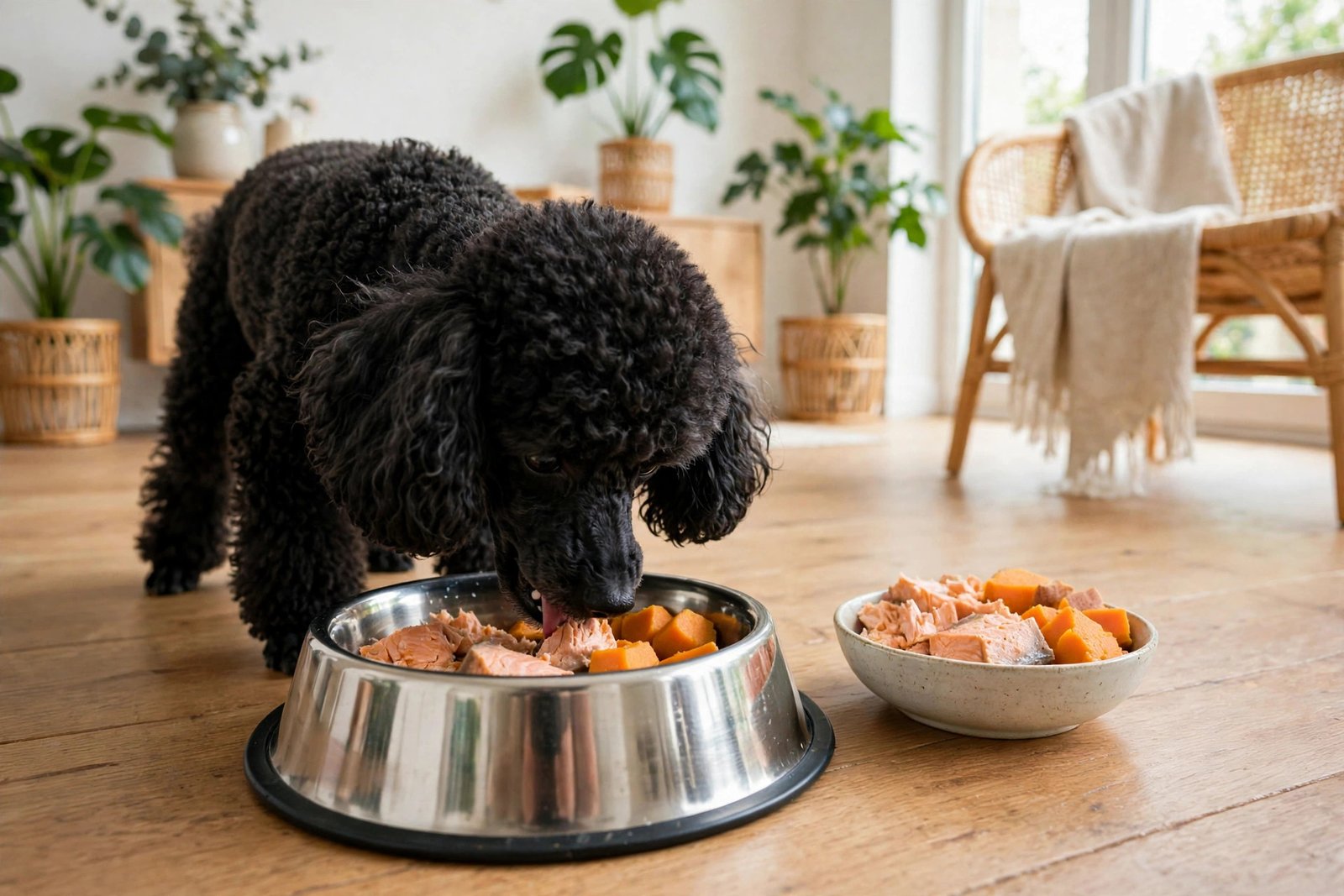
Pumpkin is another favorite. Plain canned pumpkin is gentle on the stomach and adds fiber. A tablespoon or two helps firm up loose stools and adds a taste most poodles enjoy. Blueberries are small, safe, and full of antioxidants; a small handful scattered over the food works as a topper or a training treat.
Cooked sweet potato, plain cooked chicken, and a spoonful of plain yogurt are other safe options. Sweet potato adds fiber and vitamins, chicken adds lean protein, and yogurt brings a little probiotic support. Start small — with a sensitive breed, one new thing at a time is the right pace.
What to avoid is just as important. Never feed onions, garlic, grapes, raisins, chocolate, xylitol, cooked bones, or anything heavily seasoned. When in doubt, leave it out and check with your vet.
Frequently Asked Questions
How much food does a poodle need per day?
It depends on size. A toy poodle usually eats about half to three-quarters of a cup a day, a miniature about three-quarters to a cup and a quarter, and a standard about two to three and a half cups, all split into two meals. Your dog’s body condition is the best guide — you should be able to feel the ribs easily and see a waist from above.
What is the best protein for poodles?
There is no single best protein for every poodle. Fish, chicken, and lamb are all solid choices, and many owners find fish-based foods help with coat and skin health. The key is a named meat as the first ingredient and a protein level that matches your dog’s activity — around 22–28% for most adults.
Can poodles eat grain-free food?
Yes, poodles can eat grain-free food, and some do very well on it. But grain-free is not required for the breed. Wholesome grains like brown rice and oatmeal are fine for most poodles. What matters more is the quality of the protein and fat.
Why is my poodle so picky with food?
Picky eating is common in poodles. They are smart, they notice small changes, and they can be fussy about taste, texture, and routine. Warm weather, low activity, and too many treats can all cut appetite. Try set meal times, taking the bowl up after 20 minutes, warming the food slightly, and cutting back on treats. If your poodle refuses food for more than a day or two, or loses weight, see your vet.
Do poodles need supplements for their coat?
Most poodles on a good, balanced food do not need extra supplements. A food with omega-3 and omega-6 fatty acids usually covers coat health on its own. Fish oil is the supplement owners ask about most, and it can help some dogs, but it adds calories and is not right for every dog. Regular brushing matters as much as any supplement — a poodle’s curls mat easily, and no food can fix a coat that is never brushed.
Feeding a poodle well is less about finding a perfect food and more about paying attention to your own dog. Watch their energy, their weight, their coat, and their appetite, and adjust from there. Get the basics right — a named meat first, the right fats, a slow switch, and set meal times — and the rest falls into place.