

Small dogs have fast metabolisms, tiny stomachs and — very often — surprisingly delicate digestion. A food that suits a big, robust dog can leave a little dog with gurgling tummies, loose stools and lost appetite. If your small dog struggles, the answer is usually a combination of gentler ingredients, smaller kibble and smaller, more frequent meals.
This guide covers what to look for, which food types and reputable brands are worth considering, and how to switch foods without making things worse.
Signs of a Sensitive Stomach in Small Dogs
- Frequent soft stools or bouts of diarrhoea
- Gas, stomach rumbling or occasional vomiting
- Eating grass often or licking lips (a nausea sign)
- Going off food, or eating only after long hesitation
- Stools that swing between firm and loose from week to week
Because small dogs dehydrate faster than big ones, repeated vomiting or diarrhoea in a little dog deserves a prompt vet visit. Toy breeds and puppies can also risk low blood sugar if they stop eating, so never let a small dog “wait it out” for days.
What to Look For in a Food for Sensitive Small Dogs
Small kibble size
Small-dog formulas use bite-sized pieces that little jaws can crunch comfortably. Comfortable eating slows gulping and reduces swallowed air, which itself causes gas and discomfort.
One gentle, digestible protein
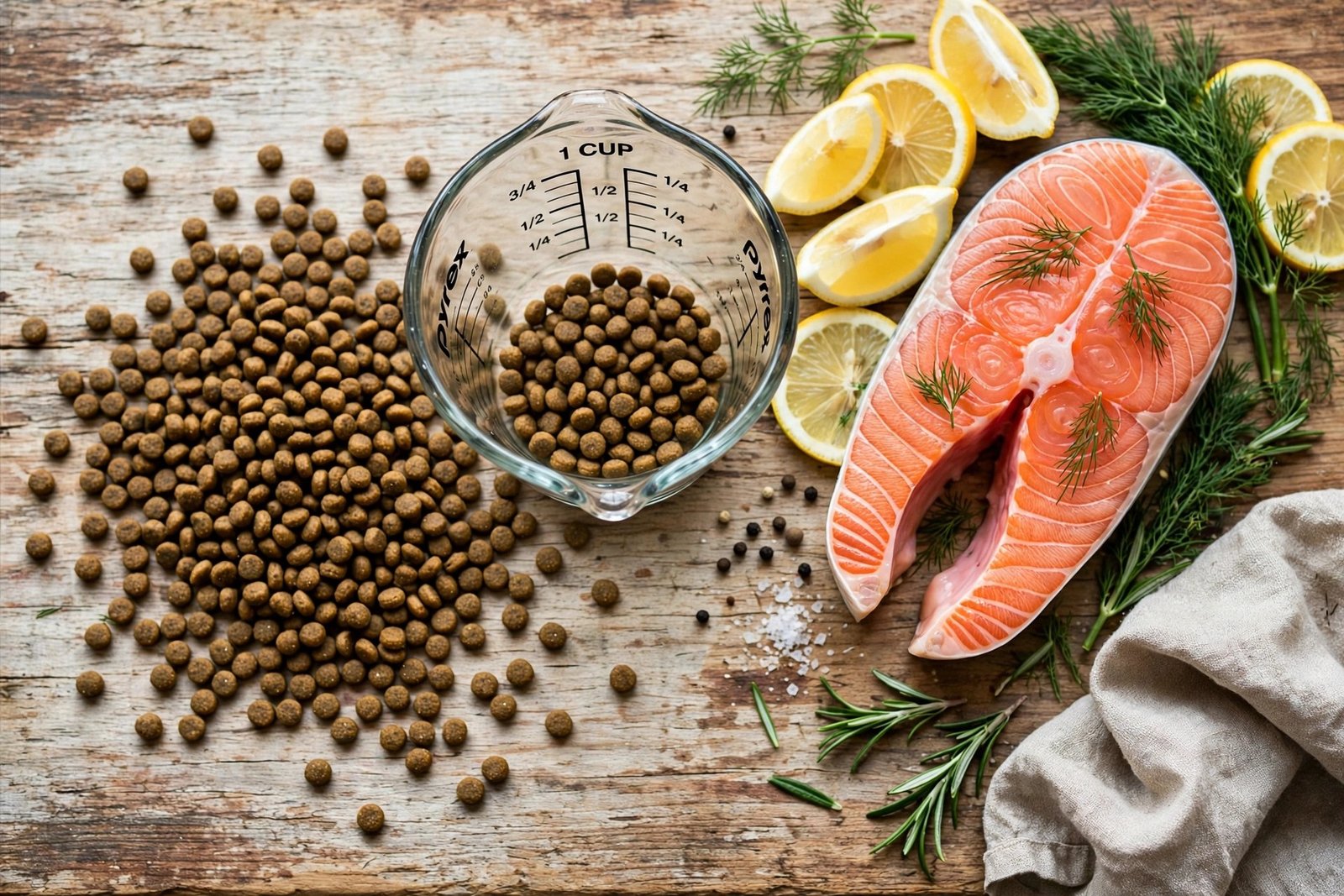
Salmon, lamb and turkey are popular gentle choices. A short ingredient list built around a single named protein helps you identify what suits your dog — and avoid what does not.
Digestible carbohydrates and fibre
Rice, oatmeal and sweet potato are kind to most stomachs. Helpful extras include:
- Pumpkin and beet pulp for stool-firming fibre
- Prebiotics (such as chicory root or FOS) to feed good gut bacteria
- Probiotics added to the finished food for digestive support
Moderate fat, no common irritants
Very rich food often triggers flare-ups. Choose moderate fat levels, and skip foods with artificial colours and flavours, and vague ingredients like “meat derivatives”. If your vet suspects an intolerance, common suspects to test include wheat, soy, beef and chicken — change one thing at a time.
Calorie density
Small dogs need more calories per kilo than big dogs, but their stomachs are tiny. A calorie-dense small-breed food lets them meet their needs in modest portions, which is easier on digestion than huge meals.
How to Read a Label for a Small, Sensitive Dog
- Start with the life-stage line. The food must say it is complete and balanced for your dog’s stage — growth for puppies, maintenance for adults, or all life stages. Small-breed wording (“for small and mini breeds”) confirms the kibble size and calorie density suit little dogs.
- Ingredients run heaviest first. You want a named protein (“salmon”, “lamb”, “turkey meal”) at the top. “Meat meal” from a named animal is concentrated protein and a perfectly good ingredient; vague “meat derivatives” hides what you are actually feeding.
- Compare the analysis, not the adjectives. For a sensitive small adult, a typical comfort zone is protein around 22–28%, fat around 12–16% and some named fibre sources in the ingredient list. Words like “gourmet” and “natural” on the front are unregulated.
- Look for functional extras. Probiotics (named strains such as Enterococcus faecium), prebiotic chicory root or FOS, and omega oils listed in the ingredients show the recipe was designed with digestion in mind.
- Check calories per cup. Small stomachs need density. Two foods can look identical on the shelf yet differ by 100 kcal per cup, which is a big difference when the whole meal is half a cup.
Food Types and Reputable Examples
Small-breed sensitive formulas. Well-known examples include Hill’s Science Diet Sensitive Stomach & Skin Small & Mini, Purina Pro Plan Sensitive Skin & Stomach in small-breed options, and Royal Canin Mini Digestive Care. These combine small kibble with digestive support and skin-friendly omega fats.
Limited-ingredient foods. Brands such as Natural Balance Limited Ingredient and Canidae Pure offer simple recipes with one protein — useful if you are narrowing down a trigger ingredient with your vet.
Wet food. Pâtés and stews are often the gentlest and most tempting option, and the extra moisture helps hydration. Wet food alone can be pricey for daily feeding; many owners mix a spoonful through kibble.
Fresh, gently cooked food. Commercial fresh recipes formulated for small dogs can be excellent. If you cook at home, follow a balanced recipe with a canine supplement, and involve your vet — home diets are easy to unbalance.
Feeding Tips That Make a Big Difference
- Feed little and often: two to three small meals a day beats one big bowl
- Keep it consistent: same food, same times, minimal extras
- Transition slowly: 7–10 days of gradually mixing new into old
- Limit treats: use plain options like a few pieces of the dog’s own kibble, and keep treats under 10% of calories
- Mind the water bowl: fresh water always available; encourage drinking after vomiting or loose stools
- No rich scraps: fatty table food is a classic trigger for a flare-up
How Much to Feed: A Small-Dog Portion Guide
Portions for little dogs are small, which is exactly why measuring matters — a heaped scoop can be half a meal too much. As a starting point for an adult small dog on a typical small-breed kibble (about 370 kcal per 100 g):
| Dog’s weight | Daily amount (approx.) |
|---|---|
| 2 kg (4.5 lb) | 45–55 g (about ¼ cup) |
| 3 kg (6.5 lb) | 60–70 g (about ⅓ cup) |
| 5 kg (11 lb) | 90–110 g (about ½ cup) |
| 7 kg (15 lb) | 115–135 g (about ⅔ cup) |
| 10 kg (22 lb) | 150–175 g (about ¾–1 cup) |
Weigh the food on a kitchen scale for the first week — you will be surprised how far a “cup” drifts. Active, young and unneutered dogs sit at the top of the range; older, neutered or less active dogs at the bottom. You should feel your dog’s ribs easily under a thin fat covering, with a visible tuck at the waist.
A Gentle 10-Day Transition Plan
Small, sensitive stomachs repay patience. Change foods over about ten days:
| Days | Old food | New food |
|---|---|---|
| 1–3 | 75% | 25% |
| 4–6 | 50% | 50% |
| 7–8 | 25% | 75% |
| 9–10 | 0% | 100% |
If stools soften at any step, hold that ratio for two extra days before moving on. A spoonful of plain pumpkin purée mixed in can help stools stay firm during the change. If your dog vomits repeatedly, refuses food for more than a day, or has watery diarrhoea, stop and call your vet — little dogs should never be left to “push through” for days.
Building a Gut-Friendly Daily Routine
Food choice is only half the story; routine is the other half, and for little dogs it is often the half that fixes things:
- Fixed mealtimes. Two or three meals at the same times daily. A predictable schedule lets the digestive system settle into a rhythm, and makes appetite changes easy to spot.
- A calm feeding spot. Stress shows up in small dogs’ stomachs quickly. Feed away from household chaos, other pets and competitive gulpers.
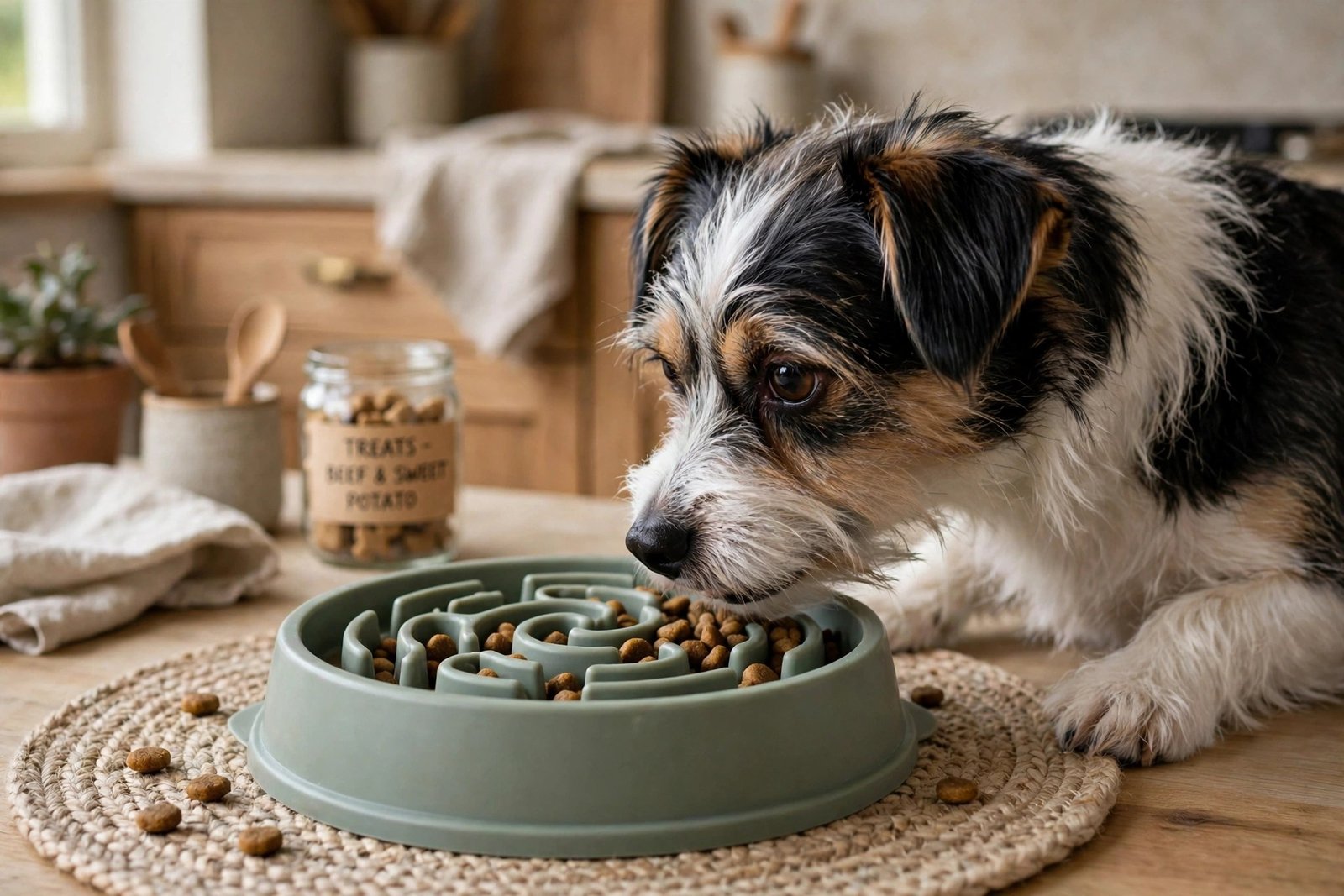
- Slow the eating down. A slow-feeder bowl or a lick mat with wet food spread thin turns a 30-second gulp into a relaxed five-minute meal, cutting swallowed air and regurgitation.
- Post-meal rest. Gentle pottering after eating is fine; wild play on a full tiny stomach is not.
- A probiotic-friendly environment. Avoid unnecessary antibiotics and sudden diet extras; a stable gut is a boring gut, in the best way.
- A simple food diary for the first month. Note the food, treats, stools and any flare-ups. Patterns — the Sunday roast scrap, the new dental chew — leap off the page once written down.
Pros and Cons: Wet, Dry and Fresh at a Glance
Dry food (kibble)
Pros: easy to measure precisely, economical, stores well, and the crunch helps teeth a little. Cons: lowest moisture, and some sensitive dogs find rich kibble harder work than wet food.
Wet food
Pros: highly digestible, hydrating and very tempting for fussy small dogs. Cons: costs more per calorie, needs refrigerating once opened, and does nothing for teeth.
Fresh, gently cooked food
Pros: simple ingredient lists, soft textures and excellent palatability. Cons: the priciest option, needs freezer space, and homemade versions must be balanced with a supplement and vet input.
Many owners land on a practical middle path: a sensitive-formula kibble as the base with a spoonful of matching wet food on top — the digestion of wet food with the economy and measurable portions of dry.
How to Choose and Judge a New Food
- Check the label: formulated for small or mini breeds, complete and balanced for your dog’s life stage
- Read the first five ingredients: named protein first, digestible carbs next
- Start with a small bag and transition gradually
- Score after 3–4 weeks: firmer stools, less gas, steady appetite, bright coat and good energy mean you have a winner
- If symptoms persist, ask your vet about an elimination trial, probiotics, or tests for parasites and other causes
Common Mistakes With Sensitive Small Dogs
- Eyeballing portions. On a 4 kg dog, one extra tablespoon per meal is a significant calorie error — repeated daily, it means weight gain and extra strain on the gut.
- Rotating foods for “variety”. Dogs do not need a changing menu; sensitive ones actively do worse. Find a winner and stick with it.
- Treating all day. Tiny dogs receive tiny treats, but five a day can equal a whole meal — and five unknown ingredient lists for the stomach to cope with.
- Letting a small dog skip meals for days. Toy breeds, puppies and diabetic dogs can risk low blood sugar. A small dog off its food for more than 24 hours needs a vet call, not patience.
- Ignoring dental pain. Small breeds are prone to dental disease, and “picky eating” is often a sore mouth. If crunching seems difficult, book a dental check before changing foods again.
Frequently Asked Questions
What is the gentlest protein for a small dog with a sensitive stomach?
Salmon and lamb suit many dogs, but “gentle” is individual. If your dog has always eaten chicken, trying a fish-based food is a sensible, simple change.
Is wet food better than dry food for sensitive stomachs?
Wet food is often easier to digest and more hydrating, but a good sensitive-formula kibble works well too. Many small dogs do best on a mix of both.
Can I give my small dog probiotics?
Canine probiotics are widely used and generally well tolerated. Choose a dog-specific product and confirm the dose with your vet, especially for very small dogs.
How much should a small dog eat each day?
Follow the food’s guide for your dog’s weight, then adjust. As a rough guide, small dogs often need around 40–60 calories per kilo of body weight daily, but individual needs vary — body condition is your best guide.
When should I worry about a sensitive stomach?
See your vet promptly for vomiting or diarrhoea lasting more than 24–48 hours, blood in stool or vomit, weight loss, lethargy, or if a small puppy or toy breed stops eating.
Grain-free or with grains — which is better for sensitive small dogs?
Neither is automatically better. Rice and oatmeal are among the most digestible ingredients for most dogs; grain-free only helps if grains are the proven trigger. Choose by the protein, the fibre sources and how your dog actually responds.
Can I cook for my small dog instead of buying food?
Yes, but small dogs have no margin for nutritional error — a missing mineral matters more at 3 kg than at 30 kg. Cook only from a balanced recipe, add the specified canine supplement, and have your vet review the plan.
Conclusion
Small dogs with sensitive stomachs thrive on simple, digestible food in small pieces and small meals. Choose a small-breed sensitive formula with one gentle protein, fibre and probiotic support, switch slowly, and judge the results over a few weeks. If the tummy trouble continues, your vet can help rule out allergies and other causes — little dogs deserve quick answers, and so do their owners.