

As dogs age, their mouths often tell the story: worn teeth, tender gums, a few extractions, or dental disease that makes crunching kibble painful. Wet food is the obvious answer — but not every tin is right for an older dog. Senior dogs need nutrition that supports ageing joints, kidneys, muscles and weight, in a texture they can eat comfortably. Here’s how to choose the best wet food for a senior dog with dental problems.
Why Wet Food Suits Dogs with Dental Issues
Wet food typically contains 70–80% moisture and a soft texture that needs almost no chewing. For a dog with missing teeth, loose teeth or sore gums, that means mealtimes go back to being a pleasure instead of a struggle. The extra water also helps older dogs stay hydrated, which supports kidney function — a real consideration in senior years. Many dogs also find wet food more aromatic and appealing, useful when an ageing appetite fades.
A Note on Dental Pain First
If your dog is dropping food, chewing on one side, pawing at their mouth or has bad breath, book a dental check before simply switching food. Wet food makes eating easier, but it does not fix infected teeth or gum disease, and dental pain is one of the most common hidden causes of misery in older dogs. Sometimes a dental procedure transforms a dog’s quality of life far more than any food change.
What to Look for in Wet Food for Seniors with Bad Teeth
Complete and balanced for adults or seniors. The label should state the food is a complete diet meeting recognised standards (such as FEDIAF or AAFCO) for adult maintenance. “Complementary” wet foods are treats, not meals.
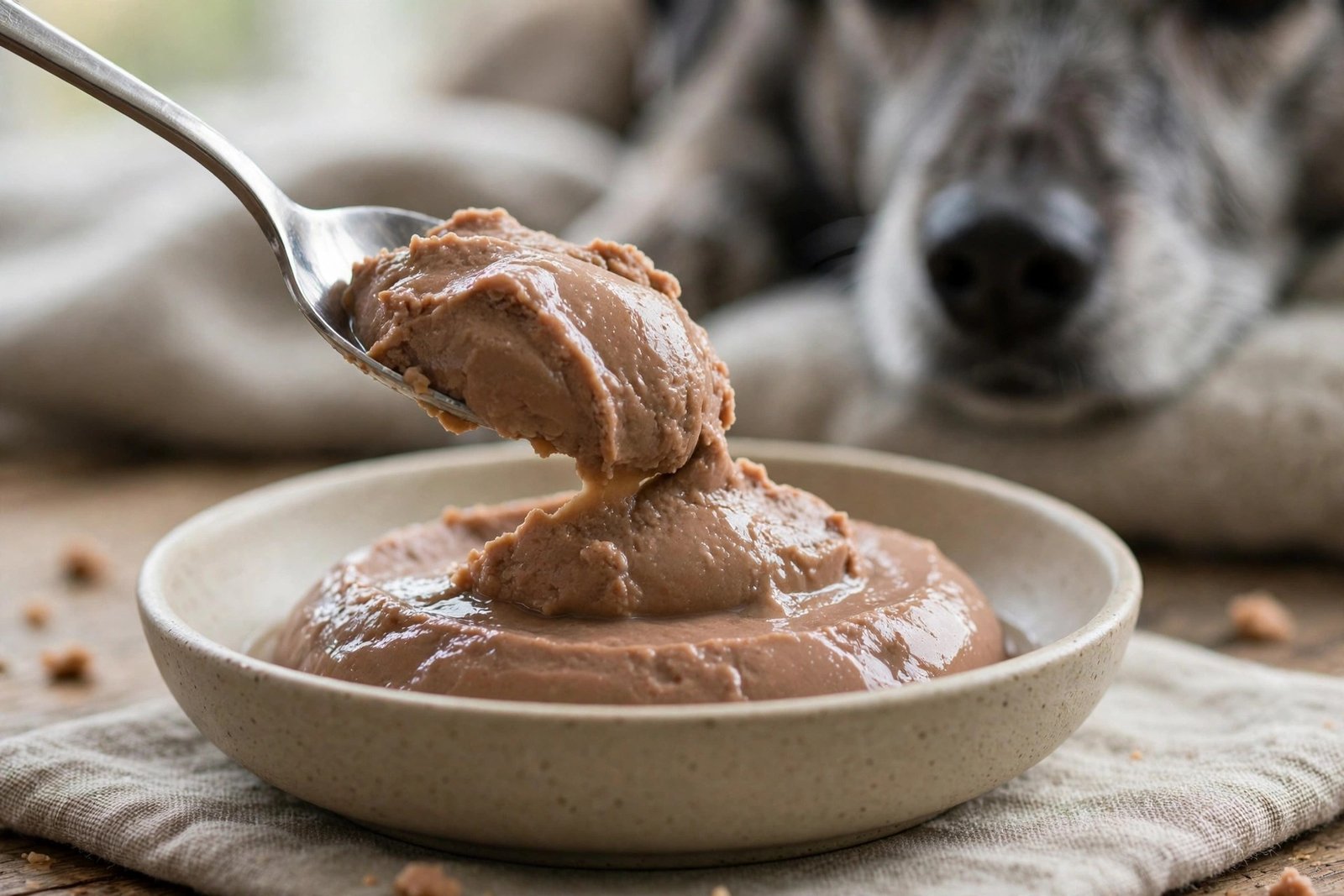
A smooth, manageable texture. Pâtés and finely minced recipes are easiest for dogs with few teeth. Chunky stews with firm pieces can be mashed with a fork, but a dog with a very sore mouth will do better with a smooth consistency.
Good-quality protein. Ageing dogs lose muscle easily, and protein helps them keep it. Look for named meats high on the ingredients list — chicken, turkey, lamb, beef or fish — rather than anonymous “meat and animal derivatives.”
Moderate calories. Senior metabolism slows, and excess weight strains arthritic joints. Wet food is usually less calorie-dense than kibble per gram, which helps, but still measure portions — obesity is common in seniors fed “as much as they like.”
Joint and organ support. Ingredients such as fish oil (omega-3s), glucosamine and chondroitin are welcome extras. Dogs with diagnosed kidney disease need specific veterinary diets with controlled phosphorus, so follow your vet’s advice in that case.
No hard extras. Avoid wet foods containing baked biscuit pieces or hard chunks marketed as “with crunchy bites” — exactly what a sore mouth doesn’t need.
Food Types and Brands Worth Considering
Major pet food makers produce senior wet ranges that fit these criteria. Royal Canin and Hill’s Science Diet both make senior wet foods in soft textures with controlled mineral levels for older dogs, and Purina Pro Plan’s senior lines include wet options with a smooth consistency. Butcher’s, Lily’s Kitchen and similar brands offer soft pâté-style complete foods that many owners of toothless dogs rely on. The best choice is the complete senior wet food your dog eats enthusiastically and maintains weight on — there is no single “right” tin.
If your dog strongly prefers their current kibble, a middle path is soaking it in warm water or low-salt stock for 15–20 minutes until it mashes to a porridge. This keeps familiar nutrition while removing the crunch.
How Much to Feed: A Practical Portion Guide
Wet food portions vary a lot between brands because moisture and calorie density differ, so the tin’s own guide is always your starting point. As a general orientation for a complete wet food of typical density, senior dogs often fall in these neighbourhoods:
| Dog weight | Approx. wet food per day | Practical split |
|---|---|---|
| 5 kg (11 lb) | 300–400 g | Two meals of 150–200 g |
| 10 kg (22 lb) | 600–800 g | Two or three meals of 200–300 g |
| 20 kg (44 lb) | 1,000–1,300 g | Two meals of 500–650 g |
| 30 kg (66 lb) | 1,400–1,800 g | Two meals of 700–900 g |
Weigh the food rather than guessing by the tin, and reassess body condition every two weeks: ribs should be felt easily with light pressure, and your dog should have a visible waist from the side and above. Senior dogs that are losing weight unintentionally need a vet check, not just bigger portions — unexplained weight loss in an older dog can be an early sign of illness.
Making Wet Food Even Easier to Eat
If your dog still struggles, a few small adjustments help a great deal:
- Mash it finer. Break pâtés and minced recipes down with a fork, or add a spoonful of warm water and stir to a soft porridge consistency.
- Warm it gently. Ten seconds of warmth releases aroma and softens the texture further. Stir well and test with a fingertip — never serve food with hot spots.
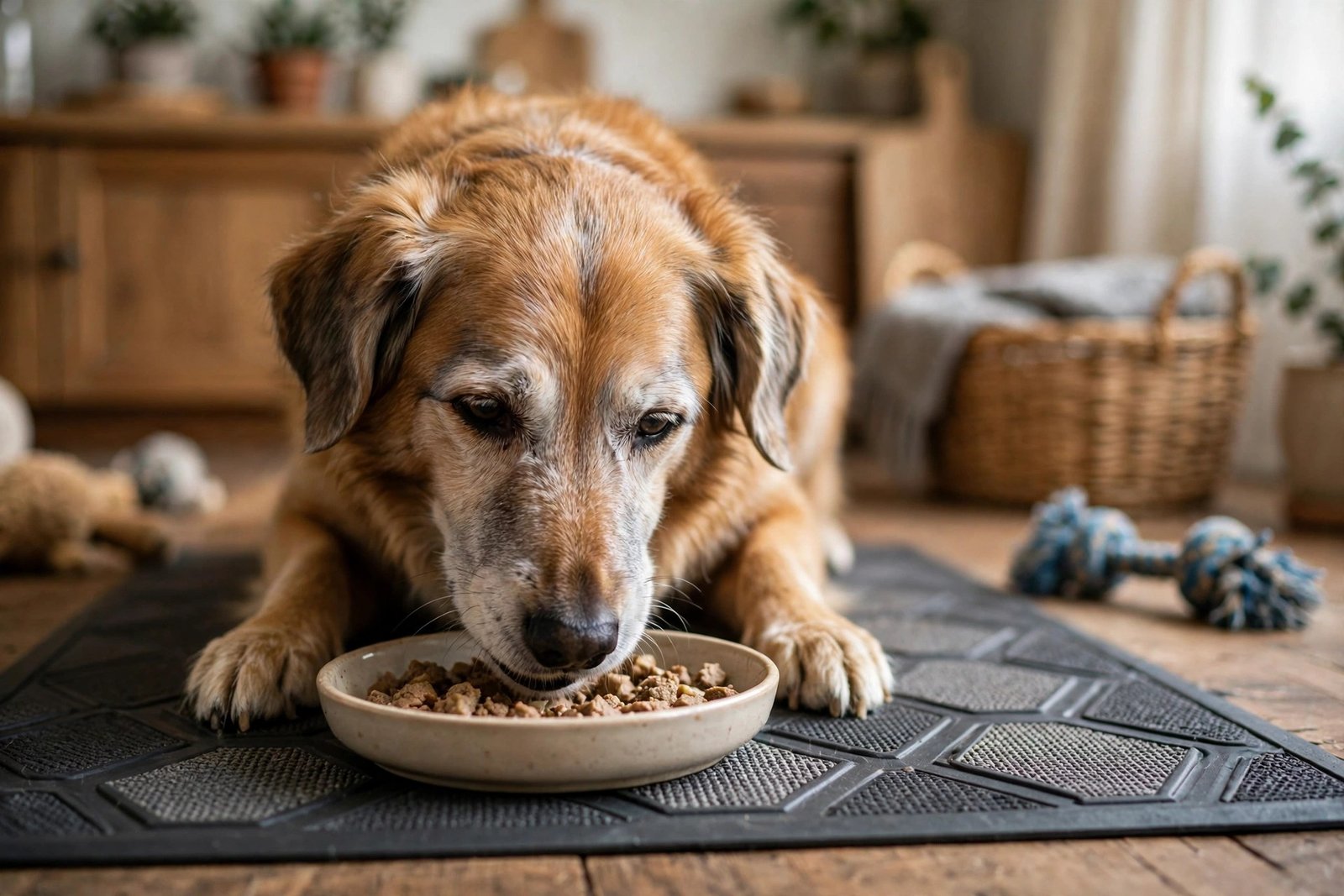
- Raise the bowl slightly. Dogs with stiff necks, arthritis or missing teeth often eat more comfortably from a bowl raised a few centimetres on a stable stand.
- Offer a lick mat. Spreading soft food on a textured lick mat slows fast eaters, reduces gulping, and turns the meal into gentle enrichment.
- Keep meals peaceful. Feed sore-mouthed seniors away from boisterous younger dogs so they can take their time without feeling rushed or guarding their bowl.
Pros and Cons of Wet Food for Senior Dogs
Pros: effortless to chew; highly palatable for fading appetites; extra moisture supports hydration and kidneys; easy to mash to any consistency; helpful for maintaining weight in dogs that find large volumes of kibble daunting.
Cons: more expensive per calorie than kibble, especially for large dogs; opened tins need refrigeration and use within two to three days; it does not provide the chewing action some dental plans rely on; large quantities are heavy to store and carry; and very soft diets can allow tartar to build faster, so ongoing vet-guided dental care matters.
If Wet Food Alone Is Not Working
Sometimes an older dog still loses condition on a standard senior wet food. In that case, talk to your vet about veterinary therapeutic diets — renal diets for kidney disease, gastrointestinal diets for chronic tummy trouble, or high-calorie recovery diets after illness or dental surgery. These are formulated for specific medical needs and should be used under veterinary direction rather than chosen at random. Also review medications and pain control: a dog whose arthritis pain is well managed will often eat and move better, which in turn protects muscle and appetite.
Feeding Tips for Dogs with Sore Mouths
- Serve wet food at room temperature or very slightly warmed — cold food straight from the fridge can sting sensitive mouths and smells less appealing.
- Use a shallow, wide bowl so whiskers and sore jaws aren’t pressed against deep sides.
- Feed smaller meals two or three times a day rather than one large one.
- After meals, gently check lips and gums if your dog tolerates it; food packing into loose gum flaps is uncomfortable.
- Keep up dental care as advised by your vet — soft food alone doesn’t clean teeth, and some dogs still benefit from dental chews soft enough to gum, or vet-recommended oral gels.
Switching a Senior Dog to Wet Food Safely
Even a dog with a sore mouth deserves a gentle transition. Sudden diet changes can upset an older digestive system, so switch over five to seven days: replace a quarter of the old meal with wet food for two days, then half, then three-quarters, then the full meal. If your dog was eating kibble and the mouth is clearly painful, you can move faster — soaking the remaining kibble soft in the meantime — but watch stools and appetite as you go. During the switch, weigh your dog once a week; seniors can lose or gain condition surprisingly quickly, and the scale will tell you whether the new portions are right. Introduce one new product at a time rather than rotating several tins at once, because if something disagrees with your dog you want to know exactly what it was.
Signs the New Food Is Suited to Your Dog
You have chosen well when you see most of the following: your dog comes to the bowl willingly and finishes meals without dropping food or pawing at the mouth; weight stays stable week to week; stools are formed and regular; the coat looks healthy rather than dull or flaky; and your dog seems comfortable and content after eating. Keep a short note of weight, appetite and any mouth discomfort for the first month — it makes the follow-up conversation with your vet far more useful, and it gives you confidence that the new routine is genuinely helping rather than merely different.
A Final Word on Comfort
Food is one of the great daily pleasures of a dog’s life, and old age should not take it away. A sore-mouthed senior that hurries to the bowl again — tail wagging, meal finished without hesitation — is the clearest possible sign that you have got the food, the texture and the portions right. Keep notes, keep portions honest, and keep the vet involved, and most senior dogs enjoy their meals right into a ripe old age.
Frequently Asked Questions
Can a dog with no teeth eat wet food happily?
Yes. Toothless dogs manage soft wet food very well — their gums harden, and a smooth pâté needs no chewing at all. Many eat better than they did with painful teeth.
Is wet food worse for a dog’s teeth than kibble?
Kibble’s dental benefit is often overstated; most dogs crunch it too quickly for real cleaning. Dental health depends more on brushing, chews and vet care. Never force a dog in pain to eat hard food for the sake of their teeth.
How much wet food should a senior dog eat?
Follow the tin’s guide for your dog’s weight, then adjust to keep them at a healthy body condition. As a very rough example, a 10 kg senior may need around 600–800 g of wet food daily, but this varies hugely by brand and the dog.
Can I mix wet and dry food?
Yes, if the dry portion is soaked soft. Mixing is a good way to transition and can help picky seniors eat enough.
When should I worry about appetite loss?
A senior dog that stops eating, loses weight or seems in pain needs a vet visit promptly — appetite loss in old dogs is often a symptom, not just fussiness.
How do I store opened wet food safely?
Cover the tin or transfer the food to a sealed container, refrigerate it, and use it within two to three days. Take the chill off before serving, and throw away food that has been sitting in the bowl for more than a couple of hours.
Can I soften my dog’s usual kibble instead of switching?
Yes — soaking kibble in warm water or low-salt, onion-free stock for 15–20 minutes produces a soft mash many seniors accept happily. It is a good first step while you arrange a dental check, and some dogs stay on soaked kibble long term.
My senior dog eats wet food but is still losing weight. What now?
Book a vet appointment. Weight loss in an older dog can signal kidney disease, dental pain, thyroid problems or other illness, and it should be investigated rather than simply answered with more food. Bring a note of what and how much you feed, and how the weight has changed.
After a dental procedure, when can my dog eat normally again?
Follow your vet’s instructions — usually soft food for several days after extractions, then a gradual return to the dog’s normal soft diet as the gums heal. Most dogs feel dramatically more comfortable within a week or two and eat better than they did before the procedure.
Conclusion
The best wet food for a senior dog with dental problems is complete, soft, protein-rich and measured to keep weight steady. Choose a smooth texture, named meats and a recipe made for older dogs, and treat the food change as a partner to — not a replacement for — proper dental care. With a comfortable mouth and a tasty bowl, most senior dogs rediscover their love of mealtimes.