

If you have ever watched a husky eat, you know the scene. One day they clean the bowl in thirty seconds flat. The next day they sniff it, look at you like you have insulted them, and walk away. Huskies are famous for two things: endless energy and very strong opinions about dinner.
That mix makes feeding them trickier than it looks. A husky can run for miles, play hard all afternoon, and still come home and turn their nose up at a perfectly good bowl of kibble. Once you understand what a husky actually needs, though, choosing food gets a lot simpler.
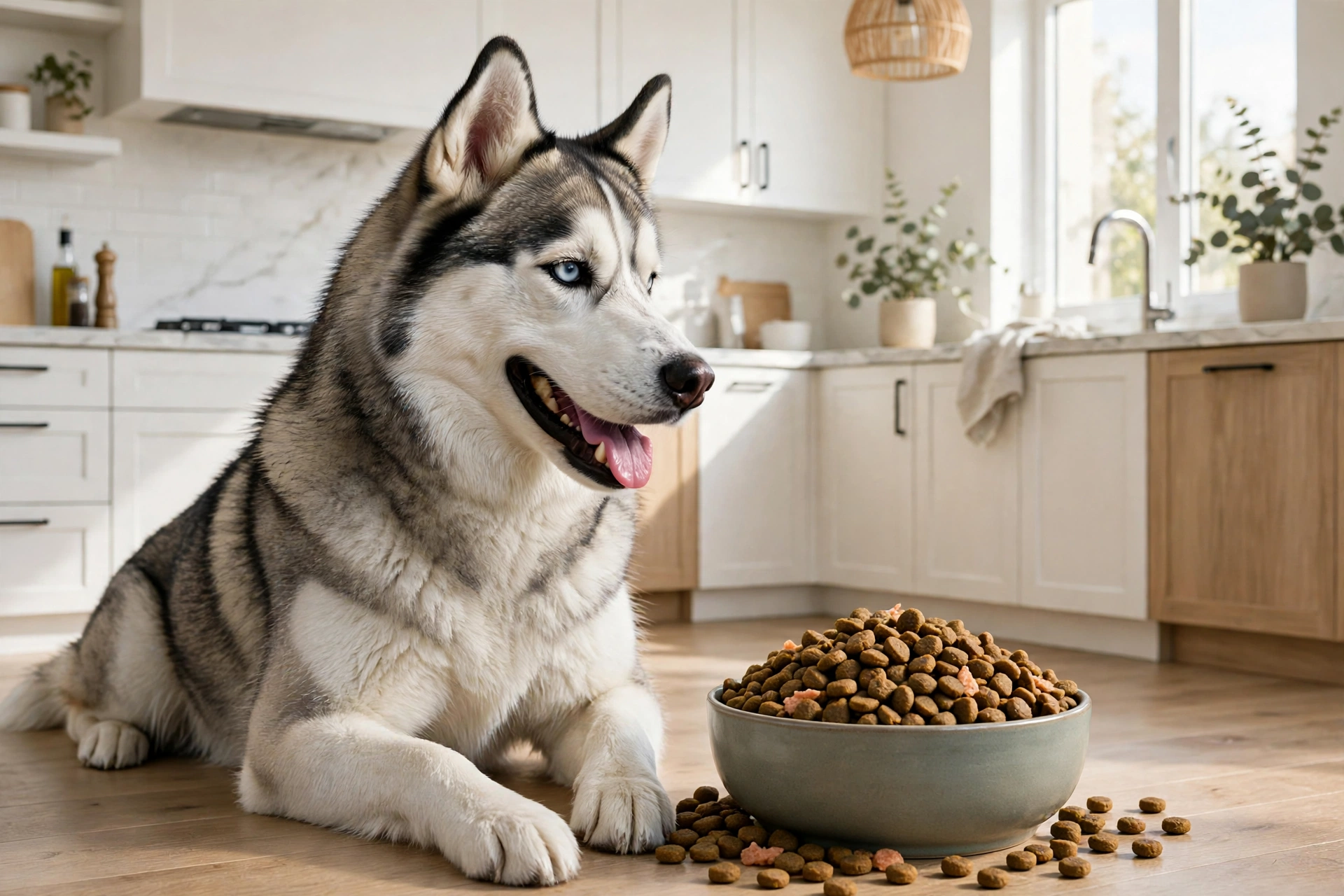
What Makes Huskies Different at Mealtimes?
Huskies were bred to run long distances in cold weather while eating relatively little. Sled dogs in the far north worked all day on rations that would leave many other breeds hungry, and that history still shows up in the modern husky sitting on your couch.
Their metabolism is efficient. A husky often needs fewer calories per pound than a dog of the same size from a less active breed — until you pair that with a dog that burns a huge amount of energy on a long run or a full day of play. The calorie need swings a lot depending on what the dog did that day.
Then there is the coat. A husky’s thick double coat needs a steady supply of good fats to stay healthy and shiny. Dry, dull fur or extra shedding can sometimes point to a diet that is short on the right fats, though coat trouble can have other causes too, so it is worth talking to your vet if it sticks around.
Huskies also tend to be picky. They may love a food for a week and then refuse it, or skip meals on warm days and eat twice as much after a long hike. This is normal for the breed more often than not, but a dog that stops eating for more than a day or two should always get checked out.
One more thing sets them apart: huskies can be prone to a skin condition called zinc-responsive dermatosis, where the body does not absorb zinc well. It can show up as crusty skin around the eyes, nose, and mouth. Only a vet can diagnose it, so it is worth knowing the name and asking about it if you ever see those signs.
How Much Should a Husky Eat Each Day?
There is no single number that fits every husky. A 35-pound female who spends most of the day napping needs far less than a 60-pound male who runs five miles with you every morning. Age matters too: puppies need more calories per pound because they are growing, and seniors need fewer because they slow down.
Most adult huskies land somewhere between 1,200 and 1,800 calories a day, with very active dogs going higher. In cups, that usually works out to about 2 to 3 cups of a standard kibble per day for an adult, split into two meals.
| Life stage | Approx. daily calories | Approx. cups per day |
|---|---|---|
| Puppy (2–6 months) | 900–1,400 | 2.5–3.5, split into 3–4 meals |
| Puppy (6–12 months) | 1,200–1,600 | 2.5–3.5, split into 2–3 meals |
| Adult, active | 1,400–1,800 | 2.5–3, split into 2 meals |
| Adult, less active | 1,100–1,400 | 2–2.5, split into 2 meals |
| Senior (8+ years) | 1,000–1,300 | 2–2.5, split into 2 meals |
Treat these as rough guides, not rules. Your dog’s body condition is the best guide of all: you should be able to feel the ribs easily under a thin layer of fat, and your husky should have a visible waist when you look down at them. If your husky is gaining weight, trim the portion a little and see how they do over two or three weeks.
What to Look for on the Label
The label tells you almost everything you need to know, once you know how to read it. First, check the first ingredient. You want a named meat — chicken, salmon, lamb, beef — listed first. “Meat meal” from a named source, like chicken meal, is fine too. Vague words like “meat by-products” at the top of the list are a sign to keep looking.
Protein is next. For an active breed like a husky, look for foods with around 24–30% protein, with higher levels suiting very active dogs. Fat matters just as much, since fat is where a lot of a husky’s energy comes from. Around 14–18% fat is a sensible range for most adult huskies, with active dogs sitting at the higher end.
Check for an AAFCO nutritional adequacy statement on the bag. It should say the food is complete and balanced for a particular life stage, such as growth, adult maintenance, or all life stages. That line means the food meets the nutrient profiles set by the Association of American Feed Control Officials.
A good food also lists a named fat source, like chicken fat or salmon oil, and includes omega-3 and omega-6 fatty acids for skin and coat health. Learning how to read a dog food label properly is a skill that pays off every time you stand in the pet food aisle.
What should you skip? Foods where corn, wheat, or soy is the first ingredient, foods loaded with artificial colors, and foods that hide behind long lists of fillers with very little actual meat. Grain-free comes up a lot with huskies, but there is no rule that says they must eat grain-free — wholesome grains like brown rice and oatmeal are fine for most of them, and the quality of the protein and fat matters far more than whether the food has grains or not.
Best Types of Food for Huskies
Not every formula suits every husky, so it helps to know the main types. Most owners end up with one of these three.
Fish-based formulas are a popular pick for huskies. Salmon, whitefish, and herring are rich in omega-3 fatty acids, which support the skin and that thick double coat. Many huskies with itchy skin or a dull coat do well on a fish-based food, and the strong taste can help with picky eaters. The downside is mostly price — fish formulas usually cost a bit more.
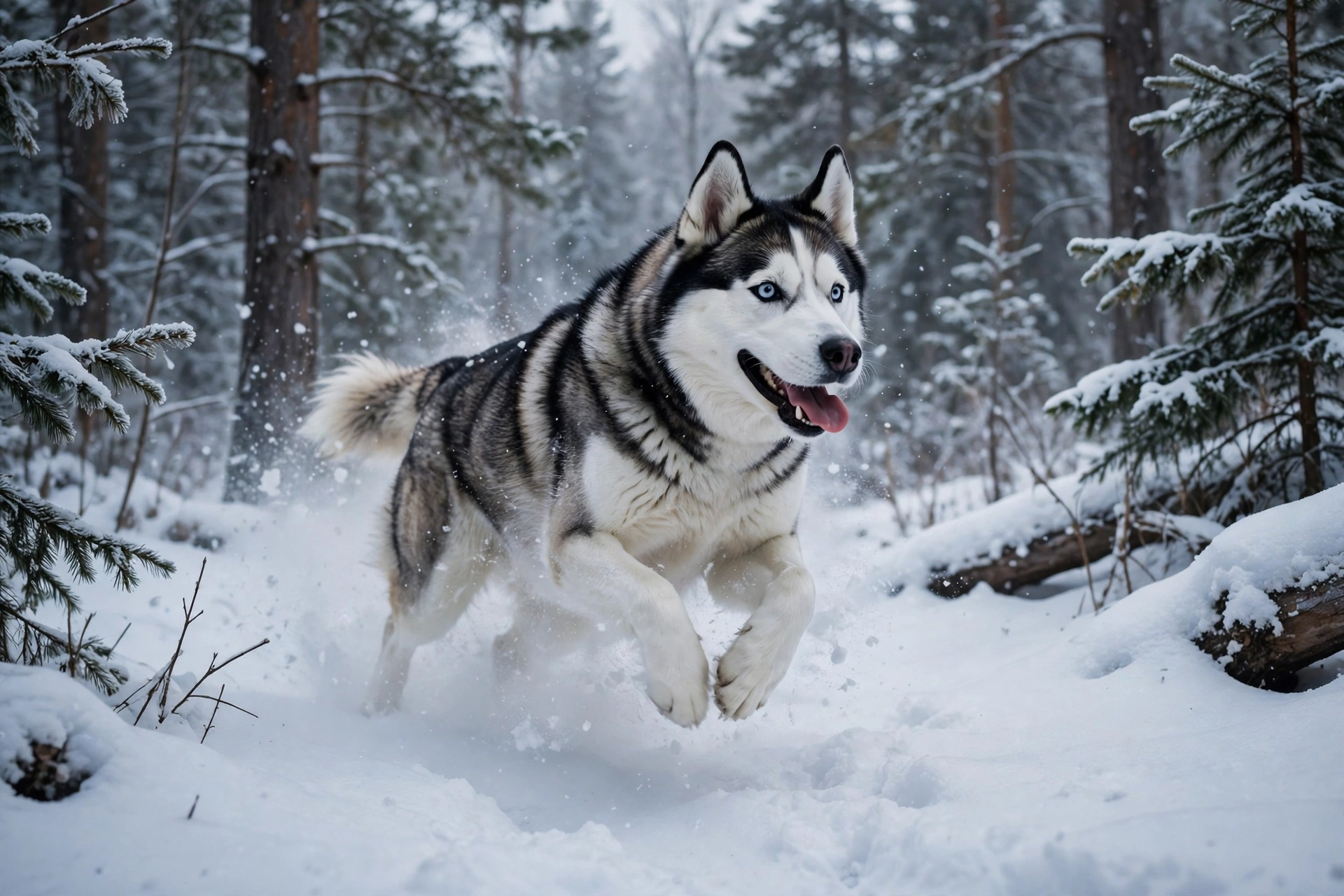
High-protein formulas are built for dogs that work hard. They usually list a named meat first, with protein levels at the top of the range, and they suit huskies that run, hike, or pull. If your husky is out with you for hours most days, this type makes sense. If your husky is more of a couch dog, a very high-protein food can pack in more calories than they need, so watch the waistline. Owners comparing options often start with a good high-protein food for active dogs and then adjust the portion to match their dog’s real activity level.
Large-breed formulas are designed for dogs in the 50-pound-and-up range, which covers many male huskies. They tend to have controlled calcium levels for steady bone growth in puppies, plus joint support like glucosamine. The same activity-first thinking applies to other high-energy breeds too — the feeding logic for high-energy breeds like border collies runs along similar lines.
So which one should you pick? Start with your dog’s life. A young, lean, very active husky often does best on a high-protein or fish-based food. A calmer adult with a sensitive stomach might do better on a fish-based or limited-ingredient formula. Buy a small bag first. If your husky eats it happily for two weeks, has firm stools, good energy, and a healthy coat, you have your answer.
Dry kibble is the most common choice, and it works well for most huskies. Wet food can tempt a picky eater, and mixing a spoonful of wet food into kibble is a trick many husky owners swear by.
Huskies and Sensitive Stomachs
Huskies have a reputation for sensitive stomachs, and a lot of it is earned. A sudden food change, too many treats, or something scavenged on a walk can mean a day of loose stools. The first rule is to change food slowly, which we cover below. The second is to keep treats simple and limited — rich table scraps and fatty leftovers are a fast way to upset a husky’s stomach. Stick to one or two treat types, and keep treats under 10% of daily calories.
Picky eating is a separate headache. A husky that skips a meal is usually fine — healthy dogs do not starve themselves. But a dog that refuses food for more than 48 hours, or that loses weight, needs a vet visit. Sometimes pickiness hides a real problem, like a sore tooth or an upset stomach, and it is better to check early.
If your husky has ongoing stomach trouble — loose stools that keep coming back, vomiting, or constant gas — ask your vet about it before you start cycling through foods on your own. A vet can rule out parasites, allergies, and other causes. Coat health ties into this too: a dull coat or flaky skin can point to a diet short on omega fatty acids, but it can also point to the zinc issue mentioned earlier, which needs veterinary care, not a new bag of food.
How to Switch Your Husky to a New Food
Huskies punish sudden food changes. Swap the bowl overnight and you will probably meet the consequences the next morning. A slow switch over a week gives the gut time to adjust.
Here is a simple 7-day plan that works for most dogs:
Day 1–2: Mix 25% new food with 75% old food. Watch the stools. A little softness is normal, but real diarrhea means slow down.
Day 3–4: Move to a 50/50 mix. Keep meals at the same times and the same total amount. This is the stage where picky huskies sometimes try to eat around the new kibble, so mixing well helps.
Day 5–6: Go to 75% new food and 25% old food. By now your dog should be eating the new food without a fuss.
Day 7: Serve 100% new food. Keep an eye on energy, stools, and appetite for another week. It can take two to three weeks for a coat or energy change to show up, so do not judge the food on day seven alone.
Homemade Additions That Work Well
A plain bowl of kibble is fine, but a few simple toppers can make dinner more appealing to a picky husky and add useful nutrients at the same time. The trick is keeping them simple and keeping the total under 10% of daily calories, so the balanced kibble still does the heavy lifting.
Cooked salmon is a great topper. It brings omega-3s and a strong smell that many huskies love. A couple of spoonfuls of flaked, plain cooked salmon over kibble can turn a refused meal into a finished one. Skip raw salmon, and skip anything seasoned or cooked in butter.
Pumpkin is another favorite. Plain canned pumpkin — not pumpkin pie filling, which has sugar and spices — is gentle on the stomach and adds fiber. A tablespoon or two helps firm up loose stools. Blueberries are small, safe, and full of antioxidants; a small handful scattered over the food works as a topper or a training treat.
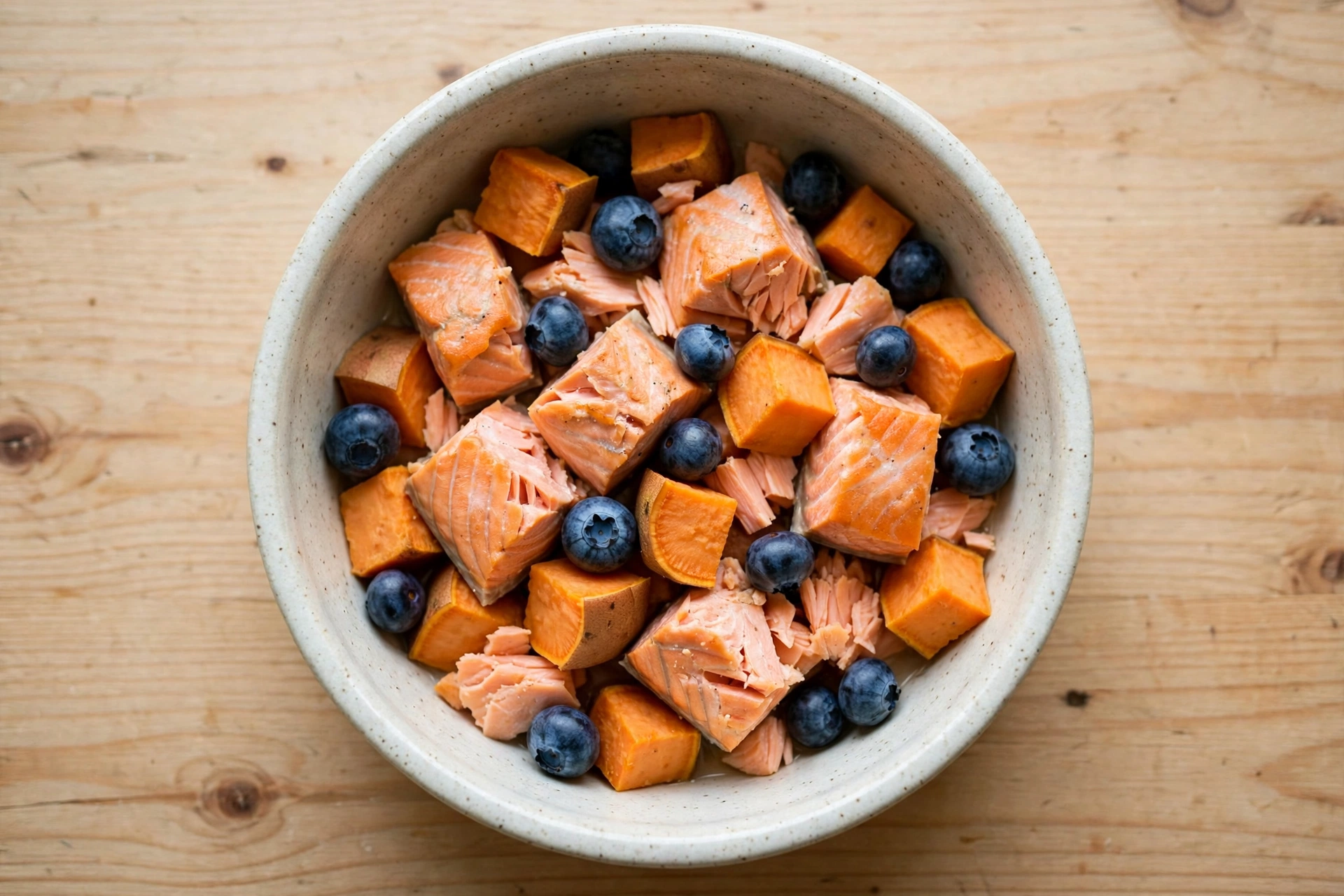
Cooked sweet potato, plain cooked chicken, and a spoonful of plain yogurt are other safe options. Sweet potato adds fiber and vitamins, and chicken adds lean protein. Start small and see how your dog does.
What to avoid is just as important. Never feed onions, garlic, grapes, raisins, chocolate, xylitol, cooked bones, or anything heavily seasoned. These are toxic or dangerous for dogs, and huskies are no exception. When in doubt, leave it out and check with your vet.
Frequently Asked Questions
How much food does a husky need per day?
Most adult huskies eat about 2 to 3 cups of kibble a day, split into two meals, which works out to roughly 1,200 to 1,800 calories. Active dogs need more, and less active dogs need less. Puppies eat more often and more per pound because they are growing. Your dog’s body condition is the best guide — you should be able to feel the ribs easily and see a waist from above.
What is the best protein for huskies?
There is no single best protein for every husky. Fish, chicken, and lamb are all solid choices, and many owners find fish-based foods help with coat and skin health. The key is a named meat as the first ingredient and a protein level that matches your dog’s activity — around 24–30% for most active adults.
Can huskies eat grain-free food?
Yes, huskies can eat grain-free food, and some do very well on it. But grain-free is not required for the breed. Wholesome grains like brown rice and oatmeal are fine for most huskies. What matters more is the quality of the protein and fat. If you are thinking about grain-free because of a suspected sensitivity, it is worth talking to your vet first.
Why is my husky so picky with food?
Picky eating is common in huskies. They were bred to work hard on modest rations, so they often eat less than owners expect, and they can be fussy about taste, texture, and routine. Warm weather, low activity, and too many treats can all cut appetite. Try set meal times, taking the bowl up after 20 minutes, and cutting back on treats. If your husky refuses food for more than a day or two, or loses weight, see your vet.
Do huskies need supplements for their coat?
Most huskies on a good, balanced food do not need extra supplements. A food with omega-3 and omega-6 fatty acids usually covers coat health on its own. Fish oil is the supplement owners ask about most, and it can help some dogs, but it adds calories and is not right for every dog. If your husky has ongoing coat or skin trouble, ask your vet before adding anything — conditions like zinc-responsive dermatosis need a vet’s diagnosis, not a supplement from a pet store shelf.
Feeding a husky well is less about finding a perfect food and more about paying attention to your own dog. Watch their energy, their weight, their coat, and their appetite, and adjust from there. Get the basics right, and the rest falls into place. Your husky will still have opinions about dinner, of course — that part never really changes.