

Some dogs go crazy for salmon the second it hits the pan. The smell fills the kitchen, they park themselves by the stove, and they watch every single move you make. If your dog is one of those, this recipe is going to make you their favorite person.
Salmon and rice is one of the easiest homemade dog meals you can cook. It takes about half an hour, uses ingredients from any grocery store, and most dogs love it. It is also a gentle option for dogs with sensitive stomachs or itchy skin.
This is a simple, plain recipe. No seasoning, no fancy extras — just cooked salmon, soft rice, and a few dog-safe vegetables.
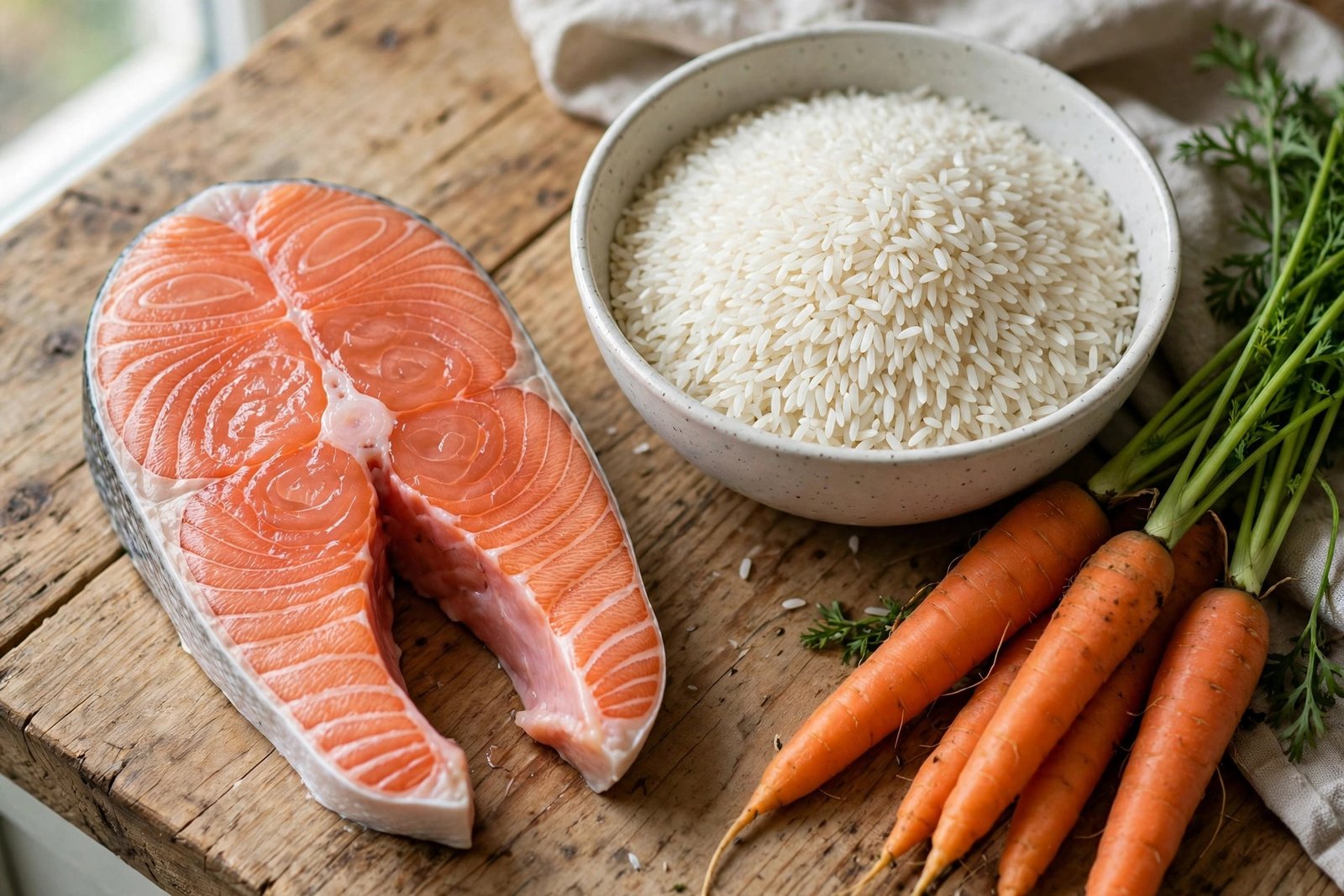
Why Salmon Works So Well for Dogs
Salmon is rich in omega-3 fatty acids, the same healthy fats people talk about for skin and coat health. For dogs, those fats can help keep the coat shiny and the skin less dry and itchy. Plenty of owners notice their dog's coat looks better after a few weeks of salmon in the diet, though results vary from dog to dog.
It is also a solid source of lean protein. Protein is what builds and repairs muscle, and salmon delivers it without the heavy fat load you get from some red meats. That makes it a good pick for dogs that need good nutrition without a lot of extra calories.
Another thing in salmon's favor is that it is easy to digest. Dogs with touchy stomachs often handle fish better than they handle beef or chicken. Vets sometimes suggest a fish-based diet for dogs with food sensitivities, and salmon is one of the most common choices. If your dog has never tried fish before, start with a small portion and watch how they do over the next day or two.
If your dog already enjoys fish, you might also like our Homemade Fish Dog Food Recipe (Safe Ingredients and an Easy Omega-Rich Meal) — it covers other fish options and which ones are safest for dogs.
Ingredients for One Batch
This batch makes about six cups of finished food. That is roughly three to four days of meals for a medium dog, or a week of dinners for a small one. You can double it if you want to cook once and freeze the rest.
- 1 pound (about 450 grams) fresh salmon fillet, skin on or off
- 1 cup uncooked white rice
- 2 cups water, for cooking the rice
- 1 cup carrots, peeled and diced small
- 1 cup green beans, ends trimmed and chopped
- 1/2 cup peas, fresh or frozen
- 1 tablespoon olive oil (optional, for a little extra healthy fat)
A note on the salmon: fresh or thawed frozen fillets both work fine. Canned salmon works too, but pick one packed in water with no added salt, and drain it well. Avoid smoked salmon. It is far too salty for dogs, and the curing process adds things their stomachs do not need.
White rice is the better choice here over brown rice. It is easier on the stomach and cooks faster. Brown rice has more fiber, but it can be harder for some dogs to digest, and this recipe is meant to be gentle.
How to Cook It, Step by Step
Cook the rice first, since it takes the longest. Rinse one cup of white rice under cold water, then put it in a pot with two cups of water. Bring it to a boil, turn the heat down low, cover the pot, and let it simmer for about 18 minutes. When the water is absorbed and the rice is soft, take it off the heat and leave the lid on for five more minutes.
While the rice cooks, get the salmon ready. Preheat the oven to 400°F (200°C). Place the fillet on a lined baking tray, skin side down if it still has the skin. Do not add salt, pepper, butter, lemon, or any seasoning at all. Plain is the whole point. Bake for 12 to 15 minutes, until the salmon flakes easily with a fork and is opaque all the way through. The inside should reach 145°F (63°C) if you want to check with a thermometer.
You can also poach the salmon in plain water for about 10 minutes if you prefer. Baking is a little less messy, poaching keeps it extra moist.
Let the salmon cool for at least ten minutes. This step matters more than it seems. Hot fish falls apart in your hands and hides bones. Cooled salmon is much easier to check properly.
Now the most important part: go through the salmon piece by piece and remove every single bone. Even small pin bones can hurt a dog's mouth or throat, and they can cause real trouble if swallowed. Run your fingers along each flake and pull out anything hard or sharp. Take your time here. It is the one step you never want to rush.
Steam or boil the vegetables while the salmon cools. Carrots need about eight minutes to go soft, green beans about five, and peas only two or three. You want them tender enough to mash with a fork, not crunchy. Drain them well.
Once everything is cooked and cooled, flake the salmon into bite-sized pieces and mix it with the rice and vegetables in a big bowl. Add the tablespoon of olive oil if you are using it and stir it through. That is the whole recipe. Let it cool to room temperature before you serve it.
Vegetables That Go Well with Salmon and Rice
Carrots, green beans, and peas are the vegetables in this recipe, but they are not the only ones that work. Sweet potato is a great swap for some of the rice if your dog likes it. It adds fiber and a bit of natural sweetness that most dogs enjoy. Zucchini is another easy one — it cooks fast and is very gentle on the stomach.
Pumpkin is worth keeping in the cupboard if your dog has a sensitive stomach. A spoonful of plain canned pumpkin (not pumpkin pie filling) can help firm up loose stools. Spinach is fine in small amounts too, though some dogs pick around leafy greens, so chop it fine.
A few vegetables should never go near a dog's bowl. Onions and garlic are toxic to dogs, even in small amounts, and they have no place in any homemade recipe. Grapes, raisins, and macadamia nuts are also dangerous. If you are ever unsure about an ingredient, leave it out. A plain meal is always safer than a risky one.
How Much to Serve
Portions depend on your dog's size, age, and how active they are. The amounts below are a rough guide for one day's food, split across two meals. Treat them as a starting point, not a rule set in stone.
- Small dogs (under 20 pounds): about 1 to 1 1/2 cups per day
- Medium dogs (20 to 50 pounds): about 2 to 3 cups per day
- Large dogs (50 to 90 pounds): about 3 to 4 1/2 cups per day
- Giant dogs (over 90 pounds): about 4 1/2 to 6 cups per day
Watch your dog's weight over a few weeks and adjust from there. If they are gaining weight, cut the portion back a little. If they are losing weight or always seem hungry, add a bit more. Active dogs burn more food than couch potatoes, so a farm dog and an apartment dog of the same size will not eat the same amount.
One more thing to keep in mind: this recipe is best as part of a varied diet, not the only thing your dog eats forever. Plenty of owners rotate two or three homemade recipes through the week so their dog gets a mix of proteins and vegetables. If you want another easy batch to rotate in, our Homemade Dog Food Recipe with Turkey and Vegetables (A Balanced, Easy Weeknight Batch) is a good partner for this one.
How to Store It
Let the food cool completely before you pack it away. Warm food in a sealed container goes soggy and can grow bacteria faster than you would think.
In the fridge, it keeps for three to four days in a sealed container. Portion it into daily servings so you are not opening and closing one big tub every mealtime. That keeps the rest fresher for longer.
In the freezer, it keeps for up to three months. The easiest way to do it is to freeze it in single-meal portions using freezer bags or small containers. Squeeze the air out of bags before you seal them, and write the date on each one with a marker. Nobody remembers what is in an unlabeled bag three weeks later.
Thaw frozen portions in the fridge overnight. Never thaw dog food on the kitchen counter. If you warm it in the microwave, stir it well and check the temperature with your finger first. Hot spots can burn a dog's mouth.
For a fuller rundown of containers, labels, and thawing times, have a look at our guide on How to Store Homemade Dog Food in the Freezer (Safe Portions, Labels, and Thawing).
Which Dogs Should Skip Salmon or Eat It Less Often
Most dogs handle salmon just fine, but a few should skip it or eat it only now and then.
Dogs with a known fish allergy should not eat salmon at all. Fish allergies in dogs are less common than beef or chicken allergies, but they do happen. Signs include itchy skin, ear infections that keep coming back, and upset stomachs after meals. If your dog has reacted badly to fish before, do not test it again with salmon.
Dogs with pancreatitis, or a history of it, need to be careful with fatty foods. Salmon is not the fattiest fish, but it is richer than white fish like cod. A dog on a strict low-fat diet is better off with a leaner protein, and your vet can point you to the right one.
Puppies can eat salmon in small amounts once they are weaned, but their diet needs to be balanced carefully for growth. A salmon and rice meal is fine as an occasional food for a puppy, not as their main diet unless a vet or canine nutritionist has signed off on the full plan.
And a quick word for owners in the Pacific Northwest: never feed your dog raw or undercooked salmon. Raw salmon from that region can carry a parasite that causes salmon poisoning disease, which is serious and can be fatal. Cooking the fish fully removes the risk, which is one more reason this recipe always cooks the salmon right through.
If your dog has allergies or a health condition, check with your own vet before adding salmon to their regular meals.
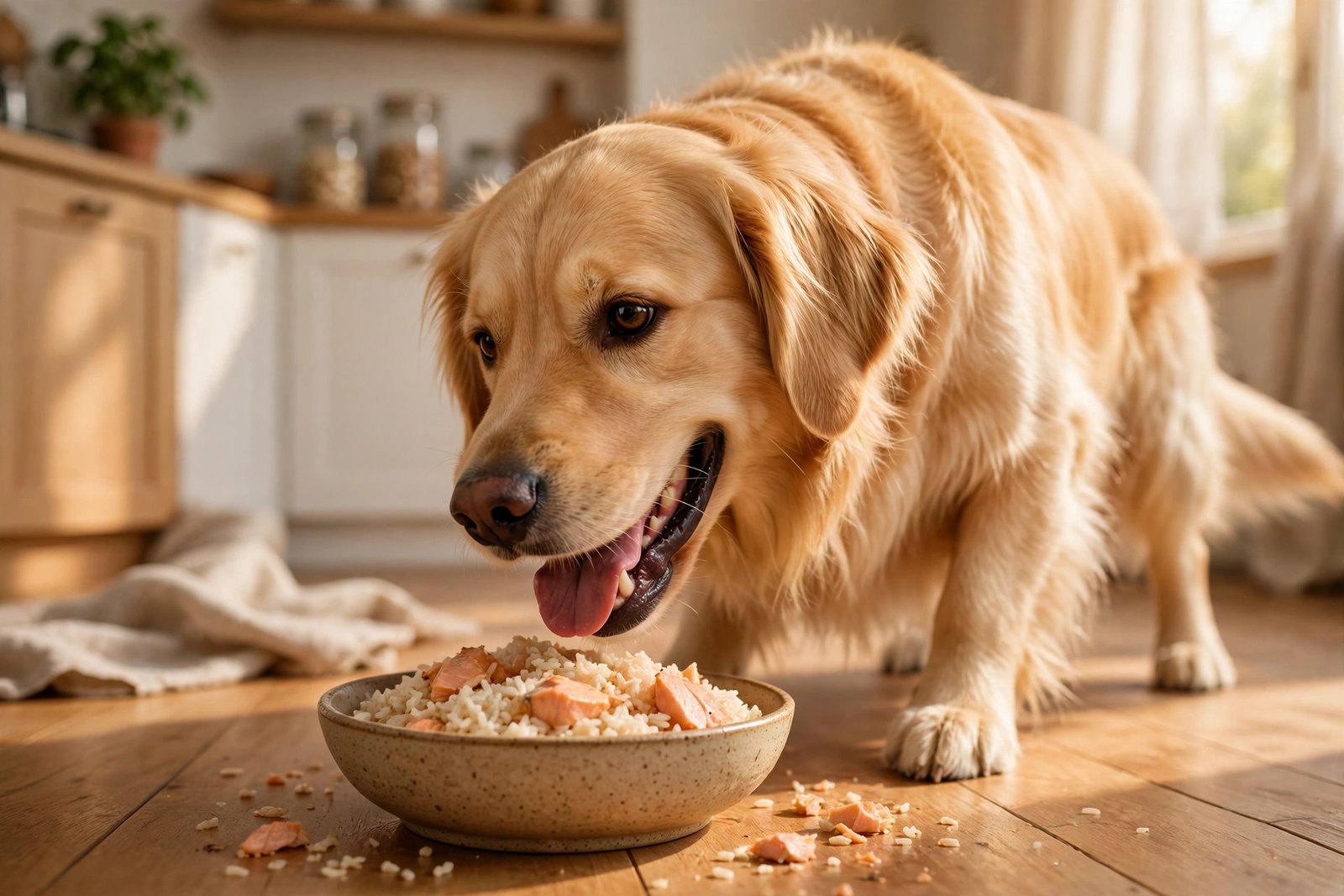
Common Mistakes to Avoid
The biggest mistake is seasoning the food the way you would season your own dinner. Salt, garlic powder, onion powder, and spice blends are all off the table. Dogs do not need seasoning, and some of the most common ones are toxic to them. Plain tastes boring to us and perfectly fine to them.
Bones are the second mistake. People sometimes assume small fish bones will just soften or pass through. They do not always, and a bone stuck in the throat or gut can mean an emergency vet visit. Check the salmon by hand, every time, even if the fillet looked boneless at the store.
Serving it raw or undercooked is another one. Some raw feeding fans serve raw fish, but salmon carries real risks raw, and cooking it properly costs you nothing. Cook it fully, every time.
Another common slip is feeding the same homemade recipe every single day for months. It feels convenient, but one recipe does not cover every nutrient a dog needs. Rotate proteins, swap vegetables, and talk to your vet about whether your dog needs a vitamin or mineral supplement on a homemade diet.
Finally, do not overdo the portions. Homemade food looks healthier than kibble, so it is easy to be generous with the scoop. Too much of any food leads to weight gain, and extra weight is hard on a dog's joints and heart. Measure the food for the first week or two until you know what the right scoop looks like.
Frequently Asked Questions
Can dogs eat salmon every day?
They can, but most owners do better rotating it with other proteins. Salmon two or three times a week is plenty for most dogs. A little variety is good for their gut and keeps mealtime interesting.
Can I use canned salmon instead of fresh?
Yes, as long as it is plain canned salmon packed in water with no added salt. Drain it well before you mix it in. Skip salmon packed in oil, and skip smoked or flavored canned salmon. Fresh fillets give you more control over quality, but canned is a fine backup for a quick batch.
Is salmon skin safe for dogs?
Cooked salmon skin is safe in small amounts, and some dogs love the crispy texture. It is quite fatty though, so a lot of skin can upset a sensitive stomach or add more calories than you planned. If you leave the skin on, keep the portion small. If your dog has pancreatitis or a sensitive gut, take the skin off.
Can puppies eat salmon and rice?
Puppies can eat cooked salmon and rice as an occasional meal once they are fully weaned. Their main diet needs to be balanced for growth, with the right calcium and phosphorus levels, so this recipe should not be a puppy's everyday food unless a vet has approved the full diet plan. For adult dogs, it works well as a regular part of the rotation.
What if my dog is allergic to fish?
Then skip this recipe entirely and do not try to swap in another fish. A dog allergic to one type of fish often reacts to others too. Turkey, chicken, or lamb are safer starting points, and your vet can help you work out which protein agrees with your dog. Watch for itching, red ears, or soft stools after new foods — those are the usual early signs.
Conclusion
Salmon and rice proves homemade dog food does not have to be complicated. One pan of fish, a pot of rice, a few vegetables, and you have a meal your dog will get excited about. Cook the salmon fully, get every bone out, keep it plain, and store the leftovers properly.