

Fish is a wonderful protein for dogs: it is usually easy to digest, gentle for dogs that react to chicken or beef, and naturally rich in omega-3 fatty acids that support a glossy coat and healthy skin. This homemade fish dog food recipe uses simple, dog-safe ingredients, cooks in one pot, and portions beautifully for the fridge or freezer.
Homemade food does take a little care to balance. This recipe is designed as a wholesome staple or topper for healthy adult dogs. If you plan to feed homemade food as your dog’s main diet long-term, ask your vet or a veterinary nutritionist about adding a canine vitamin-mineral balancer, because fish and vegetables alone do not supply enough calcium and some trace nutrients for complete nutrition. Dogs with kidney disease, pancreatitis or other medical conditions should only change diet with veterinary guidance.
Choosing Safe Fish for Dogs
Not every fish is suitable. Follow these safety rules:
- Best choices: salmon, cod, haddock, pollock, sardines and white fish such as tilapia — all well cooked and completely boneless.
- Always cook fish thoroughly. Raw fish can carry parasites and bacteria. Never feed raw salmon or trout from the Pacific Northwest region, which can carry a parasite that causes a serious illness in dogs.
- Remove every bone. Cooked fish bones are soft but can still lodge in the throat or gut. Flake the flesh carefully with your fingers.
- Keep it plain. No salt, garlic, onion, butter sauces, batter or spices. Garlic and onion are toxic to dogs, even in powder form.
- Use low-mercury fish most often. Large fish such as tuna, swordfish and king mackerel accumulate more mercury, so keep them as rare treats — or leave tuna out entirely for regular meals.
- Canned fish shortcut: sardines canned in water (no salt added, no oils with seasoning) are a nutritious occasional addition; rinse lightly and serve a small amount.
Equipment You Will Need
Nothing special — everyday kitchen basics:
- A large pot with a lid (at least 4–5 litres / 4–5 quarts), or a slow cooker
- A chopping board and a sharp knife
- A fork and your fingers for flaking and bone-checking the fish
- A shallow tray for fast cooling
- Portion-sized airtight containers or freezer bags, plus labels and a pen
- Kitchen scales (optional, but helpful for consistent portions)
Fish Safety in Detail: Bones, Mercury and Raw Fish
Three safety topics deserve extra attention because they are where homemade fish meals most often go wrong:
Bones. Fish bones cause real emergencies. Pin bones in salmon fillets are the sneaky ones — run your fingertips firmly along the flesh before and after cooking and pull out anything sharp with clean tweezers or your fingers. After flaking, spread the fish out on a plate and check it once more under good light before it goes back into the pot. When you buy fillets, ask for “pin-boned” fish, and avoid whole fish unless you are confident about cleaning it.
Mercury. Mercury builds up in long-lived, predatory fish. For regular meals, stick to small, short-lived fish — salmon, sardines, cod, haddock and pollock are all relatively low. Reserve tuna for the rarest of treats, and skip swordfish, shark and king mackerel entirely for dogs.
Raw fish. Never feed raw or undercooked fish to your dog. Raw salmonids (salmon, trout and relatives) from the Pacific Northwest can carry a parasite that causes salmon poisoning disease — a serious, potentially fatal illness that needs urgent veterinary treatment. Cooking fish all the way through removes this risk, which is why this recipe simmers the fish until it reaches 63°C / 145°F and flakes apart.
Ingredients
This batch makes roughly 2 kg (about 8 cups) of finished food — enough for several days for a medium dog.
- 2½ cups (600 ml) water, plus more if needed
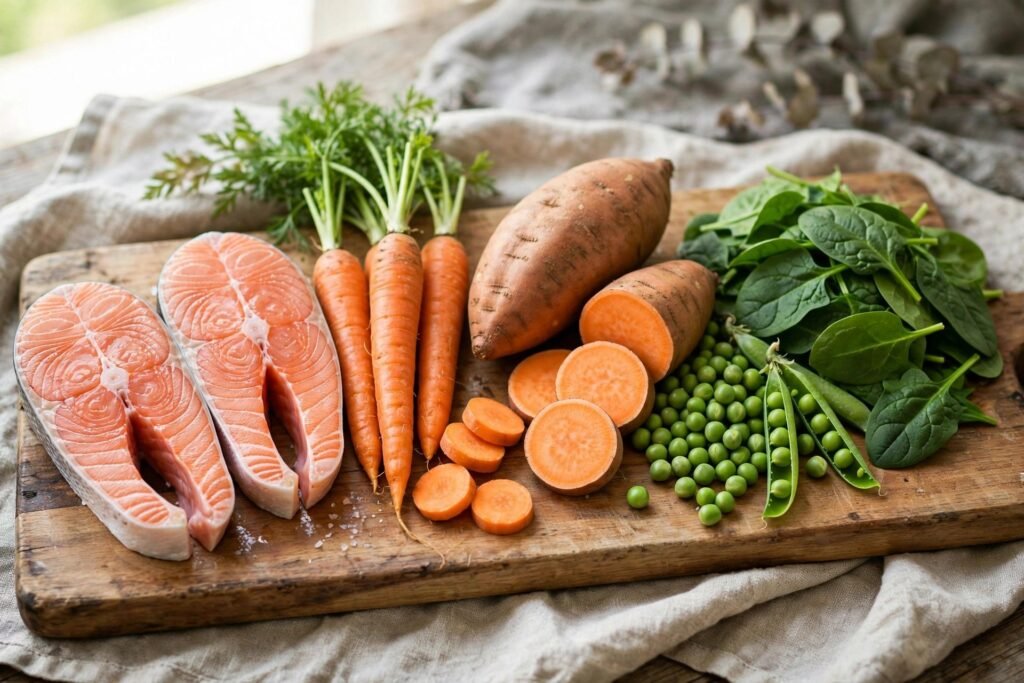
- 1½ lbs (680 g) boneless, skinless salmon fillets — or a mix of salmon and cod
- 1 cup (185 g) uncooked white or brown rice
- 2 medium sweet potatoes, about 2 cups diced (300 g), peeled
- 3 medium carrots, about 1½ cups diced (195 g)
- 1 cup (150 g) frozen peas
- 2 cups (60 g) fresh spinach leaves, roughly chopped
- 1 tablespoon (15 ml) salmon oil or fish oil (optional, for extra omega-3 — add after cooking)
- 1 teaspoon finely ground, plain eggshell powder or a vet-recommended calcium supplement (optional but recommended if feeding homemade regularly — ask your vet about the right amount)
Step-by-Step Method
- Prepare the vegetables (10 minutes). Peel and dice the sweet potatoes and carrots into small, pea-sized pieces so they cook evenly. Rinse the rice under cold water.
- Start the base (5 minutes). Add the water, rice, sweet potato and carrots to a large pot. Bring to the boil over medium-high heat, then reduce to a gentle simmer, cover, and cook for 20 minutes. Brown rice needs about 10 extra minutes — add a splash more water if the pot looks dry.
- Add the fish (10–12 minutes). Lay the salmon fillets on top of the rice and vegetables, cover again, and continue simmering for 10–12 minutes, until the fish flakes easily and is opaque all the way through (63°C / 145°F at the thickest part) and the rice is tender.
- Check for bones (5 minutes). Lift the fish onto a plate. Flake it with a fork and your fingers, feeling carefully for any stray bones or skin, and discard them. Return the clean flakes to the pot.
- Add the greens and peas (3–5 minutes). Stir in the frozen peas and chopped spinach. Cook for just 3–5 more minutes, until the spinach wilts and the peas are bright green and tender.
- Rest, mix and finish (10 minutes). Take the pot off the heat and rest for 10 minutes — the mixture will thicken slightly. Stir in the salmon oil, if using, and the calcium supplement if your vet has advised it. Mash lightly with a fork for a chunky, stew-like texture, or leave pieces whole for dogs that like to chew.
- Cool completely. Spread the food into a shallow tray to cool quickly, then portion. Never put steaming-hot food into sealed containers in the fridge.
Total time: about 50 minutes, mostly hands-off simmering.
Easy Variations and Substitutions
Once your dog loves the base recipe, rotate these safe swaps to keep meals interesting:
- Different fish: swap half the salmon for cod, haddock or pollock (use the same weight, 340 g / ¾ lb of each). All cook the same way.
- Different vegetables: replace the sweet potato with the same weight of pumpkin or butternut squash (300 g / about 2 cups diced), or swap carrots for green beans (195 g / about 1½ cups chopped).
- Different base: use 1 cup (195 g) uncooked quinoa instead of rice, rinsed well, with the same amount of water — a good option for dogs that find rice bland.
- Senior-friendly version: blend or mash the finished food more finely and add an extra ¼ cup (60 ml) of water for a softer texture that is easier on older teeth and jaws.
- Coat-and-skin boost: stir in 1 teaspoon (5 ml) of salmon oil per day’s portion for dogs with dry, dull coats (reduce other fats slightly to keep calories steady).
Avoid substitutions involving anything from the danger list — no onion, garlic, leeks, grapes, raisins, xylitol-sweetened products, or cooked bones, ever, in any variation.
How Much to Serve
Homemade fish food like this provides roughly 350–400 kcal per cup, but this varies with the fish used. As a rough guide for a healthy adult dog, feed about 1 cup per 4.5–5 kg (10 lbs) of body weight per day when using it as the main food, split into two meals — then adjust up or down based on your dog’s body condition. Transition over 5–7 days, mixing increasing amounts of the new food with decreasing amounts of the old, to avoid an upset stomach. When in doubt, your vet can calculate an exact daily portion for your dog.
Feeding Amounts by Dog Size
Use this table as a starting point for this recipe as the main food, then adjust by body condition over two to three weeks:
| Dog weight | Approx. daily amount | Split into |
|---|---|---|
| 5 kg (11 lbs) | 1–1¼ cups (200–250 g) | 2 meals |
| 10 kg (22 lbs) | 2 cups (400 g) | 2 meals |
| 20 kg (44 lbs) | 3½–4 cups (700–800 g) | 2 meals |
| 30 kg (66 lbs) | 5 cups (1 kg) | 2 meals |
| 40 kg (88 lbs) | 6–6½ cups (1.2–1.3 kg) | 2 meals |
Small dogs burn more calories per kilogram than giant dogs, and active dogs need more than couch companions, so treat these as mid-points. Weigh your dog every couple of weeks when starting a homemade diet: steady weight with easily felt ribs is the target. If you use this recipe as a topper instead, replace no more than 20–25% of the main food and reduce the regular food a little to match.
Storage Notes
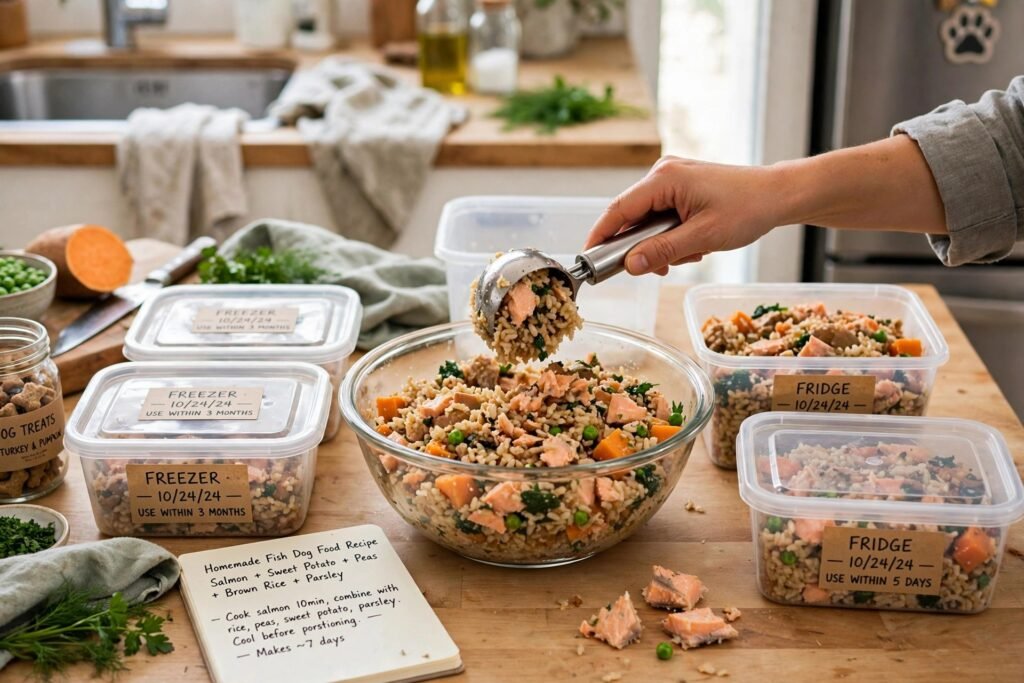
- Fridge: up to 3 days in airtight containers (fish-based food spoils faster than meat-based, so do not push it).
- Freezer: up to 2 months in portion-sized containers or freezer bags. Freeze in daily portions so you only thaw what you need.
- Thawing: move a portion to the fridge overnight. Warm gently to room temperature before serving — never serve food piping hot, and avoid microwaving unevenly heated food without stirring and checking well.
- Throw away any food left in the bowl for more than 2 hours (1 hour in hot weather).
- Label everything with the recipe name and the date you cooked it. Fish food that has lost its label and its date is food to throw away.
- Trust your nose. Cooked fish should smell mild and fresh. A sour or ammonia-like smell means the batch is finished, however long it has been stored.
Frequently Asked Questions
Can dogs eat fish every day?
Cooked, boneless, low-mercury fish can be part of a daily diet, but variety is wise. If fish is the main protein, a vet-approved nutrient balancer is important to cover calcium, iodine and vitamins that fish and vegetables lack.
Is canned tuna OK for dogs?
A tiny amount of tuna in water, very occasionally, is unlikely to harm a healthy dog, but tuna is higher in mercury and often salty. For regular fish meals, salmon, cod or sardines are safer choices.
My dog is allergic to chicken. Is fish a good alternative?
Yes — fish is one of the most common alternative proteins for dogs with poultry sensitivities, and this recipe contains no chicken or egg. Introduce it gradually and watch skin and stools over a few weeks, and confirm the allergy plan with your vet.
Can puppies eat this recipe?
Occasionally as a topper, yes, but growing puppies need precisely balanced calcium, phosphorus and calories. Do not feed homemade food as a puppy’s main diet unless a vet has formulated the recipe for growth.
Should I add the skin from the salmon?
Cooked salmon skin in tiny amounts is not toxic, but it is fatty and can upset sensitive stomachs. For everyday feeding, skinless fillets are the safer, leaner choice used in this recipe.
Can I make this recipe in a slow cooker?
Yes. Add everything except the peas, spinach and oil to the slow cooker with the same water, cook on low for 4–5 hours or high for 2–3 hours until the fish flakes and the rice is tender, then flake and bone-check the fish, stir in the peas, spinach and oil, and rest for 10 minutes before cooling and portioning.
How do I know the fish is fully cooked?
The flesh should be opaque all the way through, flake easily with a fork, and reach 63°C / 145°F at the thickest part on a kitchen thermometer. If any part looks glassy or translucent, give it a few more minutes.
Conclusion
A pot of salmon, rice, sweet potato and vegetables is one of the kindest homemade meals you can cook for your dog — gentle on the stomach, kind to skin and coat, and free of the ingredients that commonly cause trouble. Cook it thoroughly, bone it carefully, store it safely, and bring your vet into the conversation if homemade food becomes a regular part of your dog’s life. Your dog gets a delicious, fishy dinner; you get the satisfaction of knowing exactly what went into the bowl.
[…] your dog already enjoys fish, you might also like our Homemade Fish Dog Food Recipe (Safe Ingredients and an Easy Omega-Rich Meal) — it covers other fish options and which ones are safest for […]